Have you ever used suspension to ride better instead of just leaving it how the bike came from the shop? Mountain bike suspension tuning is one of the most underused upgrades to an MTB. With my own experience, I’ve found myself using it to make the tightest turns my body has ever handled. A properly tuned fork and shock help your bike not feel like you’re stuck in the sand, other than with mtb tools, most notably in a bike park, keep your body fresher over long rides, and give you the confidence to brake later, preventing any mtb derailleur adjustment, and stay composed in rough terrain.
The problem is that setting up a suspension often feels intimidating. I only recently came across these terms, but they are important if you want to improve your ride. Sag, rebound, compression, tokens, and spring rate are terms that get thrown around with little explanation, and you may have even heard them at a bike shop like mine. Even small adjustments made without a clear process can leave a bike feeling harsh, unstable, or unpredictable.
This guide breaks mountain bike suspension tuning down into a clear, repeatable system. I don’t ever ignore the small things like mtb tire inserts, or mountain bike frame bags but there’s more to setting up your bike in a full way. You’ll learn how suspension actually works, how to set a reliable baseline, and how to diagnose trail feedback so every adjustment has a purpose. I usually ride trail bike, or a hybrid mountain bike that gave me experience, but I also discuss XC, Trail Bikes, and multiple different types.
By the end, you’ll know exactly how to dial in sag, rebound, compression, and volume spacers, how to adapt your setup to terrain and conditions, and when it makes sense to seek professional tuning. Instead of guessing, you’ll have a process you can rely on every time you touch a shock pump or clicker.
Why Suspension Tuning Matters
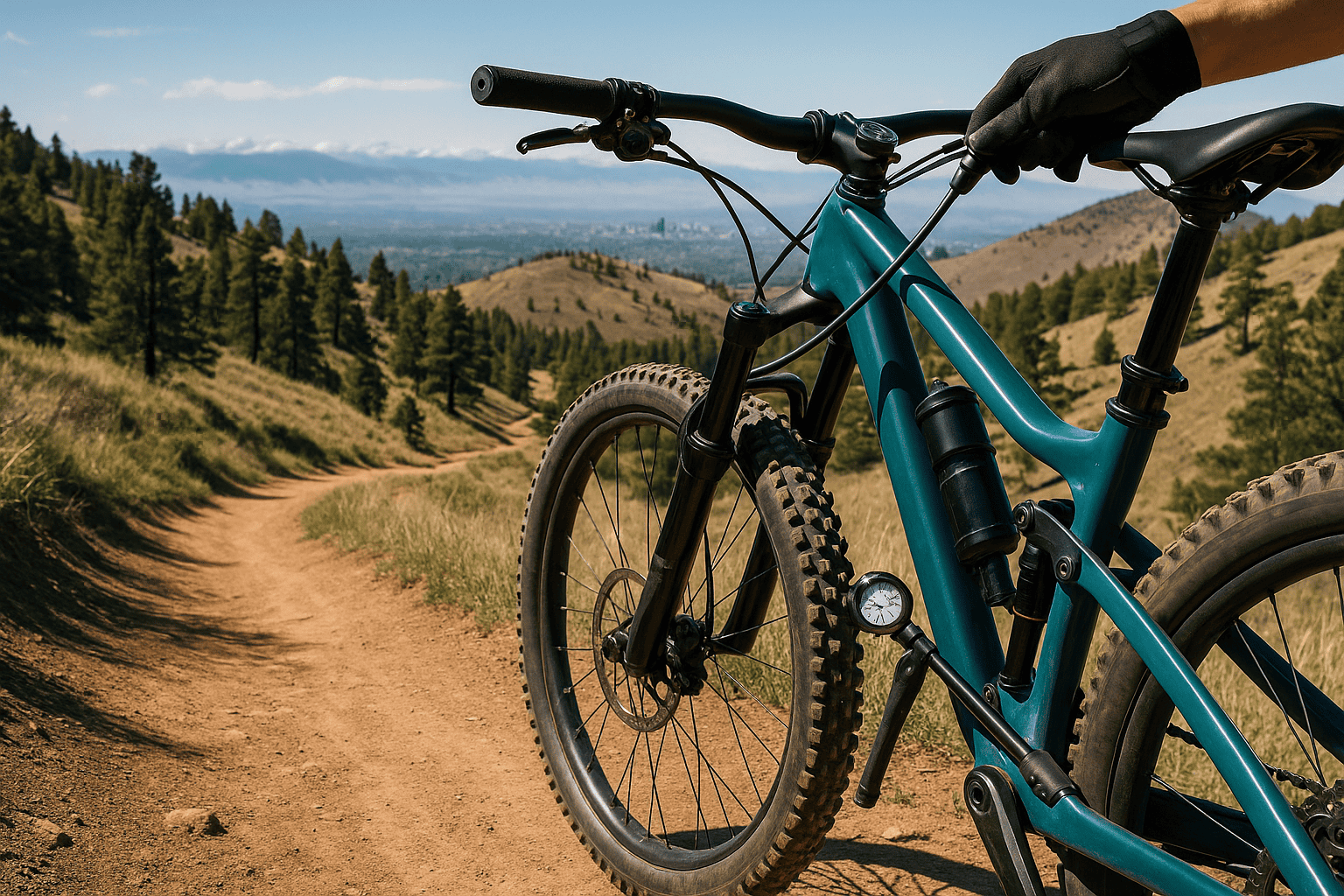
Let’s discuss how the fork works in your very own bike. It absorbs impacts at the front wheel and controls steering stability, while the rear shock manages traction and support through the bike’s linking suspension. Still confusing? I go into more detail about the balance in the sence of good balance, between front and rear, is important.
Sag is the amount of compression your suspension undergoes under your body weight in a neutral stance. It sets your ride height and determines how much travel is available for bumps and traction. Consistently set sag before any other adjustments to anchor your mountain bike suspension setup.
Rebound controls how quickly the suspension returns to its original position after compressing. Too fast and the bike can feel bouncy and unstable; too slow and it packs down and rides harshly on repeated hits. Start in the middle and fine-tune rebound clicks by symptom on your test loop.
Compression damping resists compression forces and is commonly split into something called low-speed compression for body weight shifts and brake dive, and high speed ) for square edges and landings. More LSC adds support for pumping and pedaling, while more HSC adds big-hit control. Balance both so the bike feels supportive without being harsh.
Spring rate determines how much force it takes to compress the suspension. Air springs are easily adjusted by pressure and can be tuned with tokens, while coil springs offer a linear feel and consistency with fewer adjustments. Choose air vs coil based on adjustability, weight, and feel preferences.
Volume spacers reduce the air spring volume to increase progression, making it harder to bottom out in the last part of travel. Adding tokens boosts bottom-out resistance without raising initial pressure too much, while removing them gives a more linear feel. Use volume spacers to fine-tune bottom-out control and mid-stroke support.
Damping uses oil to control motion speed, preventing pogoing and harsh spikes. Rebound damping manages return speed after impacts, and compression damping manages how the suspension resists inputs. Good damping lets you run the spring rate you need while keeping control over different bump speeds.
Tools and Prep Checklist
Before touching a shock pump or clicker, I make sure I have the right tools ready. Suspension tuning only works when adjustments are precise and repeatable.
A quality shock pump is essential for accurate air pressure changes. I use a sag meter or a simple zip tie on the stanchions to measure sag, along with a tape measure to double-check numbers. Having these tools on hand lets me reset sag the same way every time instead of guessing.
I also rely on a torque wrench to make sure my axle, stem, and suspension hardware are tightened to spec. This keeps the bike quiet, safe, and riding the way it’s designed to. Allen keys let me access rebound and compression adjusters and remove air caps without hassle. Correct torque matters more than people think, especially for consistency and warranty protection.
I always start with manufacturer recommendations before riding. Set up charts and apps like FOX’s guides and RockShox TrailHead. Just some research I found out while looking up this but I’ve also found documents by searching up my model for exact specs. It also can give me baseline air pressures, rebound, and compression based on my riding weight. These numbers aren’t perfect, but they get me close enough that I’m fine-tuning instead of starting blind.
Before changing anything, I write down my current pressures, rebound and compression clicks, and how many volume spacers are installed. This baseline is my reset button if I go too far in the wrong direction. Logging changes speeds up mtb suspension tuning and removes a lot of unnecessary guesswork.

Baseline Setup: Step-by-Step
I start by weighing myself in full riding kit. That includes my pack, water, tools—everything I actually ride with. Extra weight changes sag and spring rate more than most riders expect, and this number is what all setup charts are based on. Getting this right saves time later.
For fork sag, I aim for about 15–20% for XC, 20–25% for trail, 25–30% for enduro, and roughly 20–30% for downhill depending on feel. I bounce lightly, settle into a neutral stance, and measure the o-ring. I repeat the process until the sag number stays consistent instead of fluctuating.
For the rear shock, I target around 20–25% sag for XC, 25–30% for trail, 28–33% for enduro, and 30% or more for downhill. I sit in a centered attack position with my heels level and measure carefully. I repeat this until the rear feels balanced with the fork instead of overpowering it.
If I’m running air suspension with self-equalizing positive and negative chambers, I always cycle the suspension through about 25–30% travel after changing pressure. This step ensures accurate sag and consistent small-bump sensitivity. I re-check sag afterward to confirm nothing shifted.
When setting rebound, I close it fully while counting clicks, then open it back up to the manufacturer’s recommended starting point. From there, I fine-tune on trail. If the bike feels harsh or packs down, I speed rebound up slightly. If it feels bouncy or kicks back, I slow it down. The goal is a controlled return that keeps the tires tracking the ground.
I start with low-speed compression in the middle and high-speed compression slightly open if my damper allows it. If I feel brake dive or want more pump support, I add low-speed compression. If I’m bottoming out on big hits, I add high-speed compression. I keep changes small and test immediately on familiar terrain.
I always confirm how many volume spacers are installed in my fork and shock. If I’m using full travel too easily, I’ll add a spacer. If I never approach full travel, I’ll remove one or slightly reduce pressure. Volume spacers are one of the cleanest ways to tune progression without ruining small-bump feel.
Once things feel close, I record fork and shock pressures, rebound and compression clicks from closed, spacer counts, sag percentages, and tire pressures. I keep everything dated so I can compare setups across trails, conditions, and seasons.
Discipline-Specific Recommendations
For XC and marathon riding, I prioritize efficiency. I run lower sag, faster rebound, and modest low-speed compression for seated support. Progression stays moderate so I maintain traction on roots without the bike feeling wallowy. I use lockouts when they make sense, but I avoid relying on firm modes on rough descents.
For trail riding, I aim for balance. Mid-range sag and neutral rebound speeds keep the bike predictable. I use low-speed compression to manage body movement and pumping, while keeping high-speed compression open enough for comfort. If I’m riding aggressively, I’ll often add one extra token in the fork.
For enduro riding, I target 25–30% sag front and rear with supportive low-speed compression and controlled high-speed compression. I usually add tokens to increase progression, especially on steeper or faster terrain. Rebound is slightly slower than trail to keep stability at speed without packing down.
For downhill, I run 25–30% fork sag and 30% or more rear sag with strong high-speed compression for hard impacts. Traction and composure matter most here, so rebound is carefully controlled to avoid kickback. Downhill setups often benefit from coil shocks and progressive forks with adequate tokens.
At the bike park, I increase low-speed compression for pump and takeoff support and add progression to resist bottom-outs on landings. Rebound stays slightly faster for pop, but not fast enough to buck. I always check tire pressure and casing support so suspension and tires work together.
Trailside Tuning: Reading Feel Instead of Guessing
When tuning on trail, I don’t chase numbers—I chase symptoms.
If the bike feels harsh on small bumps, I’ll reduce low-speed compression slightly or lower pressure a small amount. If it bottoms too easily, I’ll add a token or increase high-speed compression before touching pressure. If it packs down in rough sections, rebound is usually too slow. If it bucks on landings, rebound is often too fast.
I make one change at a time, ride the same section again, and log what happened. This is how suspension tuning stops being confusing and starts becoming repeatable.
The Big Picture
Everything in this guide ties back to one idea: a reliable process. Set sag first. Use manufacturer baselines. Change one variable at a time. Test on familiar terrain. Write things down.
When you approach suspension this way, tuning stops feeling overwhelming. Instead of guessing, you’ll know why the bike feels the way it does—and exactly what to change next.