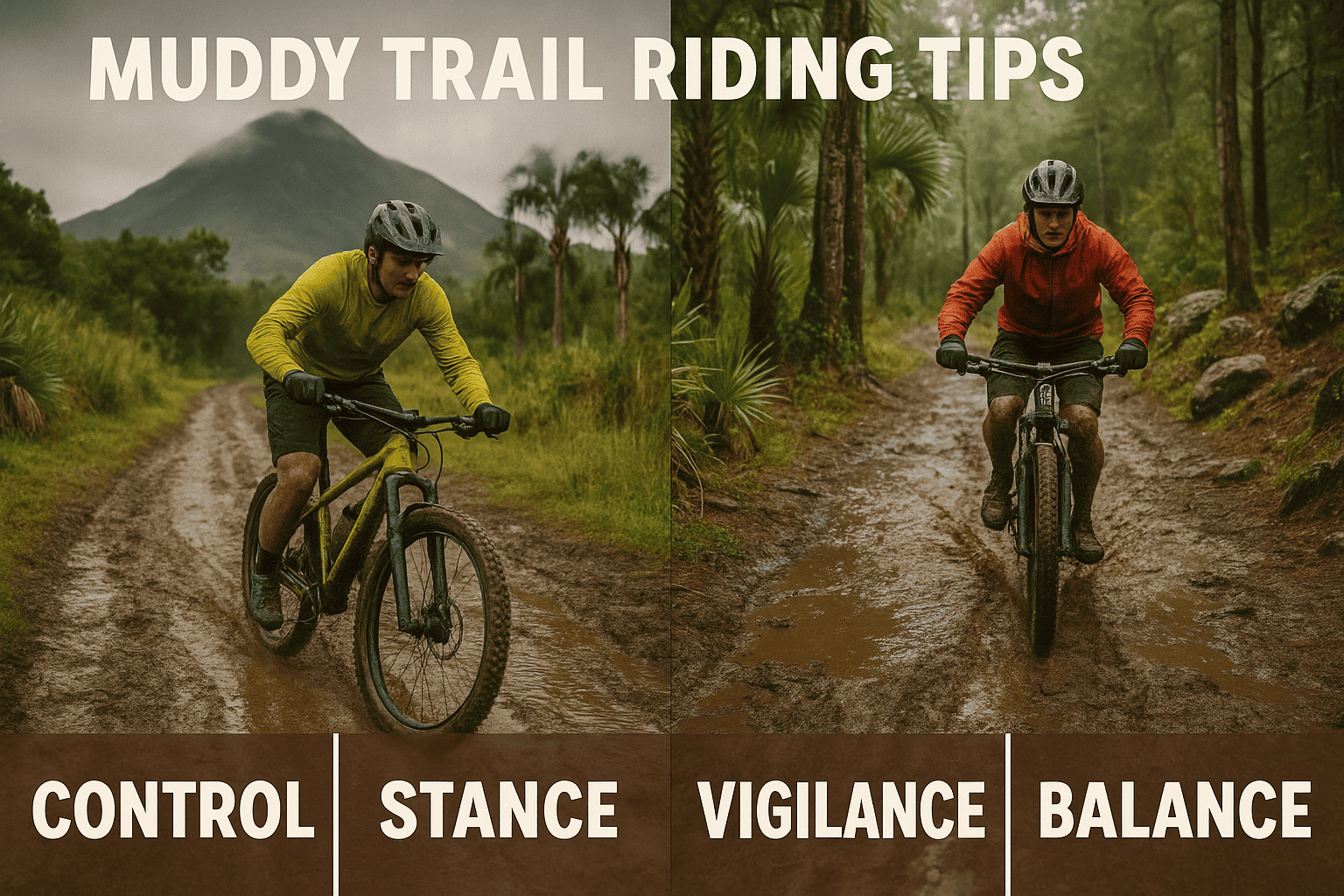
Muddy trail rides are where skill, patience, and respect for the terrain all come together. It takes mountain bike strength training, control, but also your mindset teaching you when to push through and when to step back for the sake of muddy trail riding tips following this guide.
I’m Caleb, a prospective mountain biker who’s been riding on for the past 2 years, and in that time, I’ve found mountain biking to be the most important hobby in my life. Through every slip, slide, and soaked ride, I’ve learned how much there is to understand about trail ethics, bike setup, and the rhythm of riding in tough conditions, especially in muddy environments where I’ve actually had the most fun and I expect you will too.
Should You Ride Muddy Trails? Ethics and Trail Status
Checking Trail Conditions
It’s super important to consider the trails you ride on if they’re ridden off or is it worth the experience. Check your local trail association websites, social channels as there’s usually a mountain bike page locally, and trailhead boards for official status. MTB Project for recent reports is my favorite method, which consider local rainfall totals and soil types.
If information is unclear or conditions are marginal, choose all-weather routes and avoid sensitive singletrack. Trust me my whole bike fell over and I jumped off in time.

Skip rides when the soil is plastic and sticky, when tires pack up immediately. If your tires leave deep ruts or you’re carving new lines to avoid puddles, it’s time to turn around. Look for rock-armored trails, gravel, or roads until conditions firm up.
Ride straight through puddles and soft spots instead of skirting the edges to avoid widening the trail. Keep group size small and avoid skidding or panic braking that gouges ruts. Turn back if long “soup” sections persist, and report major issues to local trail stewards.
Essential Gear and Clothing
Waterproof jacket, breathable layers, and thermal base layers
Wear a waterproof-breathable shell with vents to dump heat on climbs and seal warmth on descents. Pair it with a wicking base layer and a light mid-layer to balance warmth and moisture control. Favor synthetics or merino and avoid cotton, which stays clammy.
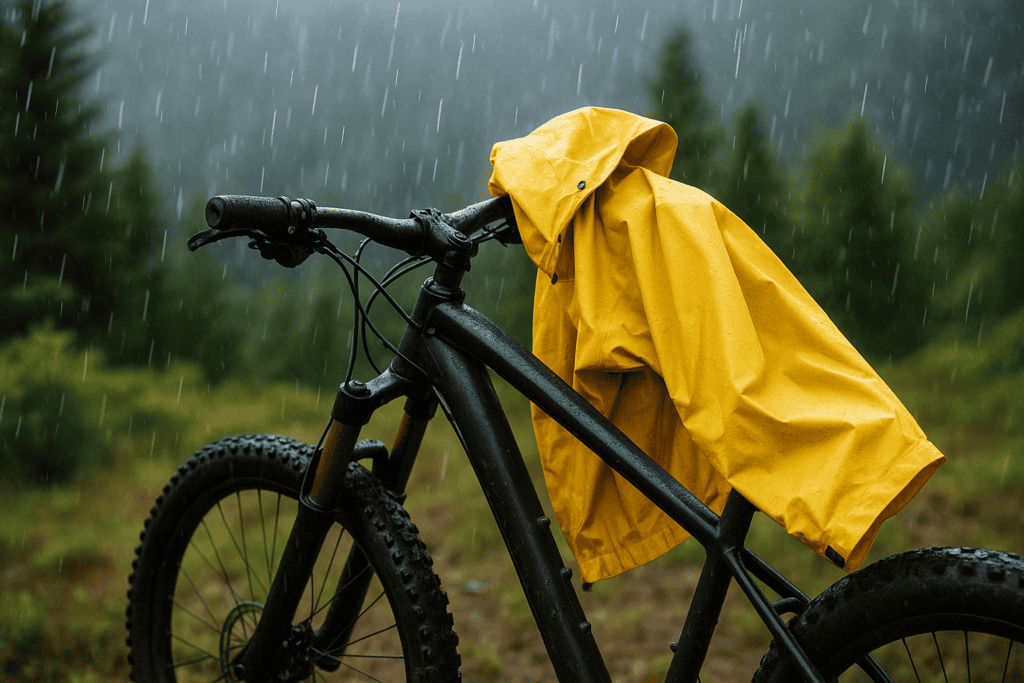
Items For Wet conditions
Pick water-resistant or neoprene gloves for grip and warmth, and carry a dry spare for the ride back. Use merino or waterproof socks to keep feet warmer even when wet. Consider waterproof socks or covers for colder days with frequent puddles.
Run clear or light yellow lenses for low-light forest canopies and storms. Apply anti-fog treatment and carry a microfiber cloth for quick wipes. A front mudguard reduces roost and helps keep lenses clear.
Pack Essentials
Bring a compact towel, spare gloves, and a dry layer to avoid post-ride chills. Pack a small wet lube bottle, multi-tool, and spare brake pads to manage grit-related wear. Include front and rear lights since muddy rides often slow pace and darken visibility.
Riding Techniques for Muddy Conditions
Body Position and Balance
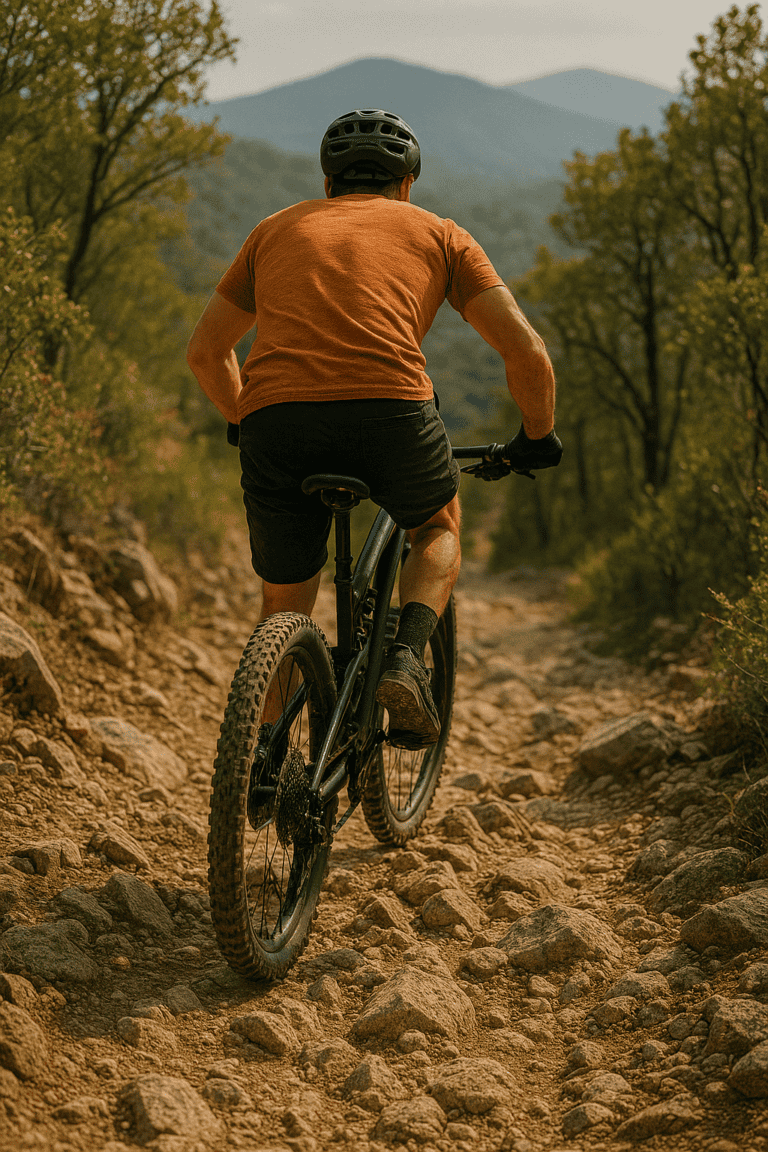
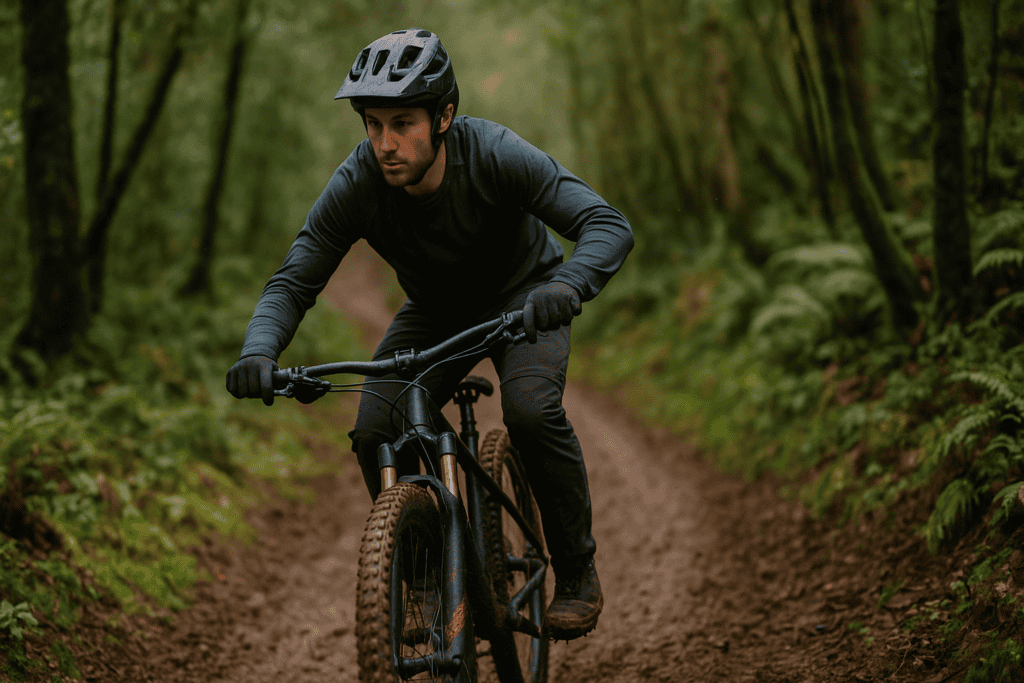
This change is one of the top three things I’d list of muddy riders. Adopt a low, neutral stance with bent elbows and knees so the bike can move underneath you. Keep your weight centered over the bottom bracket to balance front and rear traction. Stay relaxed to absorb slips and avoid overcorrections.
Spin a steady cadence in a lighter gear to limit wheelspin on slick ground. Apply power smoothly through the full pedal stroke instead of mashing. If the rear wheel breaks loose, ease off briefly and rebuild traction before adding power.
Braking Technique
Brake early and in a straight line, then release before turning to maintain grip. Modulate both brakes with light, consistent pressure, giving the front enough load to bite. If a skid starts, momentarily release and reapply smoothly to recover control.
Target firm ground, often higher lines or the trail center, and avoid fragile edges. Cross ruts at right angles or commit to a straight rut rather than fighting out mid-corner. Ride through puddles, not around them, to protect the trail corridor.
Cornering in Mud
Stay seated and slide forward on the saddle to keep both wheels hooked up. Select a gear that lets you spin without surging. If the front wanders, lower your chest and steer with light, steady inputs.
Pick braking zones on firmer patches and apply gentle, consistent pressure. Maintain a neutral stance and scan ahead for traction changes to plan moves. If slowing mid-slope, bias slightly to the rear while adding careful front pressure as grip allows.
Riding roots, rocks, off-camber, and ruts
Square up to wet roots and rocks and unweight slightly to reduce deflection. On off-camber traverses, lower your center of gravity and keep the bike more upright while looking ahead. When committed to a rut, relax and let the bike track until a safe, gradual exit appears.
Walk crossings if depth or current is unclear, and probe with a stick before entering. Shift to an easy gear in advance and pedal smoothly if riding through. Choose hike-a-bike when pedaling would cause rutting, wheelspin, or unnecessary risk.
Trail Etiquette and Environmental Impact
Ride Through the Middle, Be Cautious.
Go straight through puddles and soft sections to preserve the singletrack corridor. And this always depends on conditions and space required. Doing too much will slow down your ride and get vegetation all over it. Keep the original line intact even if it’s messier.
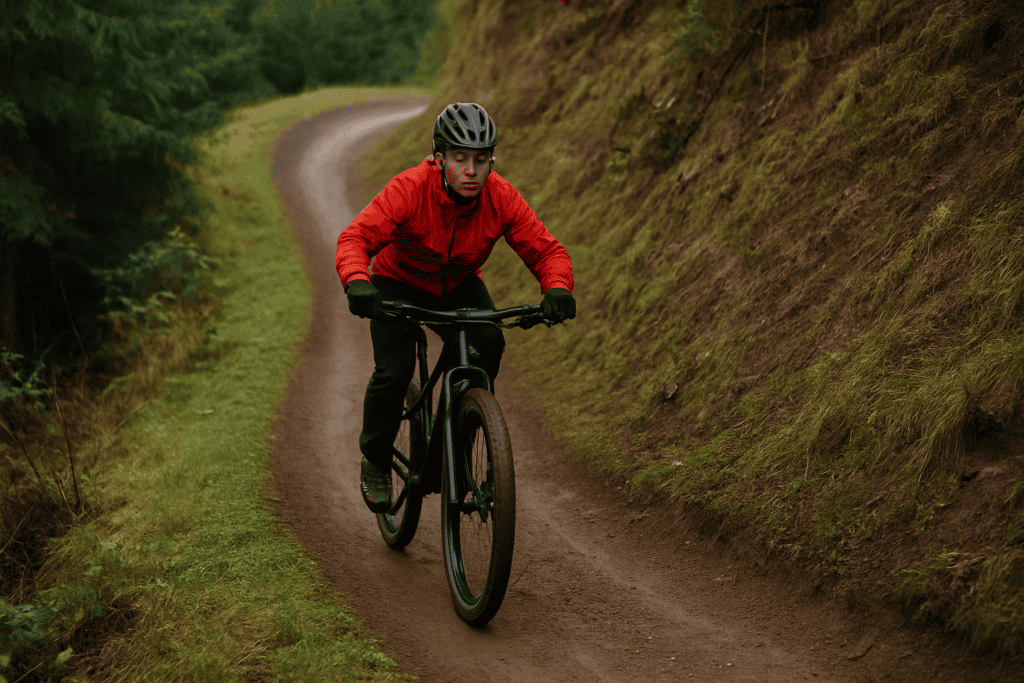
Yield to uphill riders and communicate early and clearly in poor conditions. Keep groups small to reduce impact on fragile tread and ease passing. Space riders to avoid roosting each other and to limit repeated wear on a single line.
Cleaning bikes away from waterways/trailheads
Avoid washing bikes where runoff reaches streams or heavily used trailheads. Clean at designated stations or at home where you can control wastewater and grit. Use minimal, biodegradable cleaners to protect aquatic ecosystems.
Usually they’ll have one outside the trail exit if you’re at a premium MTB trail.
Safety and Comfort
Visibility and eyewear choices + Importance
Wear high-visibility colors and reflective accents to stand out in dim forests and storms. Choose clear or amber lenses and use a visor to deflect spray. Stop briefly to clean lenses rather than riding with obscured vision.
Include waterproofed bandages, an emergency blanket, and nitrile gloves in your kit. Add tire plugs, a quick link, and zip ties to handle common issues quickly. Keep everything in waterproof pouches to ensure functionality when needed.
Post-Ride Bike Care
Rinse vs. pressure wash (protecting bearings and seals)
Use a gentle hose or bucket to loosen and rinse mud without blasting bearings and seals. Avoid direct jets on headsets, bottom brackets, hubs, and pivots. Let mud soak briefly, then brush off to minimize abrasion.
Drivetrain cleaning and re-lubing (wet lube)
Degrease chain, cassette, and chainring, then rinse and dry thoroughly. Reapply wet lube sparingly and wipe excess to limit grit attraction. Check chain wear and address stiff links before your next ride.
Brake pad and rotor inspection
Inspect pad thickness and replace before hitting the backing plate. Clean rotors with isopropyl alcohol to remove film and restore bite. Re-bed new pads with controlled stops for consistent performance.
Suspension seal wipe-down and pivot checks
Wipe fork stanchions and shock shafts clean, then add a drop of suspension fluid to refresh wipers. Check axles and pivots for play and tighten to spec as needed. Schedule service if you feel grinding or see contaminated fluids.
Clothing and shoe care to prevent odor and damage
Rinse mud promptly and avoid soaking gear in dirty water. Wash with technical detergent and air-dry away from high heat to protect membranes. Remove insoles, stuff shoes with newspaper, and dry fully to prevent odor and deformation.
Common Mistakes to Avoid
Riding closed trails or causing rutting
Disregarding closures damages trails and risks broader access restrictions. If your tires leave deep ruts or collect heavy mud, stop and turn back. Choose rockier, sandy, or hardened routes until conditions improve.
Over-inflated tires and harsh suspension
Too much pressure shrinks the contact patch and reduces grip. Overly fast rebound or firm compression causes deflection and loss of control on slick roots. Make small, deliberate adjustments and test on a short section.
Grabbing brakes mid-corner
Hard braking while leaned over breaks traction and digs ruts. Finish braking early and coast or gently add power through the apex. If slowing mid-corner is unavoidable, straighten the bike slightly and modulate lightly.
Skirting puddles and widening trails
Riding around puddles erodes edges and creates costly braids. Go through the middle where the base is firmer and predictable. Maintain steady momentum to limit spin and splash while protecting the corridor.
Skipping post-ride maintenance
Letting mud dry cements grit into moving parts and shortens component life. A quick rinse, lube, and inspection prevent expensive wear and ensure a better next ride. Make cleanup a standard part of every muddy outing.
Follow for More Tips
If this guide helped you see muddy rides in a new light, take what you’ve learned to the trail — and share it. Every mindful rider helps keep our trails alive for the next adventure.
Explore my other guides on mountain bike tips for beginners to keep building confidence in all conditions and this can also extend to all skill levels who want to make sure they have the basics covered.
Ride smart, stay grounded, and remember: mud teaches more than dry dirt ever could. I always say the worst of conditions can show you where you can improve nad grow.