Introduction
If you have ever wondered why two tires that look almost the same can feel completely different on the trail, it all comes down to tread. The shape, size, and spacing of those small rubber knobs that are spotted decide how your bike grips corners, rolls through climbs, and handles every surface in between.
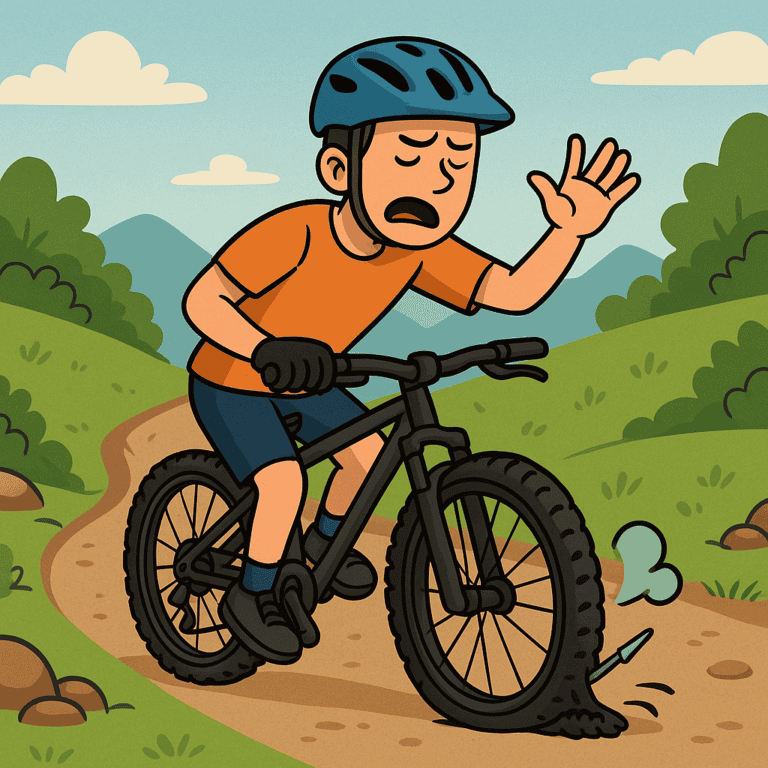
I used to just pick tires that the shop owner chose, but that didn’t quite work out, and I even had some needles go through them over and over again. It took a few sloppy rides and a couple of sketchy turns before I started paying attention to what really matters.
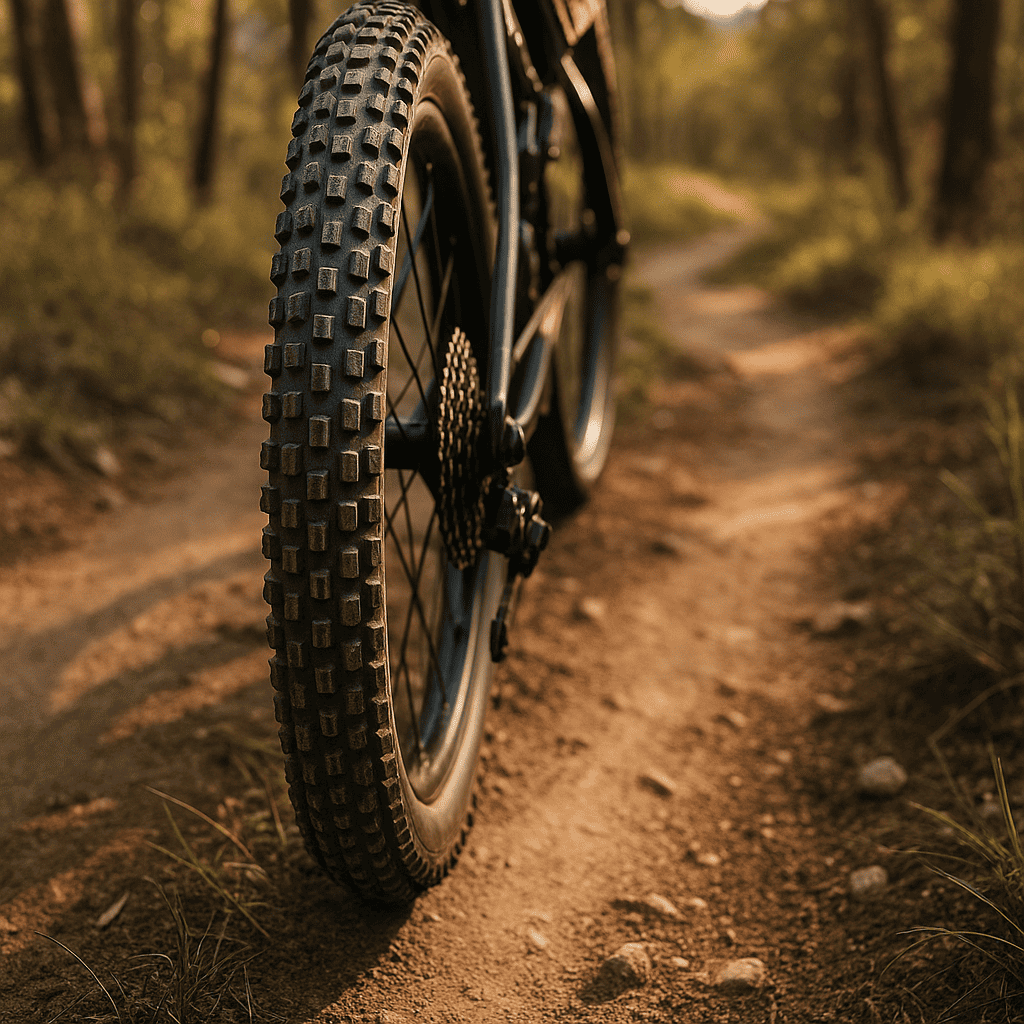
Tread design controls more than just traction. It changes how the bike moves, how it reacts to pressure, and how it performs across terrain. When the right tread is paired with a smart tubeless mountain bike tire setup, a tire pressure guide, and one of the best mountain bike tires for 2025, everything clicks. The bike feels under your control, and you can do way more with a mtb tire tread pattern. Corners feel predictable, speed feels natural, and you stop thinking about grip altogether. You just ride.
How Tread Affects Grip and Rolling Resistance
Finding the Balance Between Speed and Control
For use-case, I did not think the tread could change so much about a ride, and mostly experienced with different bikes, I realized something. I was wrong. The way a tire connects to the ground through its pattern completely transforms the feeling of grip, cornering, and speed. Every trail surface demands something different, a pattern that holds steady on loose rock, another that rolls smooth on hard dirt. Getting it right is the difference between sliding through corners or carving them clean.
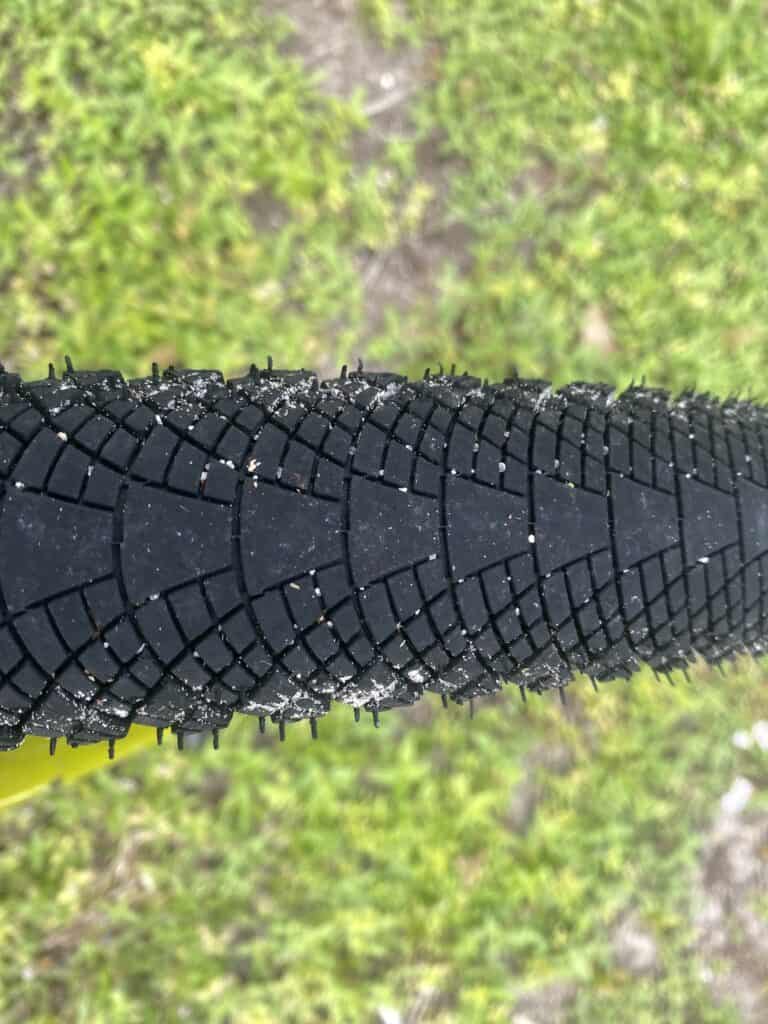
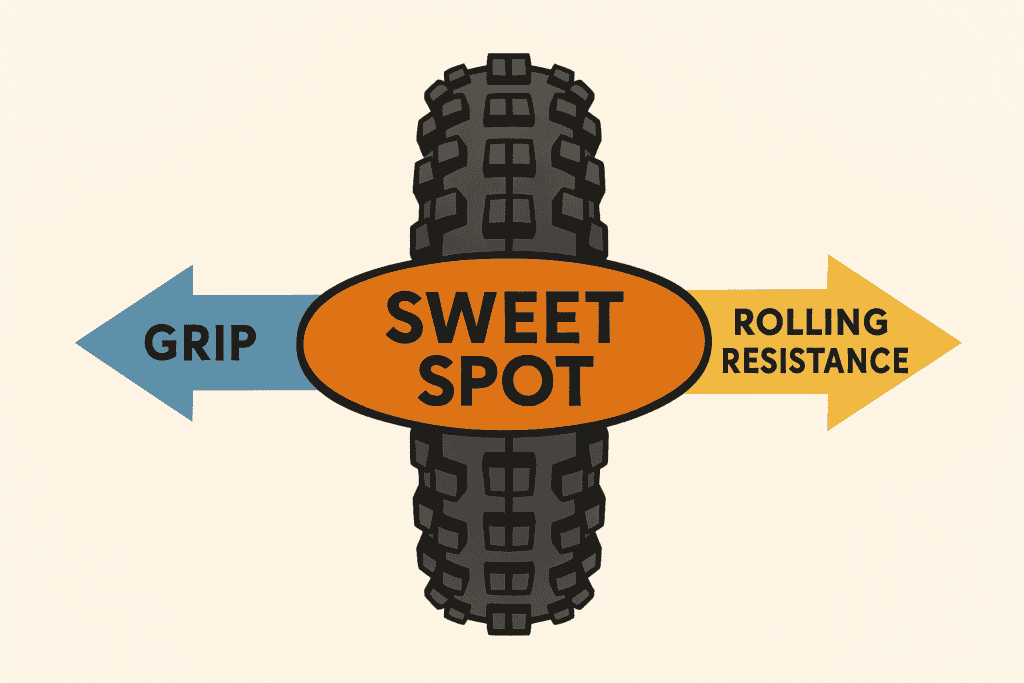
I learned quickly that grip and rolling resistance are two sides of the same coin. The deeper and wider the tread, the more traction you gain, but every extra knob adds drag, and here’s what I mean. That resistance might not sound like much, but after a few miles of climbing, you feel it in your legs. The key is balance, enough grip to stay grounded but not so much that you waste energy on flat sections.
Tread design controls more than just traction. It changes how the bike moves, how it reacts to pressure, and how it performs across terrain. When the right tread is paired with a smart tubeless mountain bike tire setup, the best mountain bike tire pressure. The bike feels fully under your control, and you can do far more with an mtb tire tread pattern. Corners feel predictable, speed feels natural, and you stop thinking about grip altogether. You just ride.
Understanding Grip on the Trail
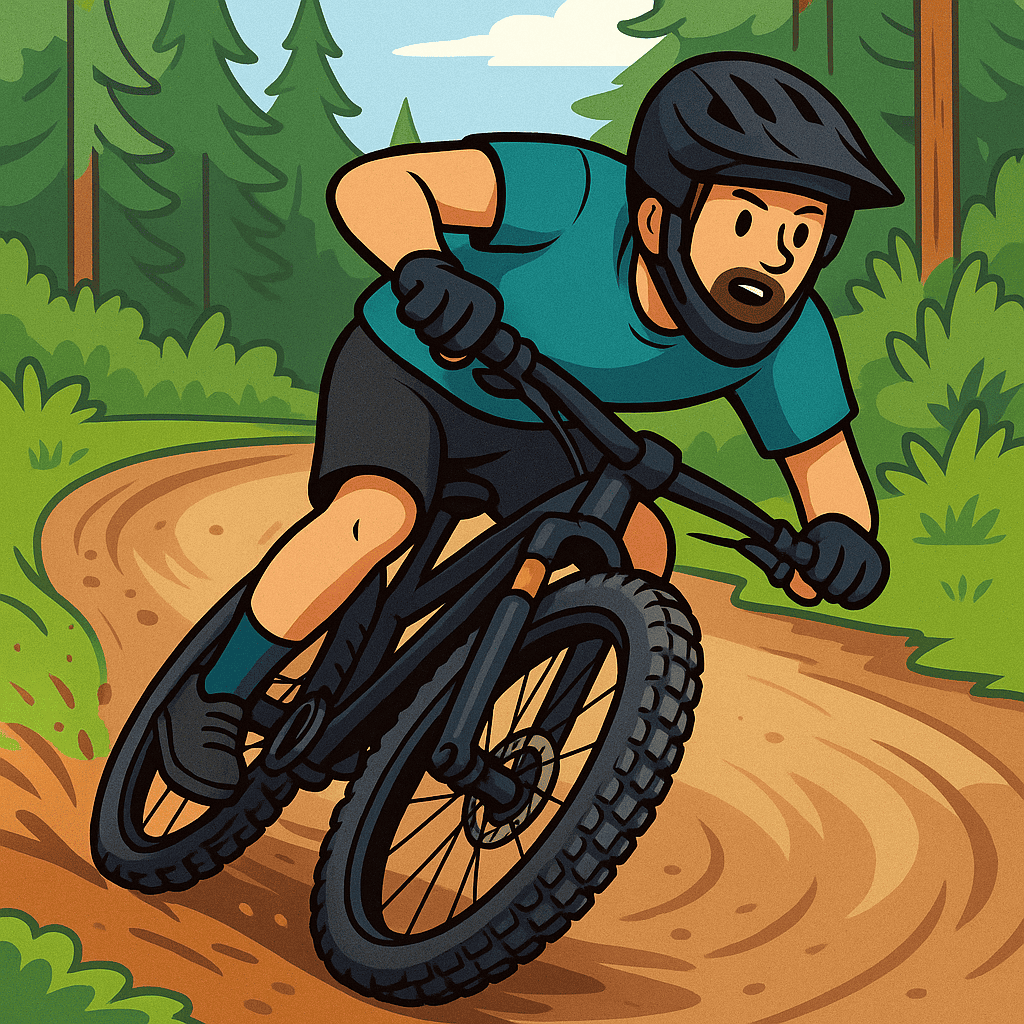
Grip is what keeps you in control when things get unpredictable. It is that steady connection you feel through your pedals when the tire hooks into the terrain instead of sliding across it. The center knobs are where most of this happens. They bite into the surface during acceleration and braking. The shoulder knobs, on the other hand, take over in corners, especially when you lean the bike hard. That handoff between the two zones determines how confident you feel entering a turn.
Rolling Resistance and Real World Speed
Rolling resistance sounds technical, but you notice it right away when you are climbing or pedaling across flat ground. A tread that is too aggressive drags with every rotation, and it almost feels like you are riding through sand. A pattern that is too shallow can spin out on loose terrain, forcing you to waste energy catching traction again. I found that the best tires balance both a strong center for speed and spaced shoulders for control. It feels natural, like the bike is breathing instead of fighting the trail.
Putting It All Together
Every rider eventually finds their own sweet spot between grip and rolling resistance. Some prefer the sticky feel of deep tread that grabs everything, others chase the flow of a faster, smoother roll. I have learned to listen to what my tires are telling me. If they hum loudly on packed dirt, they are overbuilt for the surface. If the rear wheel slips on climbs, it needs a deeper bite or lower pressure. Once you start noticing those small details, you begin to read the trail instead of just reacting to it.
Matching Tread to Terrain and Riding Style
Reading the Trail Before the Ride
Before you even touch the tires, the trail tells you what kind of tread you need. The surface texture, moisture, and steepness all shape the decision. I learned that the hard way after showing up to a muddy park with slick tires meant for dry terrain. I spent half the day sliding sideways instead of moving forward. Now, before every ride, I run my hand through the dirt and look at how it packs. If it clumps together, I go for open tread. If it turns to dust, I stay with tight, low knobs that roll clean.
Hard and Dry Trails
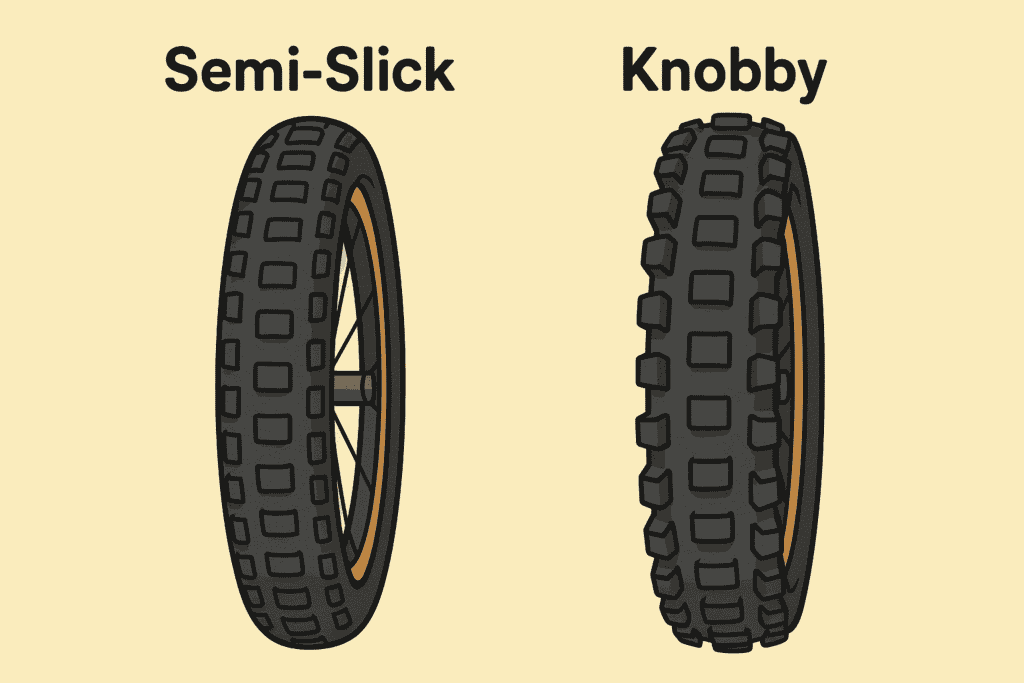
On firm and dry trails, less is often more. A compact tread with smaller knobs keeps things fast and predictable. I love how smooth these tires feel when pedaling across hard dirt or rocky singletrack. The grip is consistent without that heavy rolling drag. Tires with a semi-slick or intermediate pattern usually perform best here in Florida because they let you maintain speed while still giving enough bite for turns. The center stays steady, and the shoulders step in only when you need them.
Wet or Muddy Conditions
Mud changes everything. Water turns even good trails into slick puzzles that test your patience. For wet rides, you need tread that clears fast. The taller the knobs, the better they dig through the muck to find solid ground. I used to think any knobby tire worked in the rain until I realized how fast mud can clog small tread gaps. After a few spins with no traction, I switched to open, spiked patterns and never looked back. The difference is unreal. You stay upright and in control even when the trail looks like soup.
Adapting to Your Style
Terrain is only half the equation. Your riding style fills in the rest. If you brake late and corner hard, go for wider, deeper tread with tough shoulders. If you prefer flowy trails and smooth pedaling, you will love something tighter and lighter. I have seen friends on full suspension bikes running fast, rolling tires to climb easier, while others load up on grip for downhill stability. There is no perfect tread for everyone, but there is a perfect tread for you once you pay attention to what feels right under your wheels.
Finding What Works
After enough rides, you start building a mental map of what works best on which trails. You stop copying what other riders use and start trusting your own notes. Keep it simple, ride the same route with different setups, and write down how the bike behaves. The moment you hit that balance between grip and glide, you will know. And if you are still exploring which models hold that balance, mountain bike tires is a great place to start your search.
Conclusion
Tread patterns are not just small details; they are the foundation of how your bike connects to the earth. Every ride, every turn, and every climb teaches you something about how the tire reacts under pressure. Once you learn how grip and rolling resistance change across terrain, you stop guessing and start choosing with confidence.