Have you ever spent some time trying for mtb derailleur adjustment mid-ride? I’ve tried adjusting mine in multiple different ways and what I discovered will surprise you.
I found that three principles apply: start with a clean foundation, understand what each screw and adjustment actually controls, and make changes deliberately. And it’s not very hard to learn these things if you don’t know. There’s small differences in mountain bikes attributed to my mountain bike tires guide that will talk about how it contributes to the different derailleurs being used. Anyone can do it with simple tools, but also consider these simple issues you might’ve had which may help, and why you would need to replace one.
- You’ve had a bent derailleur and weren’t able to bend it back.
- Your clutch got bent on the chain or the rest of the derailleur itself.
- You’re experiencing random shifting at times.
I’ve experienced all of these on multiple different bikes, non-mountain, and my current setup.
However, after some trials, I’ve learned there are simple ways to follow any issue and make the setup for any bike super simple and standard to never make it again.
How to Understand Your MTB Drivetrain
A well-adjusted drivetrain delivers easy shifting, chain security, and efficiency on rough trails. Mountain bike drivetrains face mud, impacts, and wide-range cassettes, so precision matters. Knowing the parts and their limits helps you adjust once and ride longer between tune-ups.
Your rear derailleur guides the chain across cassette cogs, with a screw look. On MTB derailleurs, a clutch reduces chain slap and drops by adding cage resistance.
Most modern MTBs run 1x drivetrains for simplicity, the thing on the left of the handlebar and the right with the speeds. Generally older or XC-focused bikes may use 2x/3x for tighter gear steps, but add complexity and front shifting issues.
Match your shifter and derailleur brand and speed (e.g., 11-speed to 11-speed) to ensure correct cable pull and indexing. Confirm derailleur capacity and max cog rating fit your cassette range, or shifting will suffer, and parts can be damaged. Choose your cage length (short, medium, long) to match chain wrap needs; 1x with big cassettes often uses medium or long cages.
What are the Best MTB Derailleur Brands for Reliable Shifting
These are the drivetrain manufacturers that pair best with the principles outlined above.
Although not necessary to replace, this is trivial to even use a good bike that you have a solid and stable derailleur, as if it is cheap you’ll notice big issues with your chain and small damage could hurt.
Shimano Precision, Longevity & Quiet Drivetrains
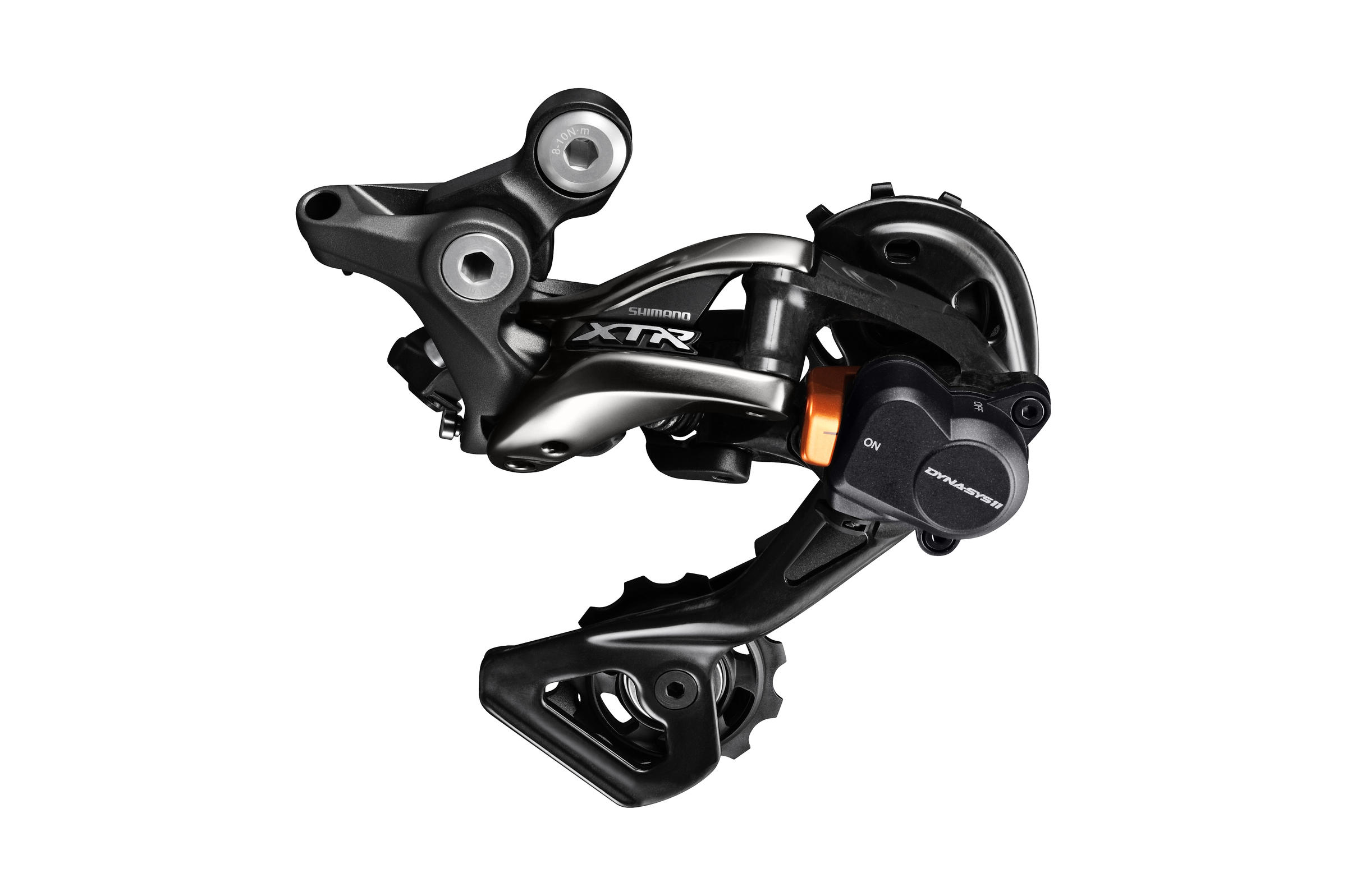
Shimano derailleurs (Deore → SLX → XT → XTR) are known for incredibly consistent indexing and quiet running under load. A surprise is that the Shadow+ clutch system is easily tunable and serviceable, making it ideal for riders who value quiet drivetrains and long-term reliability.
Shimano also provides precise gap tools, making a setup straightforward even for beginners.
Best for: riders who want smooth, predictable shifting and don’t mind following exact setup specs.
SRAM – Wide Range, Strong Chain Control & Modern 1x Leadership
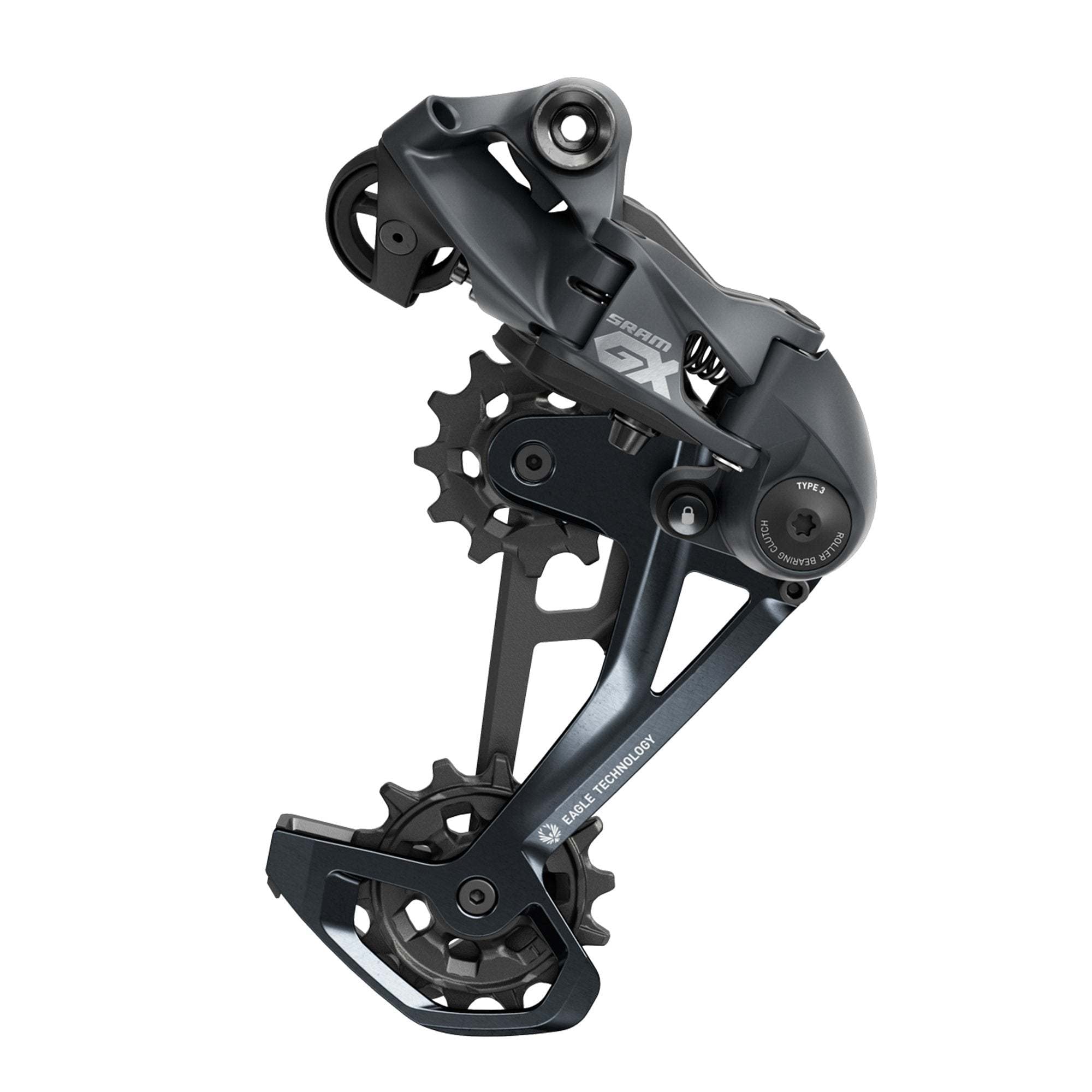
SRAM’s new direct-mount derailleurs eliminate the hanger, improving alignment and durability. Their setup uses printed guides on the derailleur and standardized chain lengths, making tuning extremely consistent.
T-Type systems integrate shifting, cassette, and chain design into one holistic platform.
Best for: riders with modern frames who want the most advanced, stiff, and crash-resistant system.
Tools and Prep for MTB Derailleur Adjustment
Without too much surprise, a proper toolset could also protect our derailleur. It’s shocking how minor adjustments could save a whole $40 – $100 on a proper derailleur.
Cleanliness and stability reduce misdiagnosis caused by grit or misaligned wheels. Assemble what you need first so you can work methodically.
Essential Tools
You’ll need quality hex keys and Torx bits (often T25) for derailleur and rotor bolts. Use sharp cable cutters for clean cable ends and ferrules, and a chain checker to measure wear. A derailleur hanger alignment tool is the most valuable accuracy upgrade, as a straight hanger is the foundation of good shifting.
Bike Setup
Place the bike in a work stand and secure it so the drivetrain spins freely. Clean the chain, cassette, and derailleur to remove grit that can mimic poor adjustment.
Confirm the rear wheel is fully seated with the axle tightened to spec to avoid false indexing issues.
Troubleshooting Common MTB Shifting Problems
Target the symptom, verify the cause, and fix the root problem rather than chasing adjustments. Many issues come from contamination, wear, or alignment. Make one change at a time and re-test.
Skipping gears and ghost shifting
Ghost shifts on rough trails often indicate a bent hanger, contaminated housing, or loose cable clamp.
Check wheel seating and cassette lockring torque before touching indexing. Realign the hanger, replace housing if sticky, and re-index to eliminate random shifts.
Slow upshifts to larger cogs usually mean not enough cable tension or a too-large gap.
On-Trail Quick Fixes for Mountain Biking
Quick trailside tweaks can salvage a ride when perfect tools aren’t available. Make conservative changes and note what you adjusted for a proper fix later. Prioritize safety and drivetrain preservation over perfect performance.
Barrel adjuster tweaks
If the shifts lag going up the cassette, add small increments of tension via the shifter barrel adjuster.
If downshifts hesitate or the chain chatters, reduce tension a quarter-turn at a time. Reassess after each click to avoid overshooting the sweet spot.
Emergency limit screw adjustment
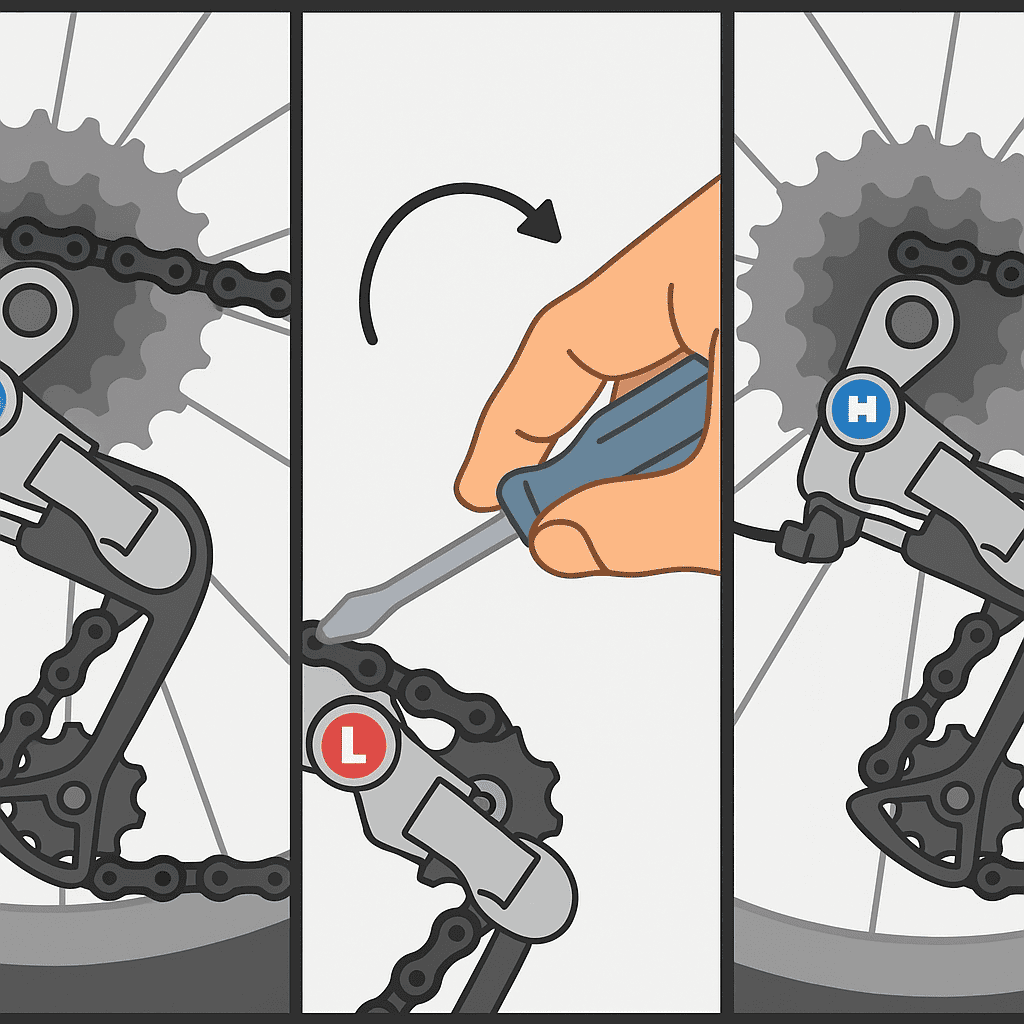
If the chain threatens to derail into the spokes, turn the L-limit clockwise to restrict travel immediately. If it wants to fall off the small cog, tighten the H-limit slightly to contain it. These are temporary safeguards until you can re-index and set B-gap properly.
Temporary fixes for a bent hanger
If a crash bends the hanger, carefully hand-straighten it by eye so the pulley roughly aligns under the cogs. Avoid large forces that could snap it, and ride gently in middle gears. Replace or realign with a proper tool before your next hard ride.
Chain quick-link and trailside cable fixes
Carry a spare quick-link and a short section of housing and inner cable to restore shifting after a snap. If a cable frays at the shifter, you can anchor a shortened cable at the derailleur and set one usable gear. Lube a noisy chain lightly if conditions are dry and squeaky to prevent premature wear..
What to Expect After Proper Adjustment
Now that you understand how each part of the derailleur system works, it’s time to focus on what truly separates a decent setup from a perfectly tuned drivetrain. The difference comes down to how consistently each adjustment holds under real riding conditions and how well the system responds when the trail gets rough.
After dialing in dozens of MTB drivetrains, I’ve identified the four factors that actually determine whether your shifting feels flawless or frustrating:
Precise Alignment:
A straight hanger and correctly positioned limits are the foundation. Even a slight bend creates ghost shifts, hesitation, and noise that no amount of barrel adjusting can fix.
Accurate Cable Tension:
The best setups maintain consistent tension across the entire cassette. Clean housing, proper routing, and exact tension changes make the difference between crisp clicks and sluggish shifts.
Correct B-Gap and Chain Control:
Modern wide-range cassettes rely heavily on proper B-tension. Get this right and your shifts will feel smooth and confident—even on steep climbs or rough descents.
Clutch Performance and Maintenance:
A healthy clutch keeps the chain stable when the trail gets violent. Proper lubrication, correct friction settings, and periodic service prevent drops and chain slap before they start.