What You’ll Achieve
True Measurable Results! Improve your mountain biking skills, how you corner, line choice, and many different decisions for smooth riding. Overall, think about it as a plan for beginner, intermediate, and advanced riders who are ready to take it to the next level. You’ll get a mountain bike training plan that blends fitness, strength, and MTB skills training. You can choose time commitments of three, four, or five-plus days per week and progress on your schedule.
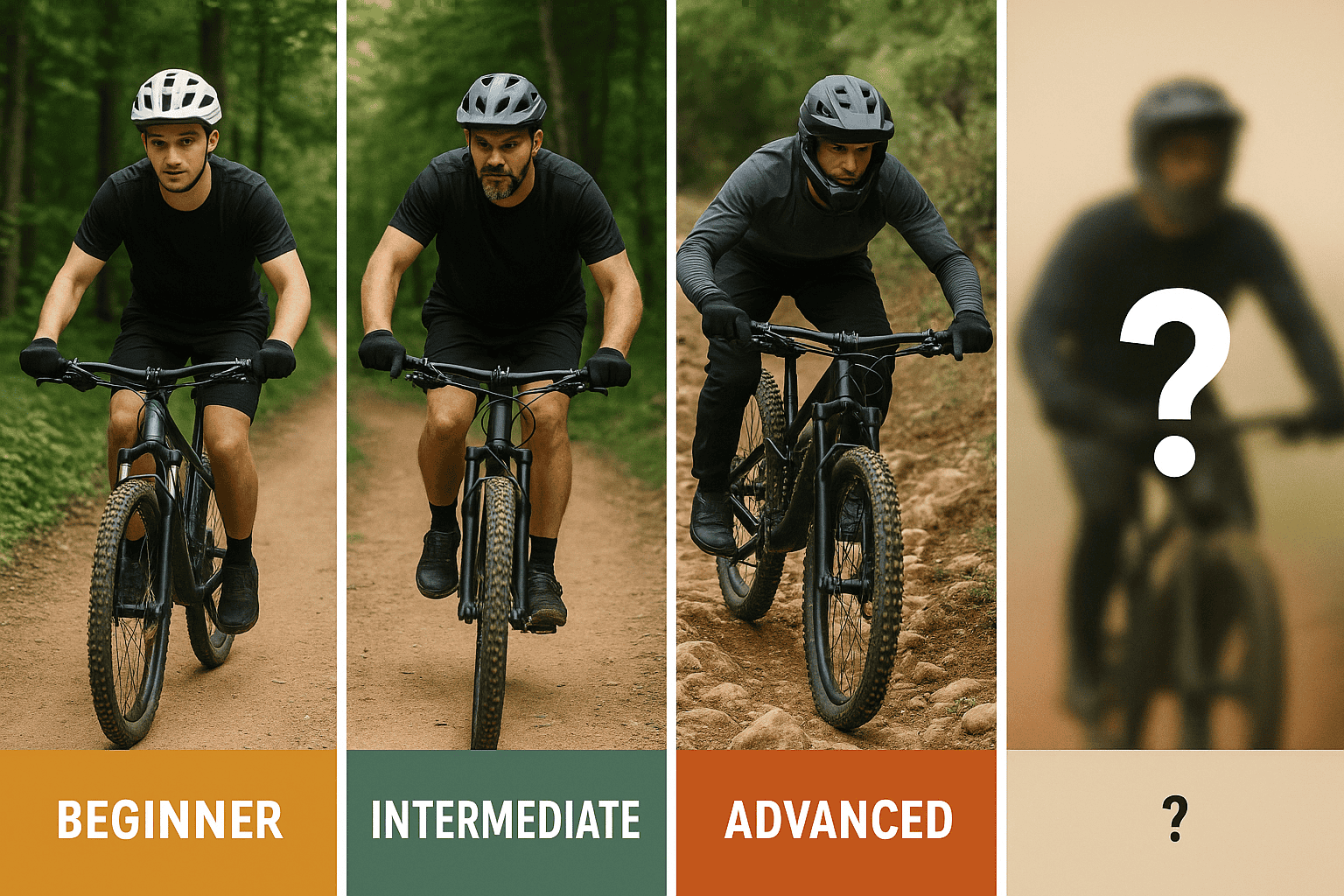
To break it down for beginners, they’ll now have an aerobic base, pick up on safe technique, and gain strength and confidence in eight to twelve weeks. Intermediates will be able to refine their positioning and apex, plus refine their technical skills. Advanced riders will sharpen peak power, improve repeatability for race efforts, and optimize tapering and recovery for key events.
The Demands of Mountain Biking
A complete mountain biking training plan targets all energy systems: your aerobic base <– endurance for long rides, your threshold for sustained climbs, VO2 for your maximum oxygen uptake, and anaerobic power for sprints and steep surges. You also need repeatability, so recovery between hard efforts improves via structured intervals and adequate fueling. Matching workouts to terrain keeps the plan specific and transferable to trails.
Strength, power, and mobility support durability, speed, and control on technical features. Strength training for mountain biking emphasizes your inner core or core bracing, leg strength, and upper body pulling and grip, while others help with accelerations and features. Mobility in the hips, ankles, and thoracic spine allows better body positioning, traction, and breathing.

Technical skills and handling determine how efficiently you translate fitness to speed. Cornering, braking, line choice, and body positioning save massive time and energy when paired with sound pacing and mental focus. The best MTB training plan integrates physical and skills sessions so you learn to apply power while staying relaxed, precise, and safe.
Baseline Testing and Training Zones
Start with a power-based FTP or CP test, or a trainer ramp test, to set training zones for endurance, tempo or sweet spot, threshold, VO2, and anaerobic efforts. If you don’t have a power meter, use a heart rate threshold test on a steady climb to anchor HR zones and track progress. Combine HR or power with RPE so you can pace accurately on any terrain.
Use a simple RPE scale from one to ten where two to three is very easy, four to five is endurance, six to seven is tempo or sweet spot, eight is threshold, nine is VO2, and ten is all-out anaerobic. Calibrate RPE to your zones during tests and the first two weeks of training. Check drift between power and HR to monitor aerobic efficiency and fatigue.
Complete a skills audit to target your MTB skills training. Rate your cornering, braking and traction control, climbing technique and switchbacks, and descending including line choice, drops, and jumps. Pair each weak area with a weekly drill so you practice deliberately and measure improvement on familiar trail sections.
Key On-Bike Workouts
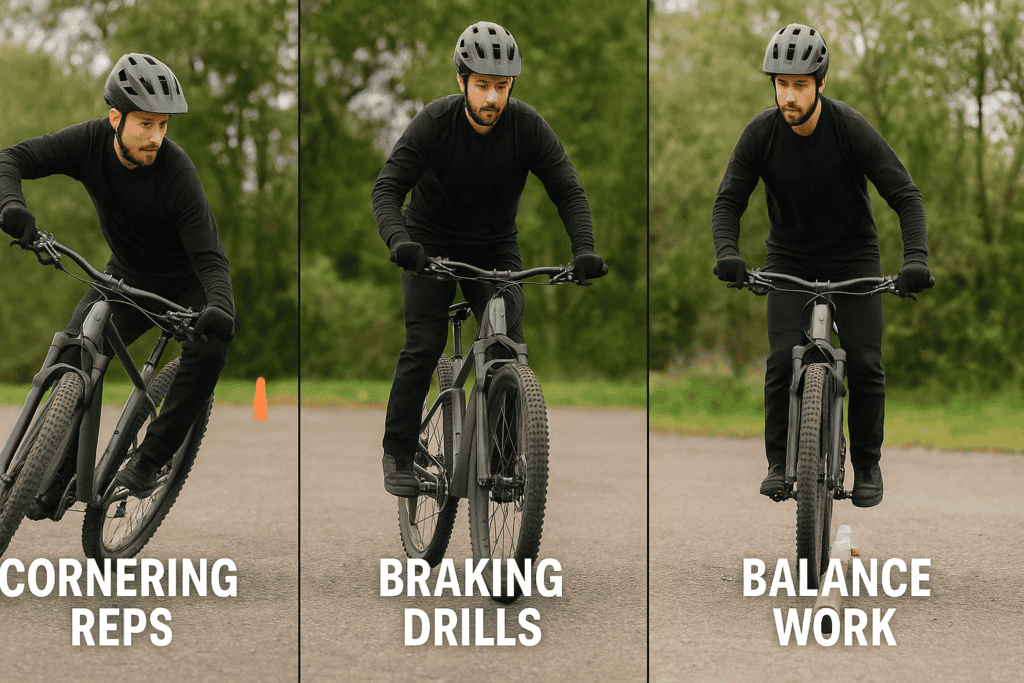
I have a couple of ideas that I’ve picked up while mountain biking and learning more about the sport. Endurance zones develop your aerobic base and grow your endurance and recovery capacity for all MTB disciplines. Ride sixty to one hundred fifty minutes steady at a steady calm pace to where you can still talk, keeping cadence varied to reflect terrain. Embed skills by adding cornering reps, braking drills, and balance work on mellow features while staying aerobic.
Sweet spot and threshold climbs raise sustainable power for XC training and long trail ascents. Do two to four intervals of eight to twenty minutes at upper tempo to threshold with equal or half recovery, ideally on steady grades. Focus on smooth torque, seated and standing changes, and breathing control to maintain pace over uneven terrain.
As I mentioned before, more for intermediate or advanced riders, VO2 <- maximum oxygen intakes improve oxygen uptake and punch for short climbs and repeated efforts. Complete four to six repeats of two to four minutes hard at around race pace for steep efforts, with equal recovery, keeping form tight on variable surfaces. For anaerobic or sprint repeats, hit six to ten efforts of ten to thirty seconds all-out with long recovery, practicing gear choice and bike body separation.
Technical skills sessions accelerate handling improvements when treated like intervals. Warm up, then do short sets of cornering with consistent entry speed and vision, braking drills to the limit of traction, and repeated lines on the same feature to refine body position. Finish by integrating skills into a short trail lap at moderate intensity to cement learning.
Strength and Mobility for MTB
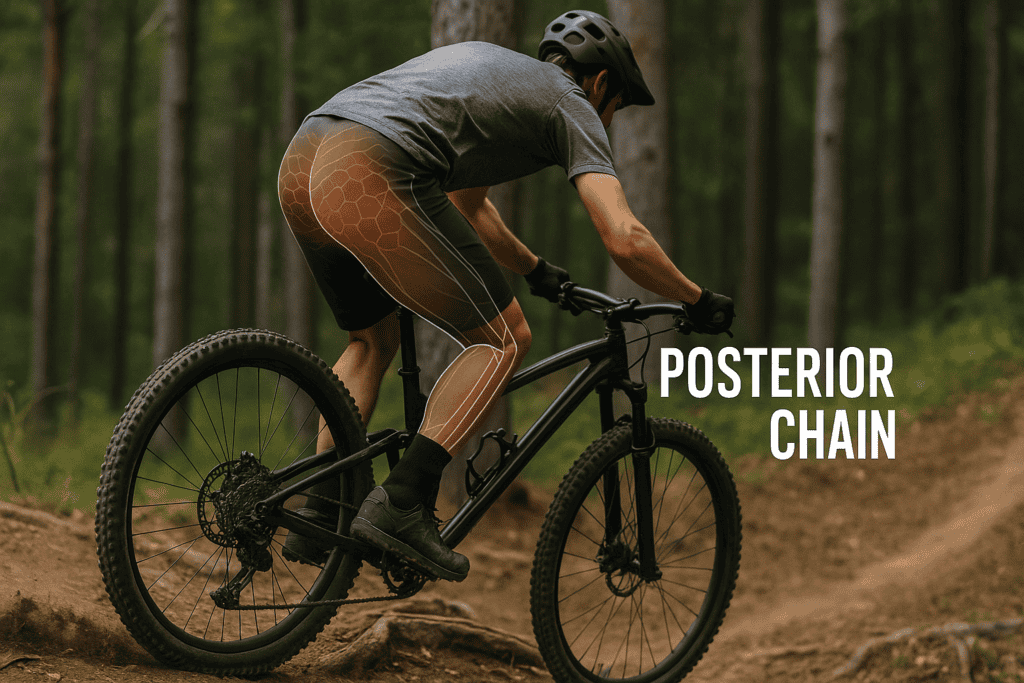
As you get better, you’ll start to prioritize core bracing, posterior chain, and single-leg strength to produce power and resist fatigue. Key lifts include hinge patterns like deadlifts or hip hinges, squats or step-ups, split squats or lunges, and rowing variations for scapular control. Train two times per week for forty to fifty minutes with moderate loads and crisp technique.
Upper body and grip endurance matter for downhill training and enduro stages. Use pull-ups or assisted pulls, push-ups or dumbbell presses, rows, face pulls, and farmer carries to build stable shoulders and strong hands. Keep reps in moderate ranges and stop one to two reps shy of failure to preserve bar control on the bike.
Plyometrics and power work improve acceleration, pump, and jumping. Add box jumps, broad jumps, lateral bounds, and med-ball throws after the warm-up for three to five sets of low reps with full recovery. Mobility should target hips, ankles, and thoracic spine daily with concise flows so you can achieve neutral, low, and dynamic positions on the bike.
Skills Training and Drills
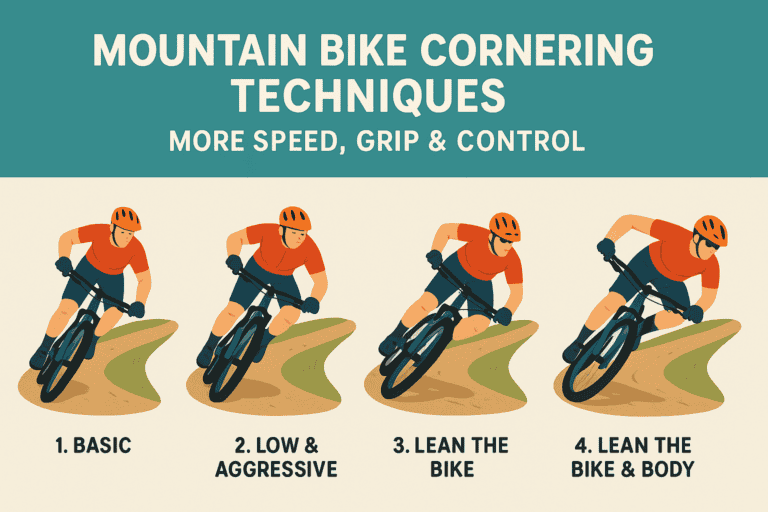
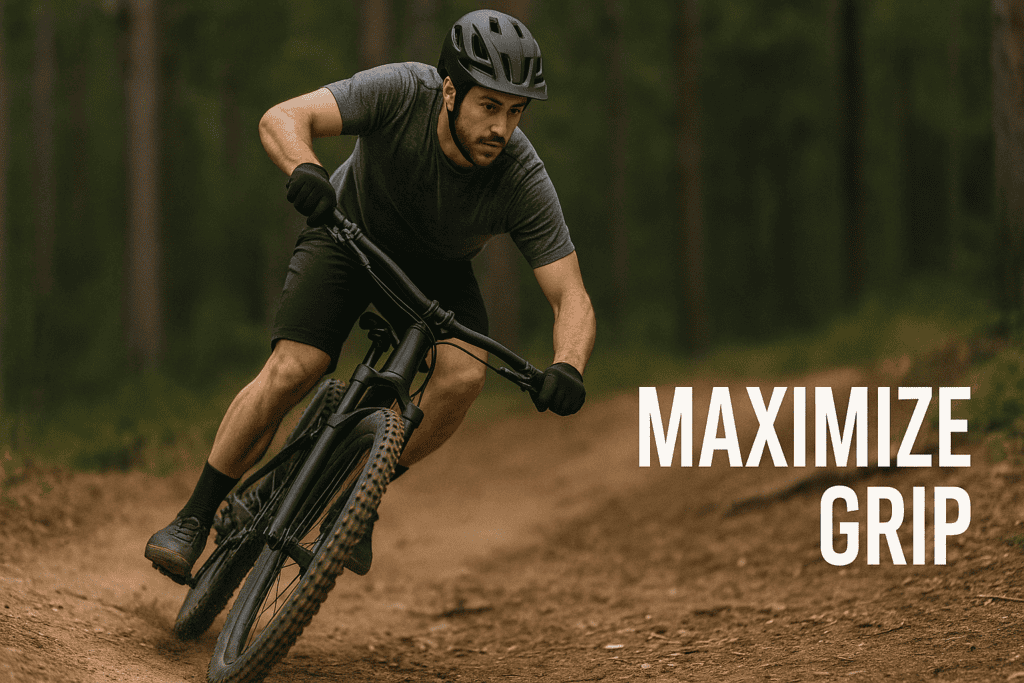
What comes to mind when cornering is the view right before the turn, most importantly, having that low body position to be able to assume that angle, and outside pedal pressure. Practice entry braking before the turn, eyes to exit, and progressive lean and countersteer while keeping the bike leaned more than the body. Run the same corner ten to fifteen times to feel traction build and speed increase without extra effort.
Braking and traction management are about modulation, timing, and body weight. Use front brake progressively while staying centered and low, then release into turns to maximize grip. On loose descents, test threshold braking in a straight line to learn the point before lock-up and how to recover if it happens.
Climbing technique improves with seated torque, smooth cadence, and front wheel lightness on step-ups and switchbacks. Practice figure-eight turns on a slight incline, ratcheting pedals, and micro front wheel lifts to clear roots while seated. For descending, work on attack position, scanning ahead, line choice, and progressive drops or roll-downs before jump progressions.
Structure sessions with a ten-minute warm-up, twenty to thirty minutes of focused drills, and ten to fifteen minutes of integration on trail. Keep speed controlled and repeat features to standardize learning before adding pace. Finish with a brief debrief and one to two notes on what to improve next time.
Nutrition and Hydration
Daily MTB nutrition should prioritize carbohydrates for training, protein for recovery, and healthy fats for overall health. Aim for consistent meals that include complex carbs, lean proteins, and colorful plants, and time a carb-rich snack one to two hours pre-ride. Hydrate steadily across the day so you start sessions topped up.
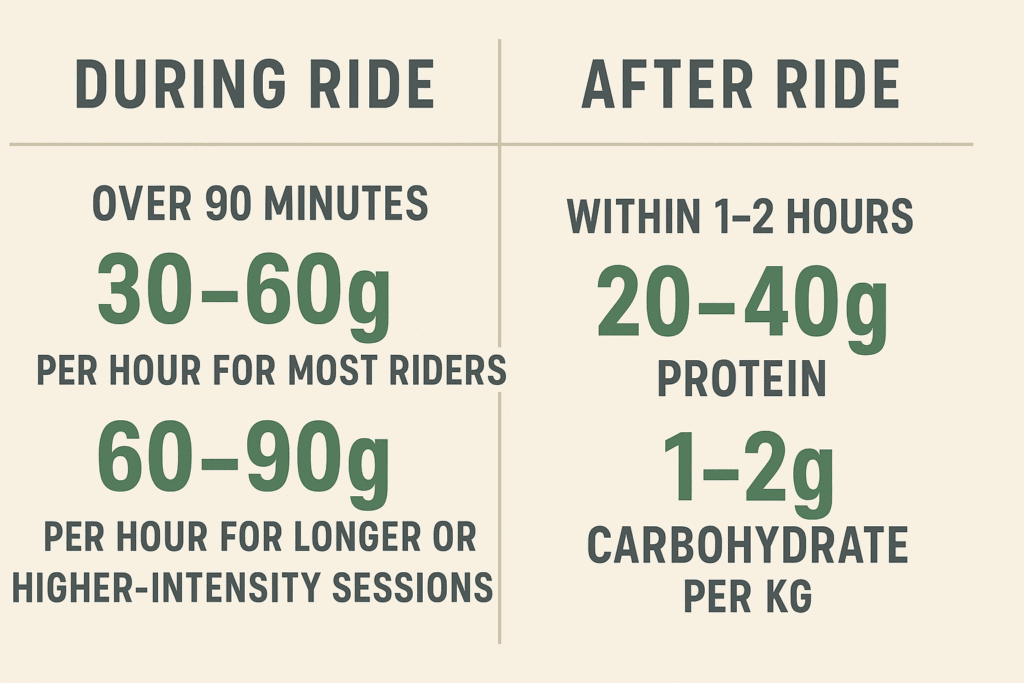
Hydration needs vary with heat and intensity, but most riders benefit from five hundred to seven hundred fifty milliliters per hour with electrolytes. Use sodium in the range of five hundred to one thousand milligrams per liter, depending on sweat rate and climate. Practice your race fueling and hydration during key MTB workouts so your gut is trained for event demands.
Sample Training Plans
8-Week Beginner MTB Plan (3 rides + 2 strength/week)
Weeks one to four focus on aerobic base, movement quality, and fundamental skills. Do one endurance ride of sixty to ninety minutes with skills drills, one sweet spot intro session like two by eight minutes at moderate-hard, and one longer trail ride at easy pace. Add two short strength sessions emphasizing hinge, squat, row, and core, plus daily five to ten minute mobility.
Weeks five to eight add progression with longer sweet spot or threshold segments and a short VO2 set. Aim for one endurance ride of ninety to one hundred twenty minutes, one intensity session like three by ten minutes sweet spot or four by three minutes VO2, and one skills ride with repeated features. Keep strength twice per week with slightly heavier loads and finish week eight with a lighter deload and a short test.
12-Week Intermediate XC/Trail Plan (4–5 rides + 2 strength/week)
Base for weeks one to four builds aerobic time and sweet spot efficiency with a weekly long ride of two to three hours. Add one sweet spot session such as three by twelve to fifteen minutes, one skills ride, and one easy endurance recovery ride, with two strength sessions supporting single-leg stability and pulling strength. Mobility runs daily and one full rest day anchors the week.
Build for weeks five to ten raises threshold and VO2 with one threshold workout like four by eight to ten minutes and one VO2 workout like five by three to four minutes. Keep one endurance ride and one skills-integrated trail session focused on cornering and descending under fatigue. Strength reduces to maintenance loads while plyo and power moves are kept brief and sharp.
Peak and taper for weeks eleven to twelve cut volume by thirty to forty percent while keeping short race-pace efforts. Do one short threshold set, one skills opener with a few sprints, and one endurance spin, then rest before key events. Retest FTP or HR zones after your event or in week thirteen to recalibrate the next block.
8-Week Enduro/Downhill Focus (intensity blocks, skills priority, strength)
This block emphasizes repeatable high-intensity efforts, technical precision, and robustness. Each week includes a high-quality VO2 or anaerobic day like eight by thirty seconds on or thirty seconds off, a technical skills day on enduro or DH terrain, and a mixed trail day practicing pacing and line choice. Strength remains twice per week with posterior chain, upper pulling, and grip, and one mobility or recovery day keeps fatigue in check.
Progression increases the number of intervals and feature complexity while keeping total ride time manageable. Add plyometrics early in sessions to maintain power and pop for jumps and compressions. Every fourth week deloads by reducing interval count and skills session intensity while reinforcing fundamentals.
In weeks seven to eight, include race-pace lap simulations of five to fifteen minutes with full recoveries to sharpen pacing and decision-making. Keep bike setup consistent while you rehearse tire pressure, suspension, and protection. Finish with a light taper into a target weekend of timed runs or races.
Indoor/Trainer Variant (bad weather/time-crunched)
Use the trainer for structured endurance, sweet spot, threshold, and VO2 work while keeping skills alive with short off-bike drills. Do one endurance spin of forty-five to sixty minutes, one sweet spot or threshold session like over-unders, and one VO2 session weekly when tight on time. Add two short strength sessions and micro skills like track stands, braking modulation on a safe surface, and mobility daily.
Keep intensity crisp and limit trainer time to focused intervals to reduce mental fatigue. When weather breaks, swap one indoor session for a skills-focused outdoor ride. Retest every six to eight weeks with a ramp test to maintain accurate zones for your MTB training plan.
Resources and Printable Plan
Use the sample plans above as your printable mountain bike training plan by copying the appropriate template and week structure into a document and printing it. Keep a simple weekly checklist of rides, strength sessions, mobility, and skills drills to make execution easy. For further depth, build a personal workout library of your favorite endurance routes, interval climbs, and skills features so you can repeat and measure progress.