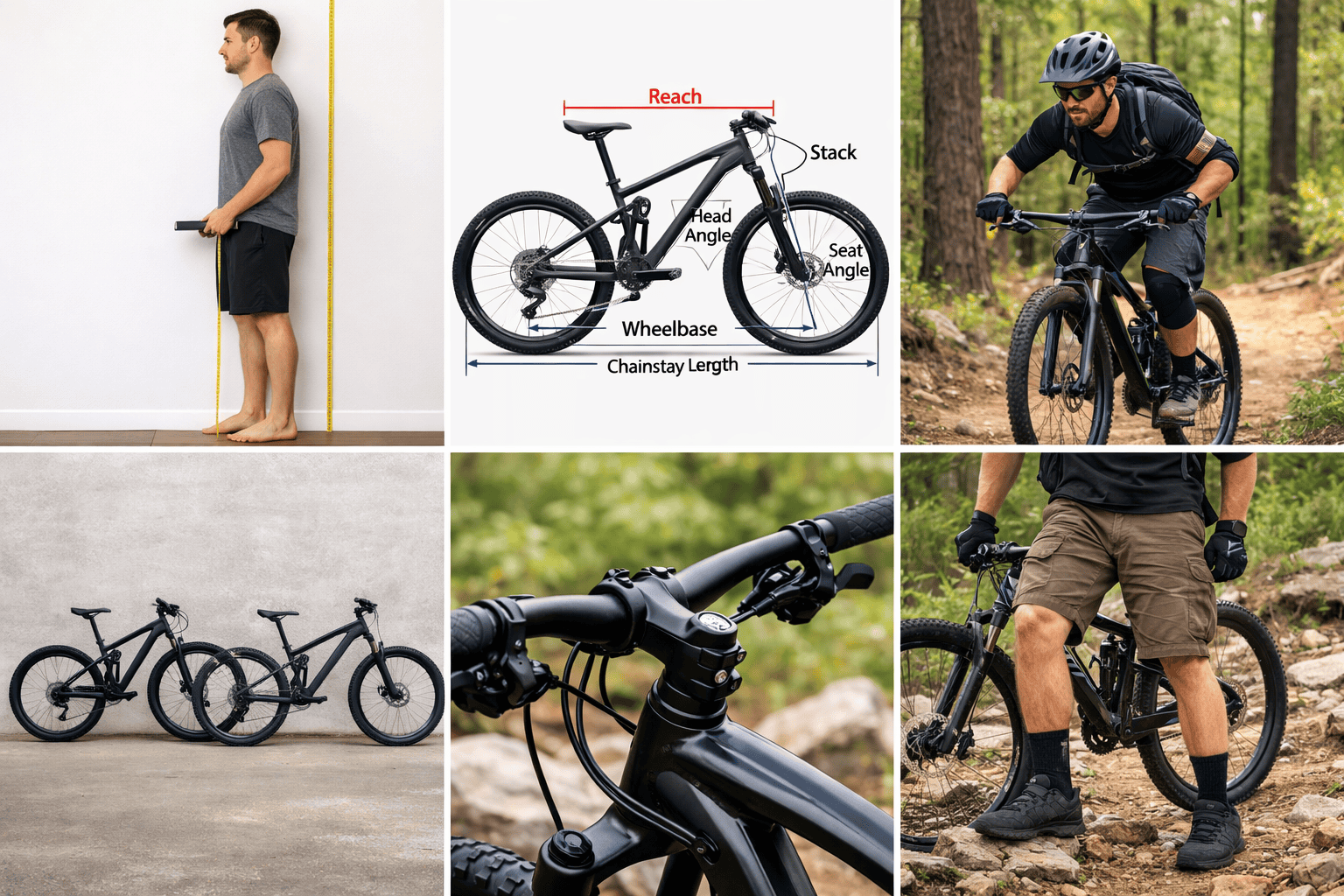
Ever been confused about bike sizing isn’t just about height. Two riders can be the same height and feel completely different on the same frame and the reason why is torso length.
There’s a thing where riders with longer torsos tend to feel more balanced on bikes with a longer effective top tube or slightly more reach. And you’ll see what it looks like a little bit further in the article, shorter torsos usually prefer a more compact cockpit so they don’t feel stretched out or locked into position.
Flexibility also plays a role here. Limited hip or hamstring mobility can make aggressive, low front ends uncomfortable over time, especially on long rides.
Things this affects in real life:
- How far you feel stretched when standing and descending
- Whether your lower back feels tight after rides
- How comfortable does an aggressive riding position feels
Learn how to choose your mountain bike for 2026, uniquely for you.
Mountain Bike Geometry Explained
This is where most sizing mistakes happen. Geometry numbers look intimidating, but once you understand a few key ones, sizing becomes much clearer.
The video above is a simple explanation and in context gives an accurate desription of how gometry can affect your ride, what trails you use beyond simple mountain bike types explained.
Reach and stack are the most important sizing numbers on any modern mountain bike.
Reach tells you how long the bike feels when you’re standing up and descending. Stack tells you how tall the front of the bike is and how upright your riding position will be.
Together, they define how a bike fits your body far better than traditional seat tube measurements.
Why they matter:
- Reach affects control, confidence, and stability at speed
- Stack affects comfort, posture, and long-ride fatigue
- These numbers stay consistent across brands, unlike S/M/L labels
If you compare nothing else between bikes, compare reach and stack.
Effective Top Tube and Seat Tube Length
Effective top tube length mostly affects how the bike feels when you’re seated and pedaling. It’s closely tied to cockpit length and comfort during climbs.
Seat tube length matters less than it used to, but it still controls:
- How many dropper post you fit
- Your maximum saddle height
- Standover clearance
Modern bikes often use shorter seat tubes to allow longer droppers, which gives you more room to move on descents.
When considering the seat length standover height is about safety and confidence, not performance.
When you’re stopped on uneven terrain, you want a bit of clearance between you and the top tube. Modern frame designs have made this more forgiving, but inseam still matters.
Good standover helps with:
- Quick dismounts on technical trails
- Confidence in slow-speed situations
- Maneuverability on steep or awkward terrain
Head Tube and Seat Tube Angles
Angles don’t change fit directly, but they change how a bike feels once you’re on it.
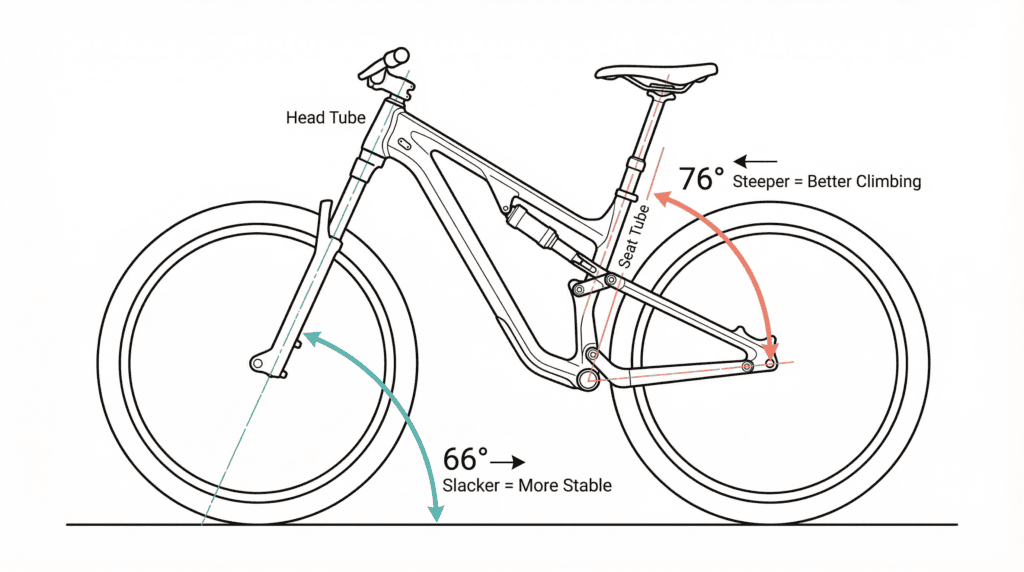
Head tube angle controls stability and steering. Slacker bikes feel calmer and more stable at speed, while steeper bikes feel quicker and more responsive.
Seat tube angle affects climbing position and pedaling efficiency. Steeper angles place you more directly over the pedals, improving traction and comfort on climbs.
Chainstay Length, Wheelbase, and Bottom Bracket Height
These measurements shape handling more than comfort.
Longer wheelbases and chainstays improve stability and climbing traction. Shorter ones make bikes feel playful and easier to maneuver.
Bottom bracket height influences:
- Cornering confidence
- Pedal strike risk
- Overall planted feeling
These numbers work together, not independently.
Not all mountain bikes are sized with the same priorities.
XC, Trail, Enduro, Downhill, and Fat Bikes
XC bikes prioritize efficiency and seated pedaling, often feeling shorter and higher. Trail bikes aim for balance and versatility. Enduro and downhill bikes lean longer, lower, and slacker for descending stability.
Fat bikes introduce extra standover and clearance considerations, especially if you ride in winter boots or rough terrain.
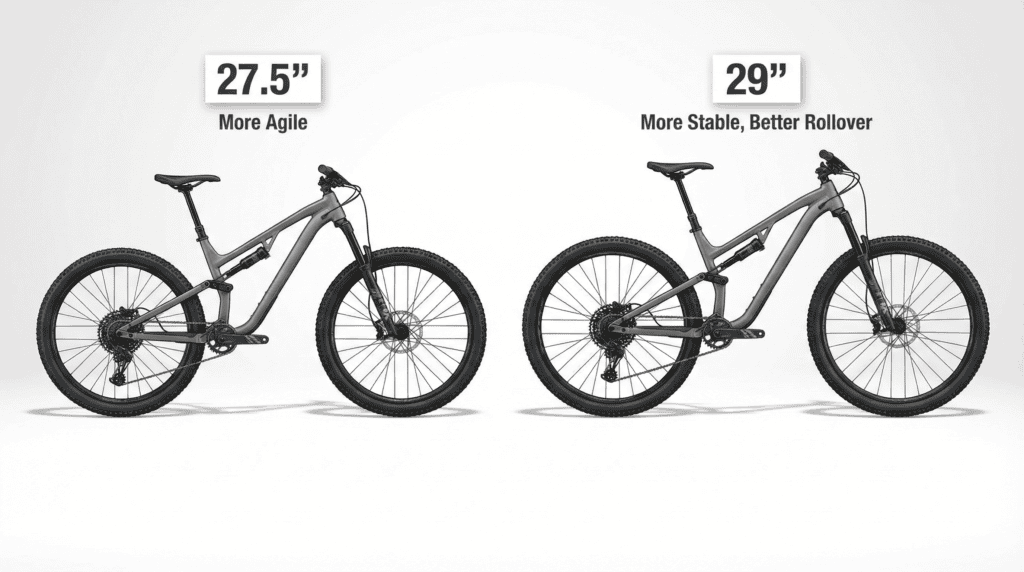
27.5 vs 29-Inch Wheels
Wheel size affects fit more than most people realize.
29ers offer better rollover and stability, which can make a bike feel “bigger” on the trail. 27.5 wheels can feel more maneuverable, especially for shorter riders or tight trails.
Instead of assuming one fits better, compare:
- Reach
- Stack
- Standover
Those matter more than wheel size alone.
E-MTB Sizing Notes
E-MTBs often feel more stable because of added weight and a lower center of gravity. Many riders choose the same size as their regular trail bike, but some prefer a slightly shorter cockpit for agility.
Always double-check:
- Dropper insertion depth
- Battery clearance
- Frame standover
Sizing labels mean very little across brands. A medium in one brand might match a small or large in another. Geometry charts are the only reliable comparison. Reach and stack act as your universal translator.
Unisex and Women-Specific Frames
Most modern unisex frames fit a wide range of riders when contact points are adjusted.
Women-specific bikes often include:
- Lower standover
- Shorter reach
- Narrower bars
- Shorter cranks
- Lighter suspension tuning
Choose the frame that fits your geometry first, then fine-tune components. This is common, and there’s rarely one correct answer.
When to Size Up or Size Down
Sizing up favors:
- Stability at speed
- Descending confidence
- A roomier standing position
Sizing down favors:
- Quick handling
- Easier front-wheel lifts
- Tight, technical trails
Your terrain and riding style should decide.
Even a perfectly sized bike needs adjustment.
Cockpit and Contact Point Adjustments
Small changes make a big difference:
The parts of the bike that will be helpful from the video, like Shorter stems quicken steering, Spacers adjust bar height and Bar width, rise, and sweep affect comfort. Saddle position, crank length, and pedal setup also play major roles in long-term comfort.
You don’t need fancy tools to get useful measurements.
What you need:
- A wall
- A tape measure
- A hardcover book
- A bit of patience
Height, inseam, and arm span will get you most of the way there.
Test Riding and Final Checks
A test ride confirms everything numbers can’t.
Pay attention to:
- Front wheel wandering on climbs
- Comfort when descending
- Ease of movement around the bike
The right size should feel natural, not forced.
Most sizing regrets come from:
- Relying only on S/M/L labels
- Oversizing for stability alone
- Ignoring cockpit setup
Fit is a system, not a single number.
Final Thoughts
Mountain bike sizing doesn’t need to be complicated, but it does need to be intentional.
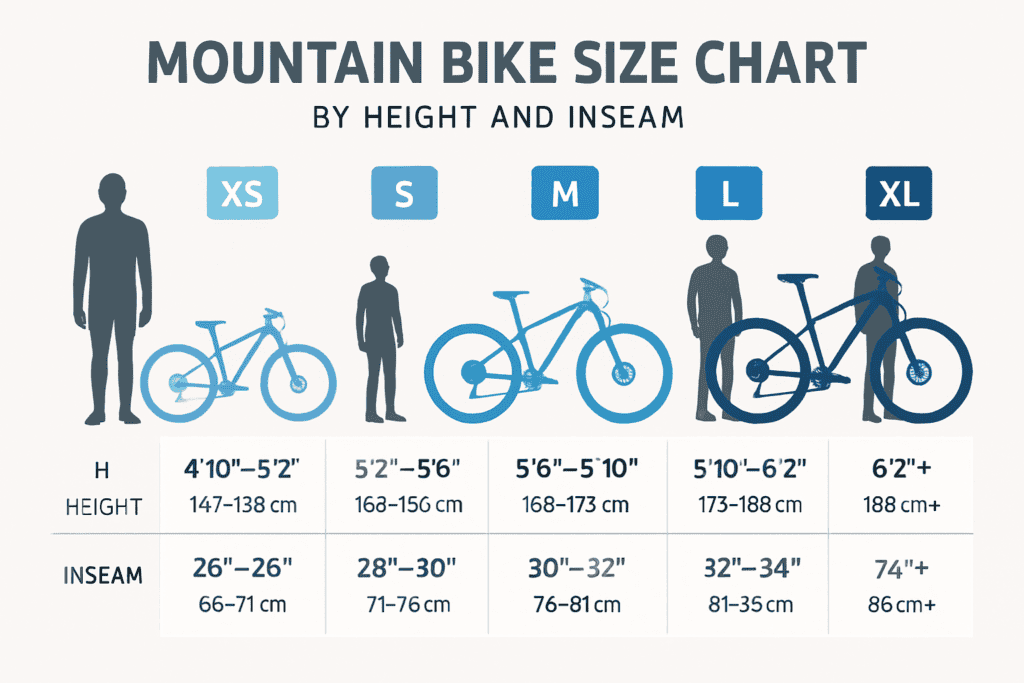
Use height and inseam to narrow options, geometry to make the final call, and real riding experience to confirm your choice. When fit is right, everything else on the trail gets easier.