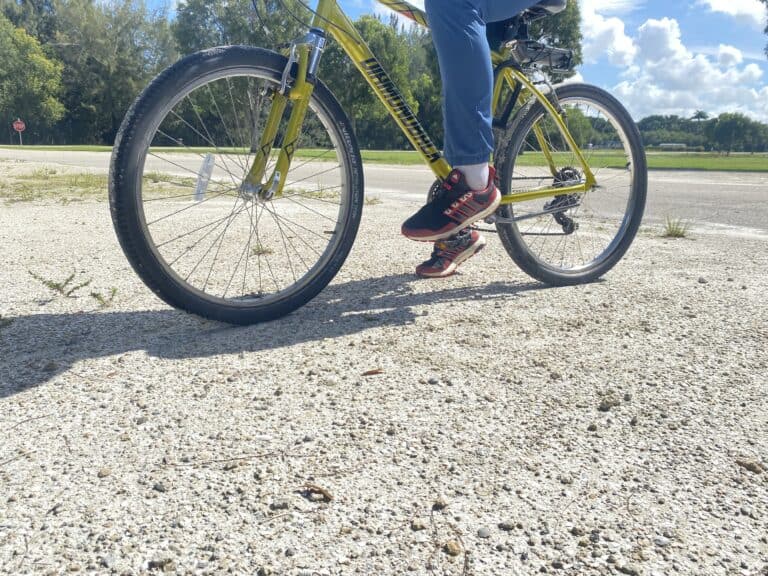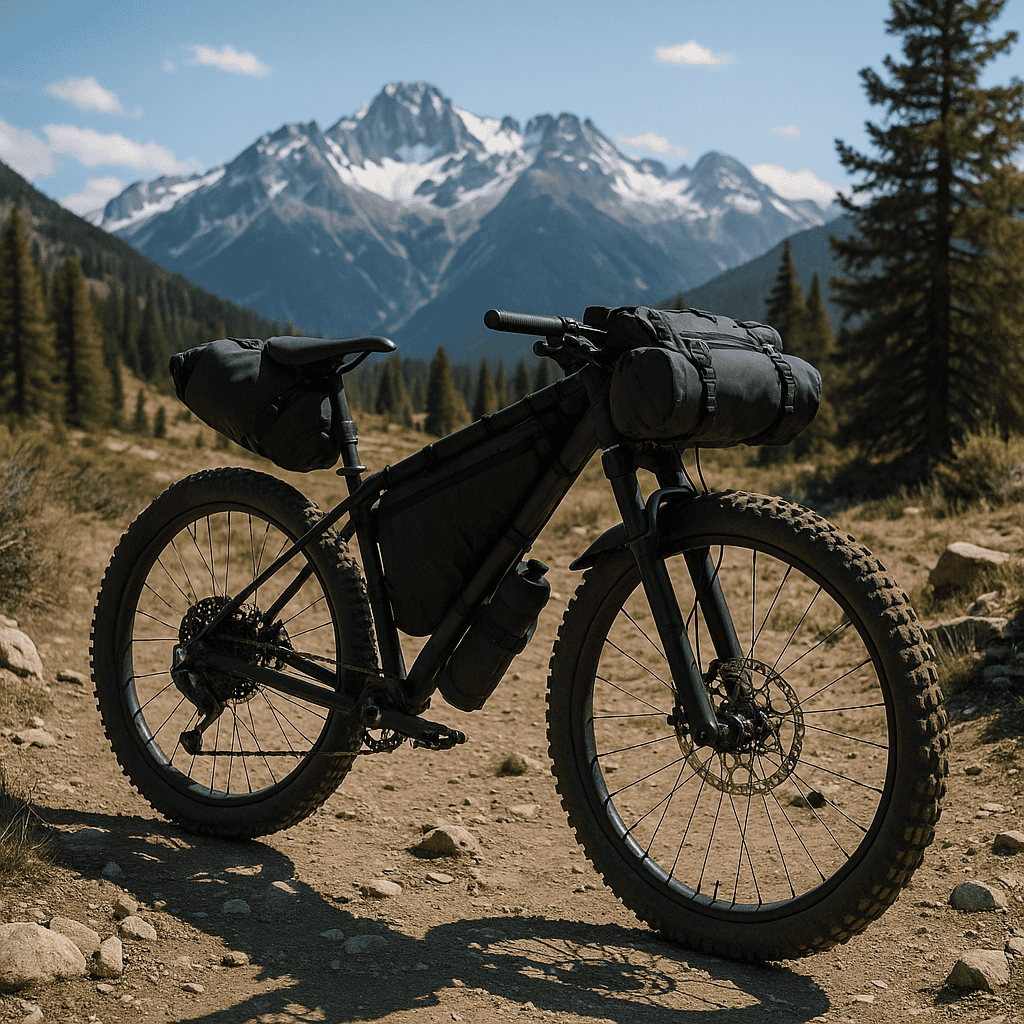
When considering mountain bike bikepacking, you’ll want to prioritize singletrack and rugged terrain using soft, rackless bags that keep weight low and central, you don’t want to destroy your setup as I’ve had in the past. Note, they were panniers.
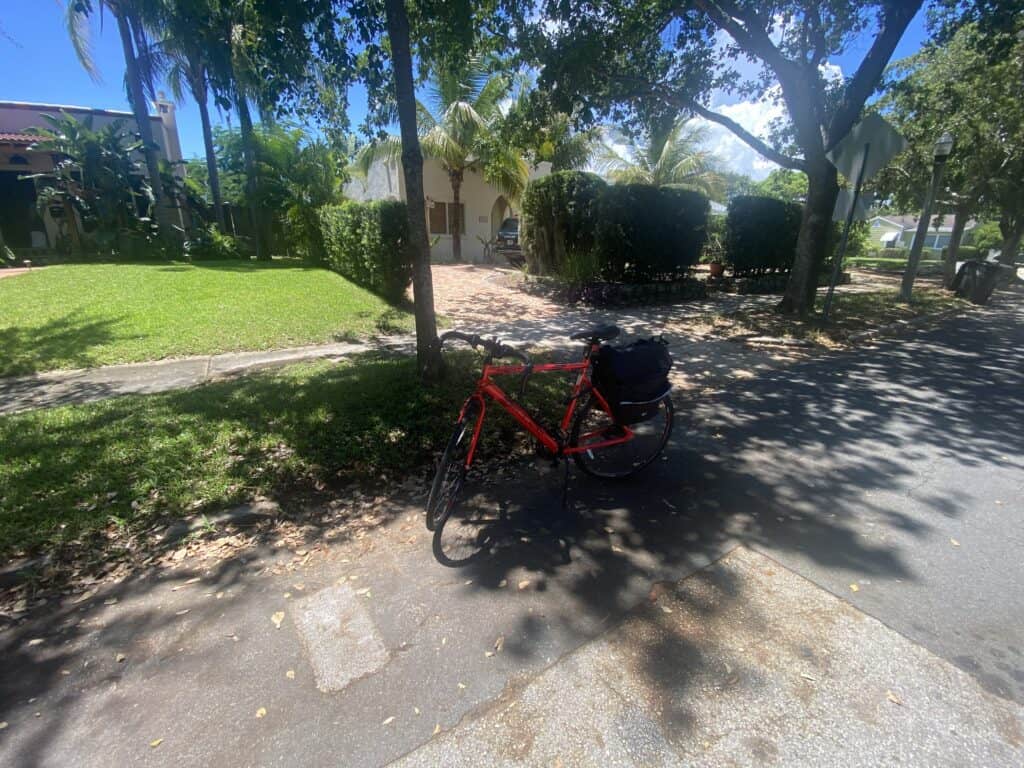
Unlike road touring with panniers and racks, bikepacking uses smaller, more stable packs designed for technical trails and hike-a-bike sections. Routes tend to be remote, self-supported, and variable in surface, demanding a lighter, tighter loadout. I also like to have extra things in my pack, such as a mini bike pump.
Bikepacking extends trail range, unlocking remote loops, backcountry connectors, and multi-day links you can’t reach in a day ride. It builds fitness, pacing, and technical control on loaded bikes while adding campcraft and navigation skills. The style also enables flexible micro-adventures, shoulder-season exploration, and objective-based challenges.
Choosing a Mountain Bike for Bikepacking
Hardtail Vs. Full-Suspension
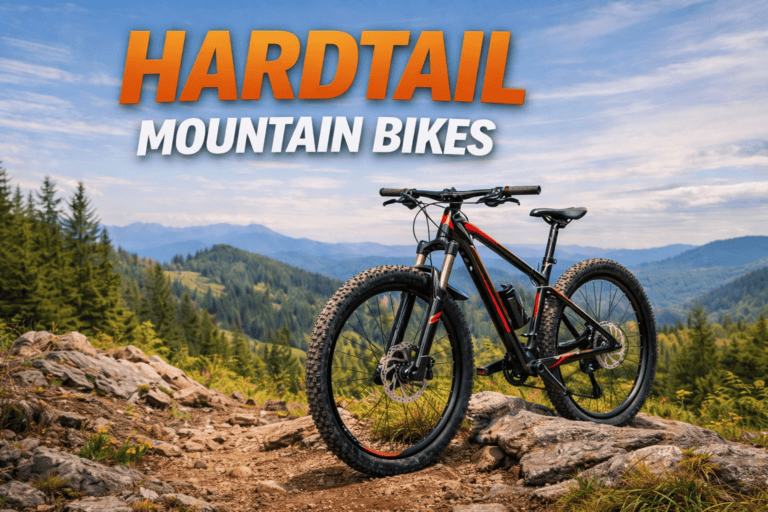
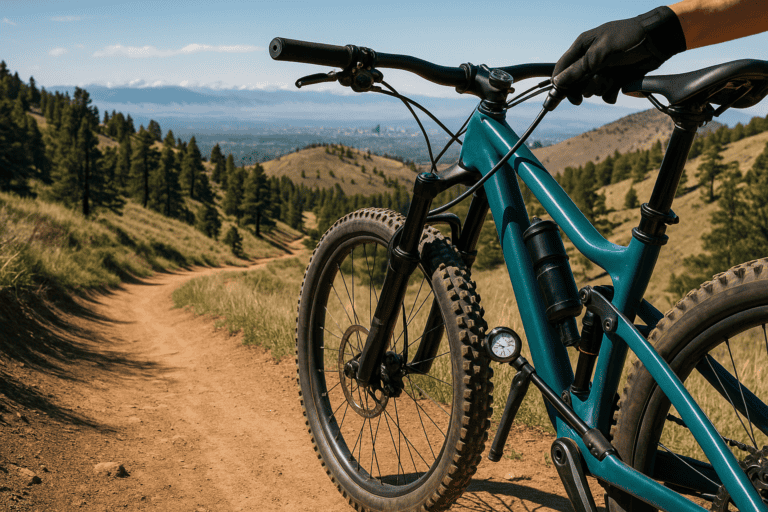
Hardtails are simpler, lighter, and offer more framebag space, making packing and maintenance easier. Full-suspension bikes add comfort and traction on rough trails, but they limit framebag capacity and require careful suspension setup for added mass. Short-travel “downcountry” or trail bikes balance efficiency, compliance, and handling for mixed-terrain bikepacking.

Tire Clearance
Stable trail geometry with a moderate reach, slack head angle, and longer wheelbase boosts confidence under load. Extra mounts on the frame and fork for bottles and cargo cages expand water capacity and packing options. Tire clearance for 2.4–2.6 in rubber with durable casings improves comfort, grip, and puncture resistance.
Essential Bikepacking Setup for Mountain Biking
Bag Systems (Frame, Handlebar)
A full-frame bag carries dense items like food, tools, and water, stabilizing the bike’s center of mass. A handlebar roll or harness holds a compact sleep system, and a seat pack or saddle harness takes clothing or a shelter. Top tube and stem “feed bags” keep snacks, phone, and small essentials instantly accessible while riding.
Rackless soft bags cause a reduction in weight, rattling, and minimize dragging on rough trails while preserving handling. Lightweight racks and cargo cages can add capacity for water and bulky items when mounts and clearance allow. They’re my favorite overall, and I have a few away from me at the moment. Choosing the simplest system carrying essentials is very important without compromising clearance, balance, or travel.
MTB Bikepacking Packing List
Shelter and Sleep System
Choose a tent, tarp, or bivy based on weather, bugs, and privacy needs, then pair it with a properly rated quilt or sleeping bag. A compact, insulated sleeping pad with a good rating is key for recovery and warmth. Add stakes, guy lines, and a groundsheet as needed, and store damp items externally to protect insulation.
Cooking, Food Storage, and Fuel
It’s so important to consider canister stoves to balance speed and convenience, while alcohol or solid-fuel setups heat up food without taking up too much weight.
Keep your pots small and set up without too much impact; however, make it very possible to repackage foods into lightweight bags to reduce trash and bulk.
If you’re going bikepacking, I already commend you for being creative. There’s no standard, but it’s great to save as much weight as you can and bring a bigger bag with a strap to make sure you can store all these.
Water Storage and Filtration
Combine frame bottles, fork-cage bottles, and a bladder in your framebag or pack to meet route-specific needs. Carry a squeeze filter or pump filter and backup purification tablets for silty or questionable sources. Plan total capacity for your longest dry stretch, and protect filters from freezing in cold conditions.
Clothing and Layers
Use moisture-wicking jerseys and liners, a breathable sun layer, and carry a lightweight insulated jacket for camp. A reliable rain shell and packable rain pants improve safety in cold, wet, or windy conditions. Spare socks, gloves, and a warm hat boost comfort, and merino or synthetic fabrics manage sweat and odor.
Tools + Repair Kit
Bring a multi-tool with a chain breaker, tire plugs, tire boot, spare tube, and a compact pump. Pack a spare derailleur hanger, quick links, zip ties, and electrical tape. Include spare brake pads, a small lube, and a few bolts, and verify everything fits your bike’s standards.
Some is a bit overboard, but I’d rather do more than less as a cyclist; you have the benefit of having a backpack in addition to extra bags, and a multi-tool is small to store.
Navigation and Electronics
Carry primary navigation on a GPS head unit or phone with offline maps, plus a paper map for backup. Use a power bank, charge cables, and a lightweight front light and headlamp for night and camping. Enable airplane mode, optimize screen brightness, and stash devices securely to avoid damage. Make sure to have something that can communicate over radio as well.
First Aid and Emergency
Build a kit with wound care, blister treatment, pain and GI meds, and a compression bandage. Add an emergency kit, whistle, a lighter, and a small repair tape roll for gear fixes and shelter reinforcement.

Sample MTB Bikepacking Setups
Ultralight Overnighter
Carry a minimal shelter, quilt, and pad, skip the stove, and rely on cold-soak or ready-to-eat food. Use a framebag and handlebar roll only, keeping base weight very low. Plan short routes with known water to maximize trail fun and minimize logistics.
Add a compact stove, extra clothing, and a roomier shelter for comfort across two to three nights. Use a seat pack to expand capacity while keeping heavy items in the framebag. Balance efficiency and comfort to enjoy long days without overpacking.
Multi-day expedition
Increase redundancy in tools and first aid, boost repair capability, and expand water capacity. Choose durable tires, protective inserts, and robust bags to withstand extended abuse. Plan resupplies carefully and carry paper maps to back up electronics.
Comfort-forward kits add space, cooking options, and warmer layers at the cost of weight and speed. Minimalist kits maximize handling and efficiency but demand careful weather windows and discipline. Decide based on terrain, distance, experience, and personal priorities.

Budget vs. Premium Gear Choices
Where to Save vs. Splurge
Splurge on tires, sleep system, and contact points (saddle, grips, shoes) for performance and comfort. Save with simpler stoves, aluminum cookware, and basic but durable soft bags. Invest where reliability matters and upgrade incrementally as needs evolve.
DIY and Repurposed Solutions
Combine dry bags with Voile straps for affordable handlebar and fork carry. Use cut foam or bottle cages with straps for frame protection and mounting flexibility. Repurpose containers for kits and organize with lightweight zip bags to stay efficient.
Safety, Ethics, and Access
Leave No Trace Principles
Camp at least 200 feet from water, pack out all trash, and minimize campfire impacts. Stay on established trails and durable surfaces to prevent erosion and habitat damage. Disperse use, keep groups small, and leave sites better than you found them.
Wildlife Safety
Store food in canisters where required or hang properly, and never cook where you sleep in bear country. Give wildlife space, control food smells, and carry bear spray in grizzly habitat. Learn local species risks, from snakes to insects, and avoid dawn/dusk surprises.
Communication and Emergency Planning
Share your route, schedule check-ins, and carry a satellite communicator for remote areas. Identify bail-out points, shelters, and hospitals along the route. Keep batteries charged, conserve power, and know when to turn back.
FAQs
1. What’s the biggest difference between bikepacking and traditional touring?
A: Bikepacking is built for rough trails, so you use soft, rackless bags instead of panniers. It keeps everything tight, stable, and safe on singletrack where racks would break or snag. You’ve seen in the beginning of the article.
2. How do I choose the right mountain bike for bikepacking?
A: Pick something stable with room for bags. Hardtail mountain bikes give the most space and simplicity, while full-suspension bikes add comfort but limit framebag size. Prioritize traction, tire clearance, and low climbing gears.
3. What’s the most important thing to pack for an overnight ride?
A: A solid sleep setup includes a shelter, a warm bag or quilt, and a good pad. If you sleep well, you ride well. Keep your kit compact so it fits in a framebag or handlebar roll without affecting handling.
4. How should I pack my gear so it doesn’t sway or throw off balance?
A: Put heavy stuff in the framebag on the bike, keep the seat pack light, and secure everything so nothing rubs tires or suspension keep a low amount of problems. Aim for a low, centered load, and with that, you will notice a smooth ride.
5. How much water do I need for MTB bikepacking?
A: Bring enough for your longest dry stretch: usually a mix of bottles and a full stomach. Add a filter or purification tabs so you can refill safely on the trail. Always plan for more water in hot or remote terrain.
Resources and Route Ideas
Route libraries and maps
Explore Bikepacking.com, Trailforks, and MTB Project for vetted routes, singletrack intel, and current conditions. Cross-check with land manager maps and MVUMs for legal access and seasonal closures. Use trip reports to gauge difficulty, resupply, and water reliability.
Plan and export routes with Ride with GPS, Komoot, Gaia GPS, or CalTopo, and download offline maps. Add weather tools like Windy, mountain-forecast, and local radar apps to time windows. Track gear lists in notes apps and maintain a reusable packing template.
Communities and events
Join local MTB clubs, forums, and the r/bikepacking community to learn, share routes, and find partners. Meet people through group overnighters and clinics to accelerate your learning curve with applicable people, such as using meetup.com
Conclusion
MTB bikepacking is all about freedom, most importantly the freedom to ride farther, explore deeper, and rely on a setup to carry you through whatever the trail brings.
With the right gear, smart packing, and a solid understanding of how your bike handles under load, you can turn any singletrack or forest road into a multi-day adventure. Start simple, refine your system with every trip, and build confidence in your ability to travel self-supported.
Whether you’re heading out for your first overnighter or planning a multi-day route, the goal is the same: stay prepared, stay safe, and enjoy the ride. Bikepacking rewards creativity, problem-solving, and the willingness to embrace the unknown, and that’s what makes it one of the best parts of mountain biking.