Mountain Bike Strength Training: Build Your Control
Ever realize that you’re always running out of energy while mountain biking, even with your trail bike? Sometimes it isn’t your bike, but a lack of strength or mountain bike strength training. According to National Library of Medicine, when on long climbs you are performing at 80% of your heart rate threshold, and you can use that to your advantage, the better you get at cycling.
Strength training for mountain bikers turns raw trail time into more speed, control, and durability it also reduces the risk of overuse injuries from high-volume riding. With the right mountain biking gym routine, you’ll improve power output, grip strength, and core stability, making every pedal stroke and body movement on the bike more efficient.
I’m Caleb, a prospective mountain biker who’s used all the resources he has to his advantage no matter what bike I use. Overtime I developed a mountain bike tires guide, I currently use a smaller bike, but I always look for ways to improve and acquire new skills with what I have.
Why Strength Training Matters for Mountain Biking
Power for Climbs
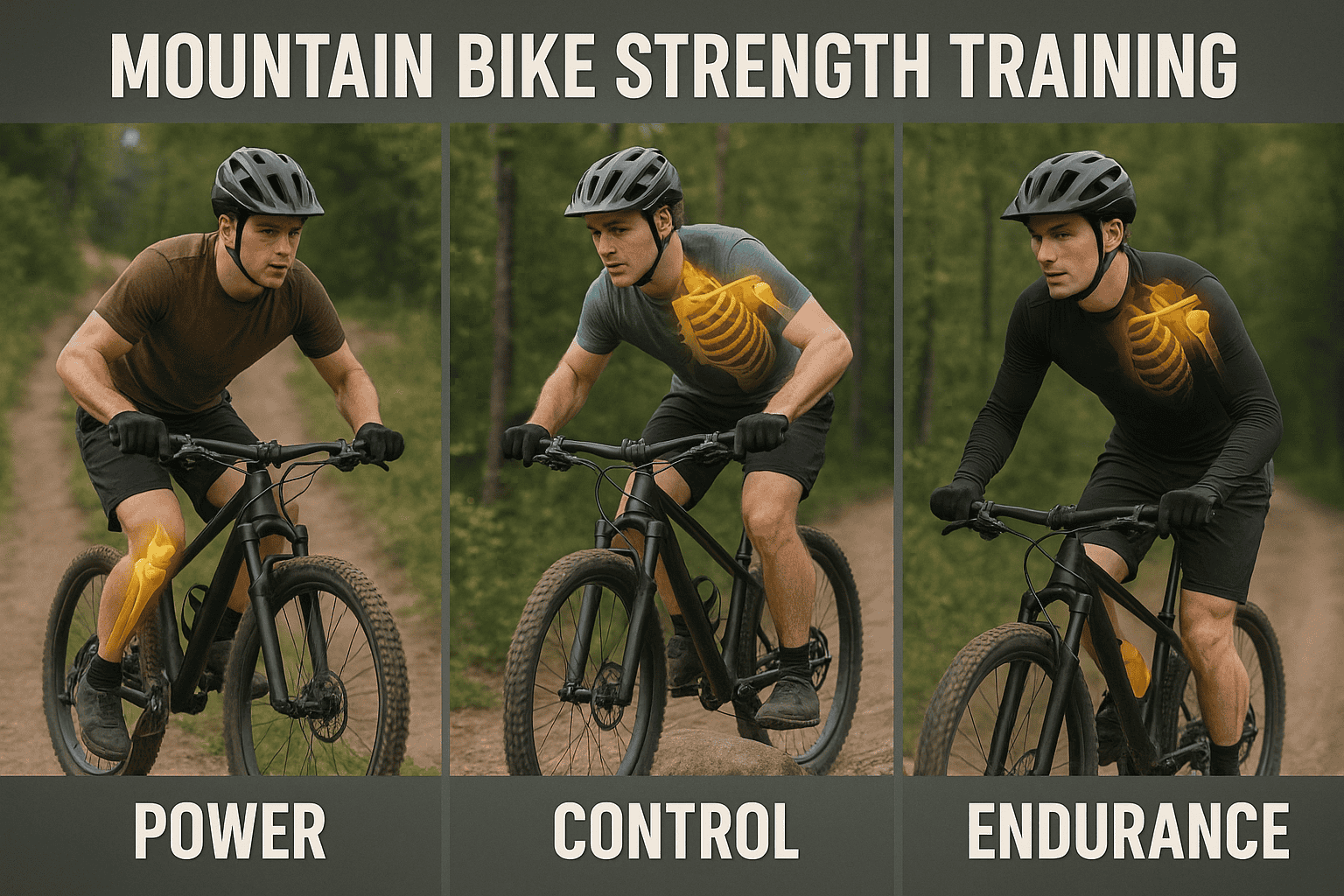
Consider that small climbs and accelerations reward riders who can put effort and force into their pedal, and strength training for mountain bikers is the fastest path to that gear. Building leg and hip strength improves your quick speed at low cadences, helping you surge over roots and ledges without stalling. When you add power-focused lifts and plyometrics, your rate of force development rises, translating to punchier sprints and faster exits out of corners.
Technical terrain demands strength in multiple planes, and MTB strength training builds the bracing, hip control, and upper-back strength that keep you centered. Strong hinges, squats, and pulling patterns stabilize your torso so your hands are lighter on the bars, which improves steering precision. With better scapular and core control, you’ll resist deflection, hold lines under braking, and float obstacles with more confidence.
Endurance and Fatigure
Lifting improves muscular endurance by increasing force efficiency, so noticing your effort and controlling your bike even late in a ride is essential. As your strength rises, each pedal uses a smaller percentage of your capacity, conserving energy on long climbs. Sounds very technical so I have a picture here. Combined with smart conditioning, mountain bike strength training delays fatigue in the legs, trunk, and forearms, so your technique holds up on the final descent.
MTB injury prevention starts with balanced strength around the hips, knees, shoulders, and spine. Strength work corrects common imbalances from hours in the saddle, lowering stress on joints and soft tissues. With better tissue capacity and control, you’ll tolerate volume spikes, big park days, and hard race efforts with fewer niggles.

How to Structure MTB Strength Training
Off-season vs in-season focus
In the off-season, focus on building strength and muscle with progressive loads, full ranges of motion, and added accessories. As you approach race season, shift to more power work, reduced volume, and maintenance loads that support freshness for rides. In-season, keep sessions short and purposeful, maintaining strength with lower volume while prioritizing recovery and ride quality.
Weekly frequency and session length
Most riders thrive on two to three strength sessions per week in the off-season and one to two in-season. Sessions of 45–70 minutes are enough to cover priming, strength, and accessories without draining you for the bike. Keep them consistent, and align hard gym days with hard ride days when possible to protect true recovery days.
Reps, sets, tempo, and rest guidelines
Build strength with 3–5 sets of 3–6 reps on compound lifts at a controlled tempo, resting 2–3 minutes between sets. Use 6–10 reps for accessories to add muscle and address weaknesses, resting 60–90 seconds. Include power sets at 2–5 reps with fast intent and full recovery, and keep technique crisp with smooth eccentrics and explosive concentrics.
Balancing lifting with ride volume and intensity
Match gym stress to your ride calendar by reducing strength volume before key rides and events. If ride intensity spikes, cut accessory volume and keep a single compound lift to maintain strength without compounding fatigue. When ride volume is low, push gym progress with an extra set or small load increase while monitoring total fatigue and sleep.
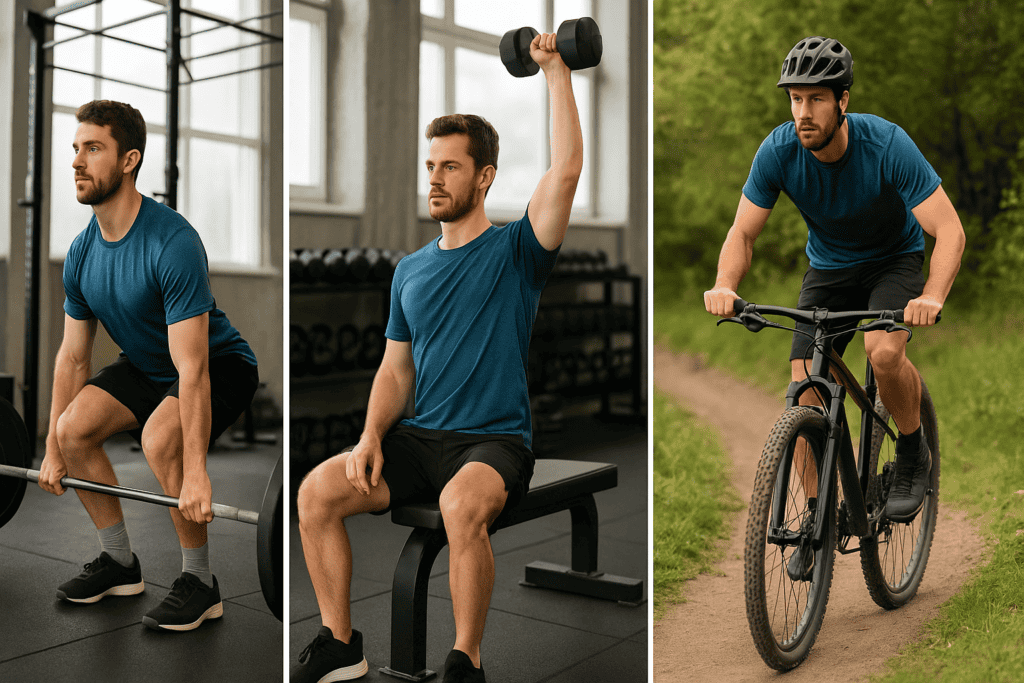
Foundational Exercises for Mountain Bikers
Lower body: squats, deadlifts, hip hinges, lunges, step-ups, single-leg work
Anchor your MTB strength training with squats, deadlifts, and split-stance work two to three days per week. Step-ups and single-leg RDLs bridge the gap between bilateral strength and on-trail demands, improving balance and force on each pedal stroke. Keep technique strict, progress loads gradually, and cycle variations to keep joints fresh.
Mix horizontal and vertical pulls with presses to build a balanced upper body that supports handling and braking. Row variations, chin-ups, and push-ups paired with serratus and lower-trap work improve scapular rhythm and posture. Aim for a 2:1 pull-to-push ratio to counter riding posture and reduce shoulder strain.
Core/trunk: anti-rotation, anti-extension, lateral stability, breathing drills
Core training for riders should focus on resisting motion and transmitting force, not endless crunches. Dead bugs, crawl patterns, rollouts, side planks, and Pallof presses create stiffness where you need it while maintaining fluid breathing. Layer in nasal breathing, 360° rib expansion, and long exhales to improve bracing and endurance.
Grip strength for mountain biking reduces arm pump and improves confidence under braking and chatter. Farmer’s carries, towel hangs, and wrist flexion/extension work fortify the forearms without excessive volume. Cycle grip modalities and keep sets short and high quality to avoid overuse.
Power and Plyometrics for Trail Performance
Jump progressions
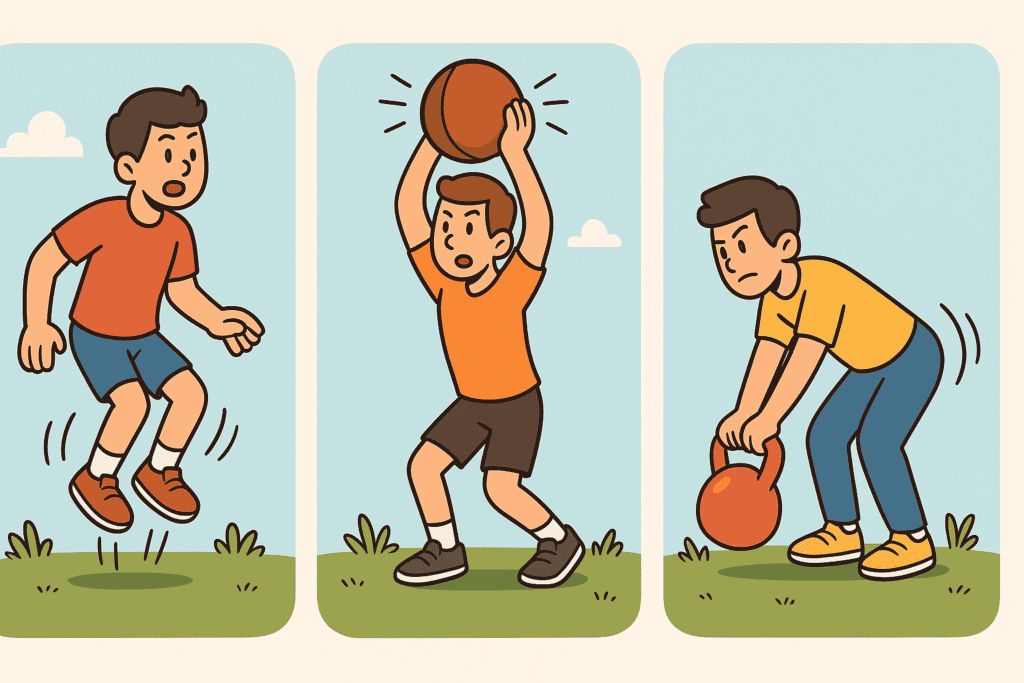
Start with low-impact jumps like pogo hops and snap jumps before advancing to box and drop jumps. Keep contacts low to moderate and emphasize soft landings, stacked joints, and crisp takeoffs. Two sessions per week of 10–30 total quality jumps sharpen power without adding fatigue.
Med-ball throws
Rotational and overhead med-ball throws build whole-body power that mirrors pumping and cornering. Use light to moderate balls, throw with intent, and prioritize speed over load to maximize carryover. Two to four sets of three to five explosive reps per pattern deliver a strong stimulus with minimal soreness.
Swings train the hinge explosively, teaching you to project force through the hips while maintaining trunk stiffness. Keep sets short, focus on sharp snaps, and let the bell float with glutes and hamstrings doing the work. Pair swings with jumps or sprints for a potent rate-of-force-development combo.
Rate of force development focus
Power gains hinge on intent, so move submaximal loads fast and stop sets when speed drops. Use velocity-based cutoffs or perceived speed to maintain quality, and avoid grinding reps. This approach keeps the nervous system primed for trail speed without unnecessary fatigue.
Mobility That Matters on the Bike
Hips and ankles
Hips and ankles need enough mobility to allow deep knee flexion and smooth weight shifts without compensations. Use hip flexor openers, 90/90s, ankle dorsiflexion rocks, and calf eccentrics to restore range. Pair mobility with light isometrics to “own” new positions and make changes stick.
A mobile T-spine supports better breathing, bar control, and reduced neck and low-back strain. Thoracic rotations, quadruped thread-the-needle, and foam roller extensions open range where riders often stiffen. Train small, controlled arcs and integrate with row and press patterns for lasting carryover.
Shoulders and wrists
Shoulder and wrist mobility affect braking comfort and cockpit control, especially on long descents. Scapular CARs, wall slides, and wrist flexion/extension drills build range and resilience. Combine gentle mobility with strength through range to tolerance so tissues adapt without irritation.
A quick flow of hip rocks, T-spine rotations, ankle pumps, and arm circles primes you without fatigue. Keep it five to eight minutes, breathe steadily, and move through pain-free ranges only. Consistency here reduces stiffness and improves on-bike posture from the first pedal strokes.
Warm-Up and Activation
Dynamic mobility
Open sessions with dynamic drills like leg swings, inchworms, lunge with rotation, and shoulder circles. Aim for smooth, rhythmic movement that elevates body temperature and preps the exact joints you’ll load. Two to three minutes per region is enough to unlock quality lifting without wasting time.
Glute activation
Glute bridges, frog pumps, and banded walks wake up the hips for hinges, squats, and single-leg work. Keep tension steady, prioritize full hip extension, and avoid back arching so the glutes, not the spine, take the load. One to two quick circuits sets the tone for powerful, clean reps.
Core priming
Use dead bugs, bear crawls, and Pallof holds to connect breath, brace, and limb movement. Keep reps low and crisp to avoid fatigue, and focus on rib and pelvis alignment. This primes spinal stability so your lifts and ride posture feel solid.
Scapular prep
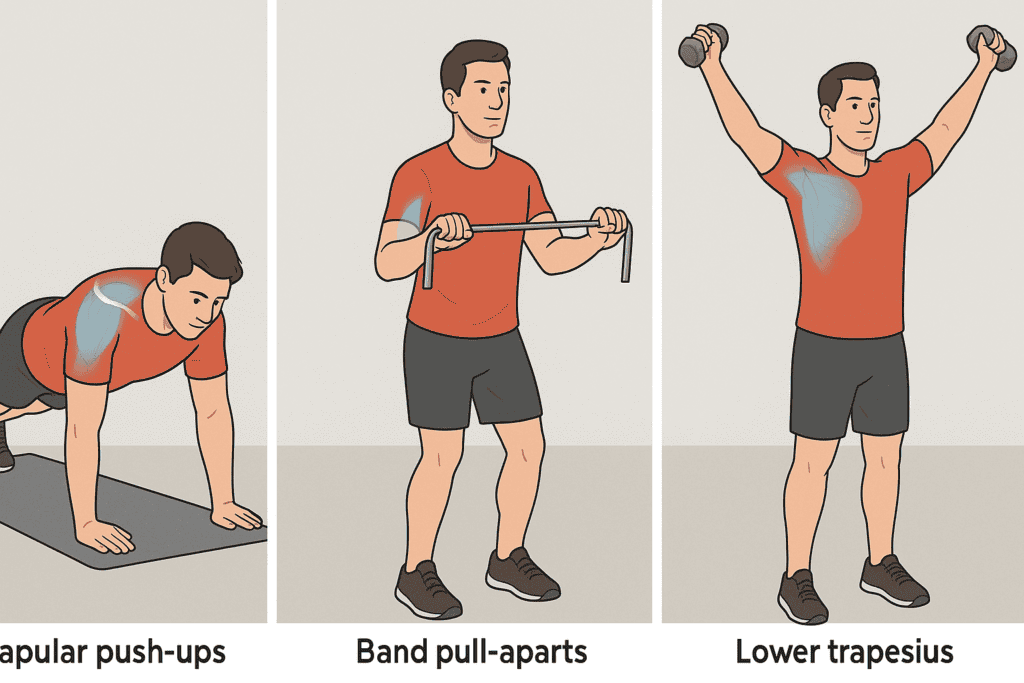
Scapular push-ups, band pull-aparts, and Y/T/Ws activate lower traps, serratus, and rhomboids for stable shoulders. Move slowly, reach long, and keep ribs down to avoid substituting lumbar extension for shoulder motion. Two short sets go a long way toward better pulling and pressing mechanics.
Sample Programs by Level
Beginner: 2 days/week
Run two full-body sessions with one hinge and one squat pattern each day, a push, a pull, and core work. Use 2–3 sets of 6–10 reps on main lifts and 8–12 on accessories, focusing on technique and controlled tempos. Finish with a carry and short grip work, and progress loads by the smallest increment once all reps feel solid.
Intermediate: 2–3 days/week
Alternate a strength emphasis day and a power/volume day, adding a third day if recovery allows. Use 3–5 sets of 3–6 reps on main lifts, add 2–3 power sets of jumps or throws, and fill gaps with single-leg and scapular work. Rotate variations every 4–6 weeks and manage volume around big ride weeks to keep legs fresh.
Advanced: 3–4 days/week
Split sessions into lower/upper or strength/power blocks to target RFD, max strength, and resilience. Include heavy compounds, Olympic lift derivatives or swings, and higher-volume accessories to armor tissues for enduro strength training or downhill strength training demands. Track bar speed or rep quality, deload every 4–6 weeks, and sync hard gym work with hard ride blocks.
Common Mistakes to Avoid
Skipping lower-body strength
Avoid the trap of only riding for legs, because targeted lower-body strength raises your ceiling and reduces strain. Squats, hinges, and single-leg patterns are the foundation that make every pedal stroke cheaper. Commit to them year-round, adjusting volume to your ride calendar.
Excessive fatigue before key rides
Crushing leg day before big climbs or races kills performance and skill execution. Keep heavy lower-body lifting 48–72 hours away from priority rides, and taper volume accordingly. Quality on the bike matters most, so let the gym support, not sabotage, your goals.
Neglecting single-leg and core work
Single-leg stability and core stiffness are non-negotiable for control and efficiency on uneven terrain. If you skip them, asymmetries grow and technique breaks down under fatigue. Place them early in sessions and progress carefully to lock in lasting gains.
Ignoring mobility and grip
Stiff hips, ankles, and T-spines, plus weak grip, limit handling and increase arm pump risk. Consistent MTB mobility and grip training make technical riding more comfortable and precise. Keep doses small and regular so they add up without costing recovery.