Mountain Bike Tire Casing Explained: Strength, Layers, and Ride Feel
Introduction
You can spend hours comparing tread patterns or rubber compounds, but if you skip over tire casing, you’ll miss one of the most important parts of your mountain bike setup. The casing is the backbone of your tire — the flexible fabric structure that shapes how it rolls, absorbs bumps, and grips the trail. It’s the difference between feeling confident through a rocky downhill or getting bounced around like a pinball.
In this guide, we’ll break down everything you need to know about mountain bike tire casing explained, from how it’s built to how it changes your ride. We’ll also help you pick the right balance of speed, comfort, and durability for your terrain.
If you’ve already checked out the posts on mountain bike tire compounds, sidewall protection, and how to patch and seal MTB tires on the trail, this is the piece that ties it all together.
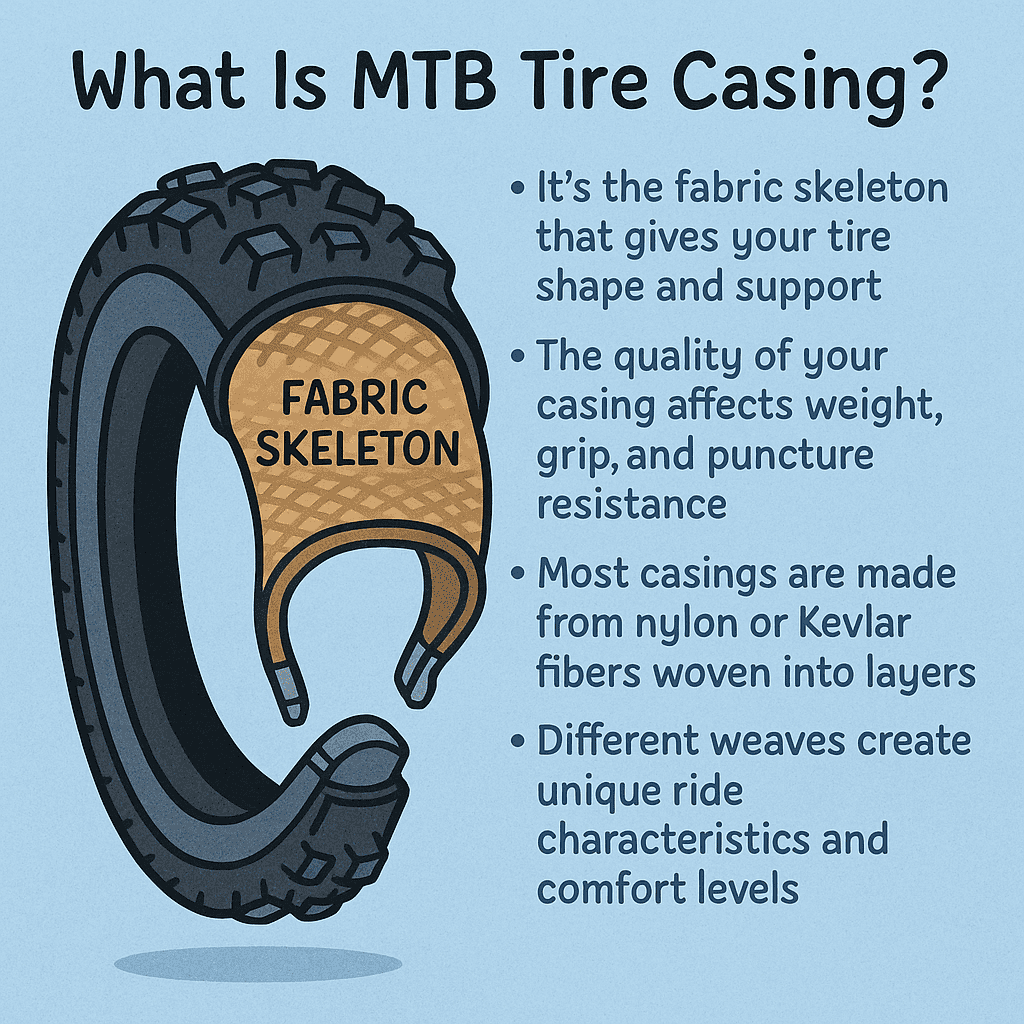
What Is MTB Tire Casing?
- It’s the fabric skeleton that gives your tire shape and support.
- The quality of your casing affects weight, grip, and puncture resistance.
- Most casings are made from nylon or Kevlar fibers woven into layers.
- Different weaves create unique ride characteristics and comfort levels.
How Tire Casing Works Under Pressure
The casing is more than a layer of fabric — it’s a living part of your tire that flexes with every rotation. It sits between the tread and the inner air chamber, controlling how the tire behaves when compressed by obstacles. A supple casing allows the tire to conform to rocks and roots, giving you more grip. A stiffer casing resists flex, which adds stability but transmits more vibration through your frame.
When you ride through mixed terrain, the casing constantly adapts. It stretches slightly under impact, then rebounds as the pressure releases. That elasticity defines whether your ride feels plush or harsh. It’s why two tires with identical treads can feel completely different.
Why Casing Quality Defines Ride Feel
High-quality casings balance durability and comfort through fiber density and rubber layering. A tighter weave offers more precision and speed but less compliance. Looser weaves improve comfort and traction but may puncture more easily. Riders often overlook this because casing differences aren’t visible — you feel them instead.
If you find your tires feel sluggish or overly stiff, it’s often because your casing doesn’t match your terrain or pressure. Choosing the right one lets you ride faster, with less fatigue and more control on technical lines.
Single Ply vs Double Ply MTB Tires
- Single ply tires are lightweight and ideal for everyday trail use.
- Double ply tires add toughness and stability for aggressive terrain.
- Choosing between them depends on your riding style, speed, and terrain.
- Extra layers reduce flats but slightly increase rolling resistance.

Trail vs Downhill Feel
Single ply tires typically use one layer of woven fabric beneath the rubber. This keeps the tire lighter, making it easier to climb and accelerate. Riders who spend time on rolling trails, singletrack, or cross-country routes often choose single ply because it feels lively and responsive. The downside is that single ply casings are easier to cut or pinch, especially on rocky terrain.
Double-ply tires use two layers of casing material, providing the tire with extra sidewall support and puncture protection. They’re the go-to for enduro and downhill riders who hit rock gardens, jumps, or rough descents. You’ll notice the tire feels stiffer and heavier when pedaling, but far more stable at speed. The double casing absorbs impacts that would normally damage a lighter tire.
Finding Your Ply Sweet Spot
If you’re not sure which to choose, consider where you ride most. Smooth trails or long climbs favor single ply setups. Technical descents, drops, or bike park days call for double ply protection. Some brands even offer hybrid casings with reinforced sidewalls for a balance between weight and durability — the best of both worlds.
How Casing Affects Ride Feel
- Soft casings hug the terrain and add traction.
- Stiff casings deliver precision and power transfer at high speeds.
- Ride comfort, control, and fatigue all tie back to casing stiffness.
- Different casings feel completely different even at the same pressure.

Supple vs Stiff: What You’ll Feel
A supple casing feels buttery smooth when you roll over rocks and roots. It absorbs micro-impacts and lets the tread conform to uneven terrain. Riders who prioritize grip — especially in wet or loose conditions — often prefer softer casings for that “connected” feel.
A stiffer casing, by contrast, feels sharper and more reactive. It transfers energy directly to the ground, which is great for sprinting or carving corners at speed. However, you’ll feel more trail chatter, especially on long rides.
Adjusting Ride Feel with Pressure
You can tune your tire feel by adjusting air pressure. Softer casings usually benefit from slightly higher pressure to avoid squirming in corners. Stiffer casings work well at lower pressures because their structure prevents excessive flex. Experimenting within a few psi can completely change how your bike feels. Riders who take time to match casing and pressure typically enjoy smoother, faster, and more predictable rides.
TPI Explained: Threads Per Inch
- TPI describes how many threads are woven into one inch of the casing.
- High TPI = thinner threads and a more flexible tire.
- Low TPI = thicker threads for durability and puncture resistance.
- The sweet spot depends on your trail conditions and ride style.

High TPI Casings
A high TPI tire (typically 120 or higher) feels supple and light. The fine threads allow the tire to deform easily over rough surfaces, improving traction and comfort. Cross-country racers love this because it reduces rolling resistance and boosts acceleration. The tradeoff? Thinner threads mean less armor against sharp rocks or debris.
Low TPI Casings
Low TPI tires (around 60 or less) use thicker threads that resist cuts and hold their shape better under pressure. These casings are heavier but more stable on aggressive terrain. Downhill and enduro riders rely on them for reliability — a bit of extra weight is worth not having to stop mid-run for a flat.
Finding Your Ideal TPI Range
For most riders, a midrange TPI (around 90–100) strikes the right balance. It offers enough flexibility for comfort while keeping durability high. Remember, tire pressure and width also affect how a given TPI feels — so adjust those in tandem before swapping tires.
Reinforced Casings for Extra Protection
- Reinforced casings add layers of defense where you need them most.
- Brands use tech like EXO, Grid Trail, or Super Gravity to prevent cuts.
- Added protection slightly increases weight but boosts reliability.
- Ideal for riders tackling rocky or technical trails regularly.

How Reinforcements Work
Reinforced casings include extra fabric layers, thicker sidewalls, or rubberized coatings. These layers distribute impact energy across a wider surface area, preventing sharp objects from puncturing through. The added material may make the tire feel a bit stiffer, but that tradeoff is worth it for durability.
When You’ll Notice the Difference
If you frequently ride rocky trails, land hard off drops, or hit sharp edges, reinforcement makes a huge difference. It prevents torn sidewalls and improves cornering stability. You can also run slightly lower pressure since the extra stiffness protects your rims. Riders who value reliability and grip over a few grams of weight love reinforced casings.
Tire Casing and Pressure Relationship
- Your casing choice determines your ideal pressure range.
- Soft casings need slightly higher pressure to avoid squirm.
- Stiffer casings handle lower psi for added traction.
- Pressure tuning fine-tunes comfort and control.
Balancing Structure and Air Volume
A flexible casing combined with low pressure gives maximum grip but can feel unstable. Too much air, and you lose traction. The trick is to find a pressure that complements your casing’s stiffness and your body weight. Most riders don’t realize just how sensitive tire feel is — a 1–2 psi difference can make or break traction in corners.
How to Tune for Your Terrain
On smooth, fast trails, a bit more pressure helps maintain rolling speed. On loose or rocky ground, dropping pressure slightly lets the tire absorb terrain better. The more durable your casing, the lower you can safely go without risking pinch flats or rim strikes. Riders who dial in this balance usually describe their bike as “floating” over terrain instead of bouncing off it.
When to Upgrade Your Casing
- If you’re constantly repairing flats, it’s time to upgrade.
- A stronger casing adds confidence on aggressive trails.
- Durable casings last longer and perform better under stress.
- Match your casing upgrade with the right pressure and width.

Signs You Need a Better Casing
Frequent punctures, rim strikes, or torn sidewalls all point to a weak casing for your terrain. You might also feel instability in corners or harsh feedback on rocky sections. Upgrading to a reinforced or double-ply casing often eliminates those issues overnight.
Performance Benefits
Better casings improve consistency — your tires hold shape through corners and landings, and you’ll notice a smoother ride. Many riders say it’s like upgrading suspension without touching your fork or shock. Combine that with proper tire pressure and the right width, and your setup becomes noticeably faster and more forgiving.
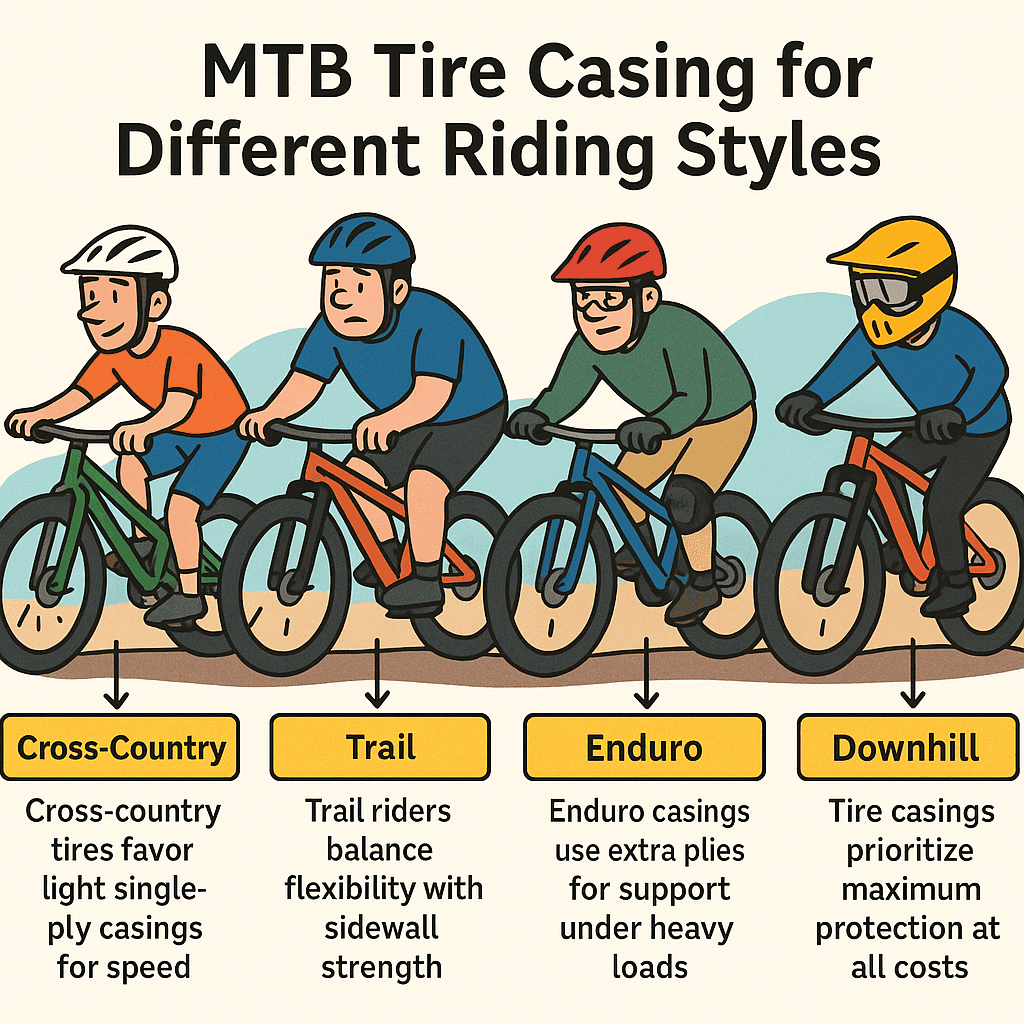
MTB Tire Casing for Different Riding Styles
- Cross-country tires favor light single-ply casings for speed.
- Trail riders balance flexibility with sidewall strength.
- Enduro casings use extra plies for support under heavy loads.
- Downhill casings prioritize maximum protection at all costs.
Choosing for Your Discipline
Cross-Country: Lightweight single-ply with high TPI is ideal. You’ll get lower rolling resistance and better acceleration, especially on climbs.
Trail: A mid-weight casing with moderate stiffness offers a great balance. It handles mixed terrain while still feeling responsive.
Enduro: Double-ply or reinforced casings provide stability and confidence on long descents. The added weight pays off in control.
Downhill: These casings are the toughest on the market. Thick, multi-layer builds resist sharp impacts and hold steady even under extreme conditions.
Conclusion
Your tire casing isn’t just a technical detail: it’s the most important part of how your bike feels under pressure. The right casing transforms a ride from harsh and unpredictable to smooth, controlled, and confident. Whether you prioritize grip, speed, or durability, matching your casing to your terrain is the key to better performance.
Once you’ve dialed in your setup, revisit the fundamentals with mountain bike tire compounds, sidewall protection, and how to patch and seal MTB tires on the trail. Each one builds toward a tire system that’s uniquely tuned for your ride — and when everything clicks, you’ll feel it on every turn and climb.