Hardtail Mountain Bike Geometry: Measurements, Fit & Setup Guide
After riding and experimenting with different mountain bikes over the years, I’ve consistently found myself coming back to a hardtail mountain bike. It’s helped me with the question of how to choose a mountain bike, including hardtail mountain bike geometry. There’s something about their simplicity and efficiency that keeps them feeling fun and purposeful on most of the trails I ride, and they are part of the best mountain bikes.
I’ve been using a hardtail for years at this point and have never had any problems. They’re very easy to get into, but the geometry is one of my favorite parts of using it compared to full-suspension, mountain bike types explained. On flow trails, rolling terrain, and pedaling heavy routes, they feel quick, responsive, and rewarding in a way that’s hard to ignore.
While they can handle rough trails, their real strengths show up where speed, control, and efficiency are prioritized over outright comfort, and I highly emphasize, along with reach and stack, a mountain bike sizing chart in this article.
Hardtail Geometry Basics
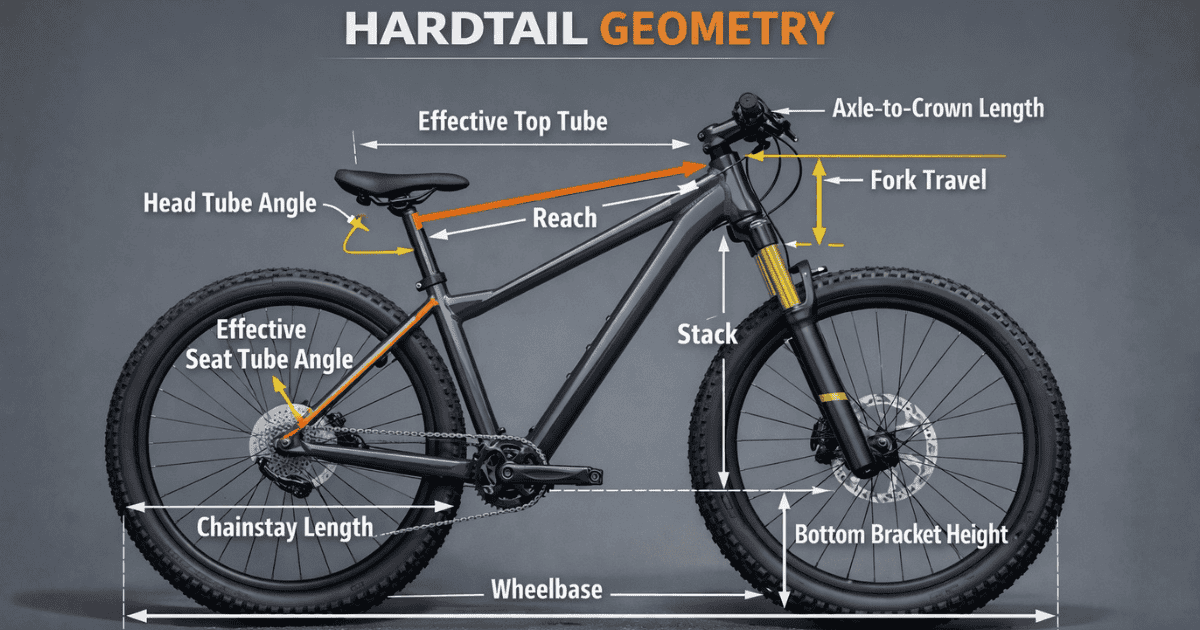
Hardtail geometry starts with understanding how the frame and fork work together to define handling, fit, and stability. A geometry chart lists the critical dimensions that determine how a bike behaves on the trail, including head tube angle, seat tube angle, reach, stack, chainstay length, wheelbase, and bottom bracket height or drop. On hardtails, fork specifications are especially important because the front suspension plays a major role in how geometry changes dynamically while riding.
(Frame components like the head tube, top tube, down tube, and seat tube form the bike’s core structure, but their angles matter more than their raw shapes. Modern frames often use curved or kinked tubes, which makes “actual” measurements less useful for comparing bikes across brands.)
I find that… This is why geometry charts rely heavily on effective measurements that represent rider position rather than tube orientation. The example above is how to understand it in practice.
Effective measurements, such as effective top tube and effective seat tube angle, normalize geometry so bikes with different frame shapes can still be compared fairly.
Effective seat tube angle, for example, describes where the saddle sits relative to the bottom bracket at a realistic saddle height, which has a direct impact on pedaling efficiency and climbing traction.
Fork geometry is just as important. Axle-to-crown length, offset, and travel all influence head angle, trail, stack, and wheelbase. Increasing fork travel or axle-to-crown length slackens the bike and raises the front end, while reducing it sharpens steering and lowers the cockpit. Because hardtails lack rear suspension, these front-end changes have an outsized impact on overall ride feel.
Understanding these basics gives you the foundation needed to interpret every other geometry number correctly and avoid misleading comparisons.
Key Geometry Measurements Explained
Start with rider position (seat tube angle, reach, stack)
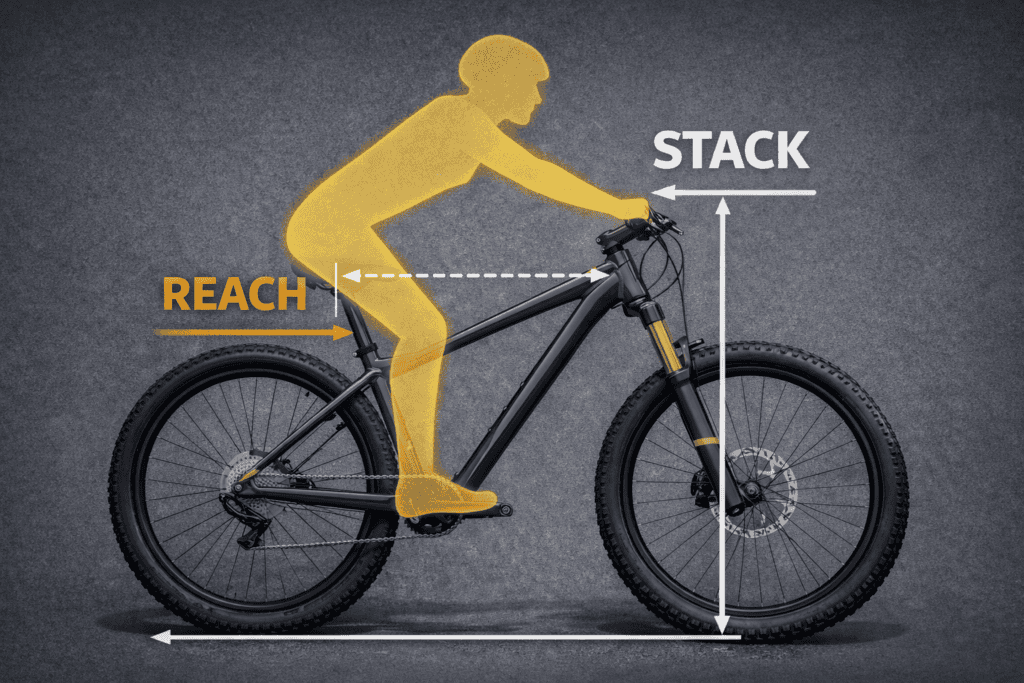
Begin by dialing in where your body sits on the bike. Effective seat tube angle centers your hips for efficient pedaling and climbing traction, while reach and stack define your standing posture, comfort, and control. If rider position isn’t right, the rest of the geometry won’t feel balanced—no matter how “good” the numbers look.
Layer in handling and stability (head tube angle, fork, front-center, wheelbase)
Once fit is established, steering and stability come next. Head tube angle, fork travel, offset, and front-center work together to determine how the bike behaves at speed, on descents, and through tight terrain. On hardtails especially, fork compression and extension constantly change these values, so terrain and riding style matter as much as the static numbers.
Fine-tune traction and feel (chainstay length, bottom bracket height/drop)
Finally, rear-center and bottom bracket height shape how the bike corners, climbs, and responds to rider input. Chainstay length balances playfulness versus climbing stability, while BB height manages the tradeoff between grip and pedal clearance. These details refine the ride once position and handling are already in sync.
How Geometry Affects Ride Characteristics?
Before you buy a hardtail, start with the numbers that actually affect how the bike feels under you. Reach and stack should make your standing position feel centered and relaxed, not stretched or cramped. Head angle, effective seat angle, and chainstay length shape how the bike climbs, corners, and carries speed, while bottom bracket height or drop influences stability and pedal clearance.
Next, make sure you’re comparing bikes fairly. Check fork travel and offset, and pay attention to the tire size assumptions used in the geometry chart.
A bike designed around a 29×2.4 tire will feel different than one based on smaller rubber, even if the numbers look similar on paper. It’s also worth double-checking seat tube length and dropper post compatibility, especially if you’re between sizes or planning to size up.
On test rides, focus less on how the bike feels in the first few minutes and more on how it behaves as the ride goes on. Notice whether the front wheel stays planted on climbs, whether corners feel supported, and whether your body feels balanced without constant adjustments. Good geometry should fade into the background and let you ride naturally if you feel like you’re fighting the bike; something in the setup or sizing is off.
Geometry by Discipline and Terrain
Different riding disciplines prioritize different geometry traits. XC hardtails focus on efficiency, using steeper head angles, moderate reach, and shorter travel to maximize climbing speed and responsiveness. These bikes feel quick and precise, but can feel nervous on steep or rough descents.
Downcountry geometry blends XC efficiency with added stability. Slightly slacker head angles, longer reach, and 120 mm forks improve descending confidence without sacrificing too much climbing performance. This category works well for riders who want speed with a margin of forgiveness.
Trail hardtails aim for versatility. Head angles in the mid-60s, steeper seat angles, and longer reach numbers balance climbing efficiency with downhill confidence. These bikes are designed to handle varied terrain without excelling exclusively in one direction.
Aggressive or enduro-style hardtails push geometry further. Very slack head angles, long reach, and stable wheelbases prioritize descending control, while steep seat angles maintain climbability. These bikes reward confident riders and demand thoughtful setup.
Bikepacking hardtails favor stability and comfort, often using longer chainstays and wheelbases to manage added weight. Dirt jump and street hardtails sit at the opposite extreme, with compact geometry, high BBs, and short rear ends focused on pop and maneuverability rather than efficiency.
Choosing the Right Hardtail Geometry
Choosing the right geometry starts with understanding where and how you ride. Steep, rough, high-speed terrain benefits from longer, slacker bikes, while smoother, pedal-heavy trails reward steeper and more compact geometry. Riders who experience a mix of conditions usually benefit from modern trail or downcountry numbers.
Fit is just as important as terrain. Reach and stack should be your primary reference points, as they dictate body position while seated and standing. Seat tube length and dropper compatibility act as constraints, especially for riders who want to size up without sacrificing saddle height.
Demo rides are invaluable. Pay attention to front-wheel tracking on climbs, stability at speed, and comfort after extended riding. Small differences in reach, seat angle, or BB height can dramatically change how a bike feels. The right geometry should feel natural, balanced, and predictable rather than forced or demanding.
Set Up Tweaks That Change Effective Geometry
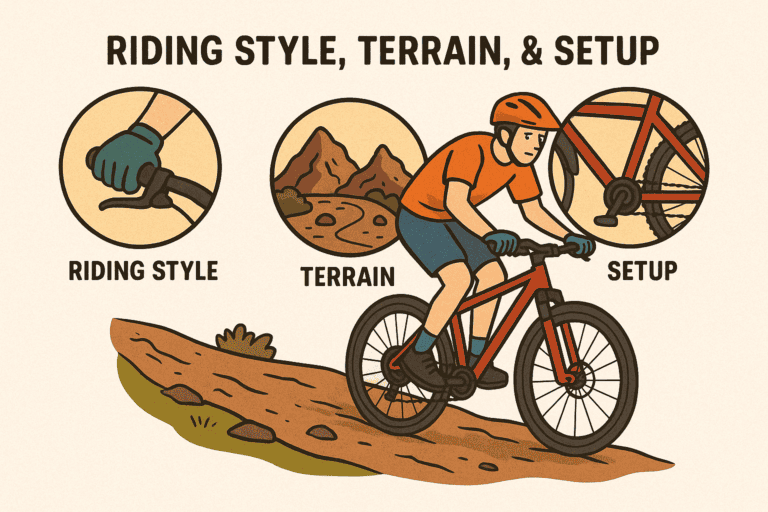
Even with the right frame, setup choices can significantly alter how geometry feels. Stem length affects steering speed and cockpit length, while handlebar rise and width shift weight distribution. Bar sweep influences wrist comfort and shoulder position, subtly changing how centered you feel on the bike.
Suspension setup has a major impact. Fork sag changes head angle, BB height, and wheelbase dynamically. More sag slackens the bike and improves descending confidence, while less sag sharpens handling and climbing efficiency. Air pressure and volume tokens influence how geometry behaves under load.
Tire size and volume alter ride height and rollover characteristics. Larger tires raise the BB slightly and add compliance, while smaller tires lower the bike for improved cornering grip. Wheel size choices further affect stability and agility, and crank length plays a role in pedal strike risk on low-BB setups.
Hardtails and full-suspension bikes respond differently to geometry because rear suspension changes how loads are absorbed. Full-suspension bikes maintain geometry more consistently, while hardtails rely on fork movement and rider input. This makes hardtails more sensitive to geometry choices.
You’ll find that full-suspension bikes excel on rough descents by maintaining traction. Geometry reflects these priorities, with hardtails often using slightly slacker static setups to compensate for fork dive.
Understanding these differences helps set realistic expectations and choose the right platform for your terrain and riding style.
Common Mistakes and Myths
A common mistake is assuming slacker geometry is always better. On mellow trails, overly slack bikes can feel awkward and inefficient. Another mistake is ignoring reach and stack in favor of top tube length, which often leads to poor fit. “A bike that’s too long can feel sluggish, while one that’s too small can feel cramped and unstable.” (According to Uprise Bikes)
They find that there may be a perfect size, but it always depends on the reach and stack of the frame and how that works with your body, and also how the bike is oriented.
Effective seat tube angle is frequently misunderstood, as it changes with saddle height and frame design. Wheelbase alone doesn’t guarantee stability either; front-center, rear-center, trail, and BB height all contribute to balance.
Avoiding these myths helps you choose geometry that actually suits your riding.
Example Geometry Comparisons
Small numerical changes can create noticeable differences on trail. One degree of head angle alters downhill confidence, while 10 mm of reach changes cockpit feel and front-wheel control. Even minor BB height changes affect cornering grip and pedal clearance.
Comparing XC, trail, and aggressive hardtails side by side highlights how geometry shifts priorities. Understanding these benchmarks helps you interpret charts quickly and realistically.
Buyer’s Checklist
FAQ: What geometry numbers should I look at first?
Q: What head tube angle works best for most riders?
A: A balanced head angle in the mid-60s offers a solid mix of downhill confidence and responsive steering without feeling sluggish on climbs.
Q: Why does fork travel matter so much on a hardtail?
A: Fork travel changes axle-to-crown height, which dynamically affects head angle, stack, and wheelbase. On a hardtail, these changes are more noticeable because there’s no rear suspension to balance them out.
Q: Is reach more important than top tube length?
A: Yes. Reach reflects your standing position, which matters most for control. Top tube length can be misleading due to varying seat tube angles and frame shapes.
Q: How do chainstay length and wheel size affect ride feel?
A: Shorter chainstays feel more playful, while longer ones improve climbing balance. Larger wheels add stability and rollover, while smaller wheels feel quicker and more agile.
Key Takeaways and Next Steps
Hardtail geometry works best when it’s matched to the terrain you ride most, the speeds you’re comfortable carrying, and how you naturally move on the bike. A geometry setup that feels perfect on fast, open trails can feel awkward or demanding on tighter, slower terrain, which is why context matters more than chasing extreme numbers.
Start by prioritizing reach and stack to establish a balanced standing position, then look at head angle and effective seat angle to dial in how the bike climbs, descends, and responds under power. When these core elements are aligned, the bike tends to feel intuitive rather than something you have to constantly correct.
From there, small setup changes can make a meaningful difference. Stem length, handlebar rise, and bar sweep all subtly shift weight distribution and steering feel, while fork sag and air pressure influence how geometry behaves dynamically on the trail. Tire size and pressure also play a role, affecting ride height, grip, and rollover. These adjustments are especially noticeable on hardtails because there’s no rear suspension to mask imbalance.
Whenever possible, demo rides are invaluable. Pay attention to how the bike feels after the first few miles, not just in the parking lot. A well-matched hardtail should feel predictable, comfortable, and confidence-inspiring over the course of an entire ride, not just in short bursts. Check out mountain bike types explained in this article.