Hardtail vs Full Suspension Mountain Bike: How to Choose
You’ve probably heard that bikes are full-suspension and fully featured, and ones that are hardtails for beginners or cheaper, and this is not true within the conversation of hardtail vs full suspension. Many online threads and posts specifically look for these models as they are great to pick up and great for all-around terrain.
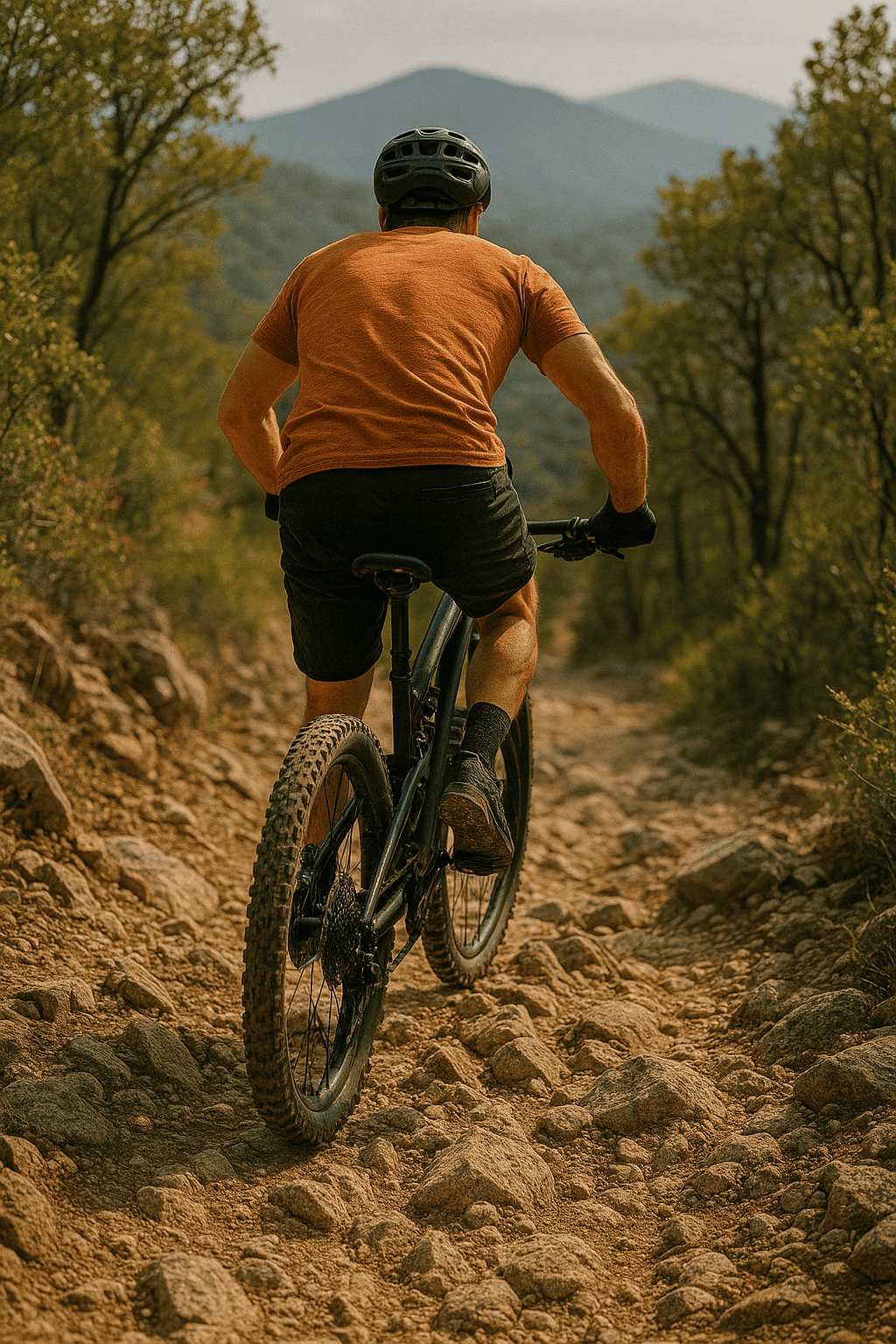
If you choose the hardtail, you want to absorb the impact and have more efficiency on smooth to heavy rock trails, while on a full-suspension, you are able to handle technical terrain easily and turn on a dime.
The rider themselves chooses whether they like better, hardtail versus full-suspension, and I highlight here what would be better for you, the pros and the drawbacks of each.
Hi, I’m Caleb Toliver, a cyclist and mountain biker who enjoys the outdoors and shares experiences and expertise while mountain biking in mountainous terrain, plus flat living in the South Florida area.
What Is a Hardtail?
Definition and core design
A hardtail mountain bike features a suspension fork at the front and a solid rear triangle with no shock. This simpler frame design reduces weight and mechanical complexity while improving pedaling efficiency. It delivers a direct, responsive feel that many riders appreciate for precision and climbing.
Typical Use Cases
Hardtails are popular for cross-country, downcountry, commuting, winter riding, and bikepacking due to reliability and value. They excel on smoother trails, rolling terrain, and technical climbs where line choice matters. Riders looking to build skills, maintain bikes easily, or stretch a budget will find hardtails compelling.

What Is a Full-Suspension?
Definition and core design
A full-suspension mountain bike includes both a front suspension fork and a rear shock connected via linkages or pivots. This design isolates the rider from bumps and maintains wheel contact for improved traction and control. Modern kinematics and lockout features help balance pedaling efficiency with plushness.
Typical Use Cases
Full-suspension bikes thrive on technical trails, enduro stages, bike parks, and long descents with rocks, roots, and drops. They reduce rider fatigue, boost confidence, and allow higher speeds on rough terrain. For riders prioritizing comfort and capability, full-suspension offers a clear advantage.

Key Differences
Suspension design and travel
Hardtails rely solely on front travel, typically 100–130 mm for XC and trail use. Full-suspension adds rear travel, commonly 100–170 mm depending on discipline, which smooths repeated hits and big impacts. More travel generally increases comfort and control but can add weight and reduce pedaling sharpness.
Hardtails are usually 1–2 kg lighter at the same price point and transfer power more directly to the rear wheel. Full-suspension systems add weight and small pedaling losses, though modern anti-squat designs and lockouts mitigate this. For long climbs and marathon efforts, weight and pedaling efficiency favor hardtails.
Comfort, traction, and control
Rear suspension keeps the wheel glued to the ground, dramatically improving traction on roots, rocks, and braking bumps. This extra grip translates to more control and less body fatigue, especially on descents and rough terrain. Hardtails transmit more trail feedback, which can be informative but harsher on the body.
On smooth climbs, hardtails feel snappier and often climb faster due to less bob and lower mass. On technical climbs with loose or chunky surfaces, full-suspension can win thanks to rear-wheel traction and momentum over obstacles. Descending stability and confidence heavily favor full-suspension on rough trails, drops, and high-speed sections.
Maintenance and durability
Hardtails have fewer moving parts, simpler frames, and lower service needs, making them durable and easy to maintain. Full-suspension requires periodic pivot, bearing, and shock services alongside fork maintenance. With proper care both can last many years, but the ownership workload is higher on full-suspension.
At any given budget, a hardtail typically buys better components and a lighter overall build. Full-suspension frames cost more and may come with lower-spec parts at the same price, affecting immediate value. Over time, service costs and wear items are higher for full-suspension, while hardtails remain cost-effective.
Learning curve and skills development
Hardtails demand precise line choice, body position, and timing, which can accelerate skill development. Full-suspension is more forgiving, letting riders attempt harder terrain sooner with less penalty for mistakes. Both can build skills, but hardtails emphasize fundamentals while full-suspension expands capability quickly.
Budget and Value
Price ranges to expect (entry, mid, high)
Entry-level hardtails start around budget-friendly prices with serviceable forks, which basically are the curve on the two points and basic drivetrains, while entry-level full-suspension typically costs significantly more.
Mid-range hardtails deliver excellent components and low weight, whereas mid-range full-suspension hits the sweet spot for performance. High-end options in both categories provide premium materials, top-tier suspension, and lightweight wheels, with full-suspension producing the highest prices and if you have the budget are great to work with.
Who Should Choose Which?
Beginners and skill-building
Beginners benefit from both, but the choice hinges on goals and terrain. A hardtail reinforces fundamentals and keeps costs down, accelerating line choice and body-position learning. On rough trails, a full-suspension can be less intimidating and safer while skills develop.
Technical trail riders
Riders tackling rock gardens, drops, steeps, and off-camber roots gain the most from full suspension. Improved traction and braking stability translate to speed and confidence on challenging lines. Hardtails can work, but demand superior technique and conservative pacing.
Budget-conscious buyers
For tight budgets, a hardtail delivers the best performance and reliability package. It allows investment in quality wheels, brakes, and drivetrain without stretching. A used full-suspension bike can be viable, but factor in service needs and potential hidden costs.
Riders with back or joint sensitivity
Full suspension reduces repeated impacts and vibrations, which helps protect backs, wrists, and knees. Lower pressures, higher-volume tires, and proper suspension setup further improve comfort. Sensitive riders on smoother trails can also consider a hardtail with a suspension seatpost and compliant tires.
Riders seeking low maintenance
Hardtails minimize service intervals and keep costs predictable over time. There are fewer moving parts to wear, and cleaning is faster after muddy rides. For riders who value uptime and simplicity, hardtails are the logical choice.
FAQs
Is a hardtail or full-suspension better for beginners?
A hardtail builds core skills affordably and performs well on smoother trails like a simple single-track. A full suspension reduces the intimidation factor on rough trails and can keep you as a new rider a much happy one.
How much suspension travel do I need?
XC and downcountry riders often prefer 100–120 mm rear and 100–130 mm front. Trail riders commonly choose 120–150 mm for balance, while enduro and park riders use 150–170 mm or more. Pick the shortest travel that comfortably handles your roughest trails.
Are hardtails faster on smooth trails?
Yes, on smooth climbs and flow trails, hardtails can be faster thanks to light weight and efficiency. Their responsive handling rewards pumping and precise cornering. Rougher sections tilt speed advantages back toward full-suspension.
Can I bikepack on a full-suspension?
Yes, but you’ll need frame-specific bags and careful packing to maintain suspension function. Efficiency is lower and storage is more limited versus a hardtail. Many bikepackers prefer hardtails for simplicity, mounts, and reliability.
What’s best for winter or muddy conditions?
Hardtails excel in winter due to easier cleaning, fewer moving parts, and better mud clearance. Full-suspension offers traction advantages on slick roots but requires more frequent service. Many riders keep a hardtail as a dedicated winter bike.
When should I upgrade vs replace?
Upgrade when fit, tires, wheels, and suspension service can address specific performance gaps. Replace when frame standards are outdated, major components are worn, or your riding style and terrain have changed. A targeted test ride on a modern equivalent can confirm whether a full replacement is worthwhile.
Should I buy used?
Buying used can stretch a budget, but full-suspension frames require careful inspection of pivots, shocks, and bearings. Service history matters; forks and shocks should be recently maintained to avoid hidden costs. Hardtails are generally safer used buys, though frame alignment and drivetrain wear still warrant attention.
At the end of the day, there’s no universal “better” choice, and you’ll find yourself using only what’s better for you and the trails you ride the most. Hardtails shine with their simplicity, efficiency, and skill-building feedback, especially on smoother singletrack or mixed rolling terrain.
Full-suspension bikes step ahead when the trail turns rough, technical, and demanding, giving you the traction and confidence to push harder with less fatigue.
Both platforms are legitimate, capable, and widely used by riders at every level far beyond the stereotypes you see online. Whether you prioritize speed, comfort, value, or versatility, your riding style, terrain, and goals should guide your decision.
As someone who rides both mountainous terrain and South Florida’s flatter, fast singletrack, I’ve learned that each bike brings something different to the experience. Choose the one that matches your everyday trails, your budget, and what keeps you excited to ride. That’s the bike that will take you the farthest.