The Best Cold Weather Mountain Biking Gear 2025
Cold-Weather Mountain Biking Gear Guide (By Caleb)
Winter riding can be one of the most rewarding parts of mountain biking, but only if you have some of the best cold weather mountain biking gear. As someone who has learned through trial and error, I’m Caleb, and I’ve spent enough rides to know when temperatures drop. There’s lots of biomes like mountain biking in the rain but cold weather is trivial!
That’s why this guide focuses on the essentials that actually keep you safe, warm, and comfortable. If you prepare correctly, winter riding becomes fast, fun, and surprisingly comfortable. Here’s everything you need to know to build a complete cold-weather MTB setup and will set you up for the upcoming winter.
Mountain Biking Gear Listed Below:
Best Overall
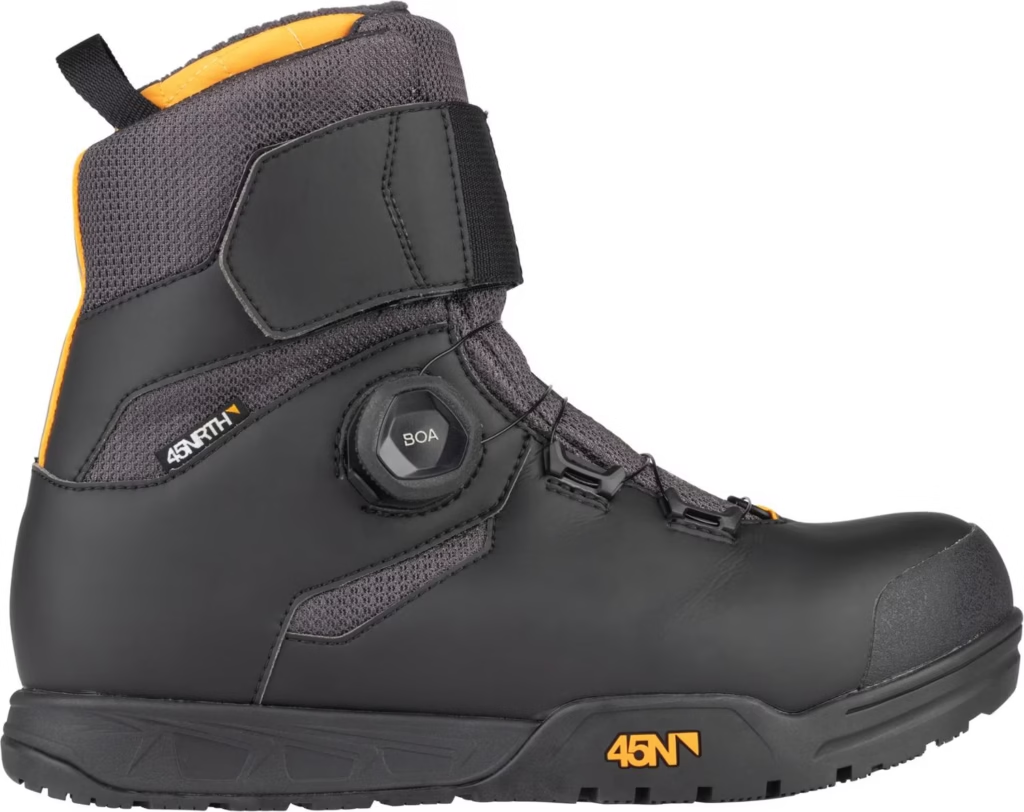
- Winter Cycling Boots
Pros - BOA dial for a secure, easy fit
- Extremely Warm with Insulated Toes
- Fully Waterproof and Windproof
- Built for Long, Cold Winter Rides
Cons - Expensive compared to other winter boots
- Bulky and heavier than normal MTB shoes
- Not very breathable during high-intensity rides
- Fit can feel tight if layering thick socks
Best Starter
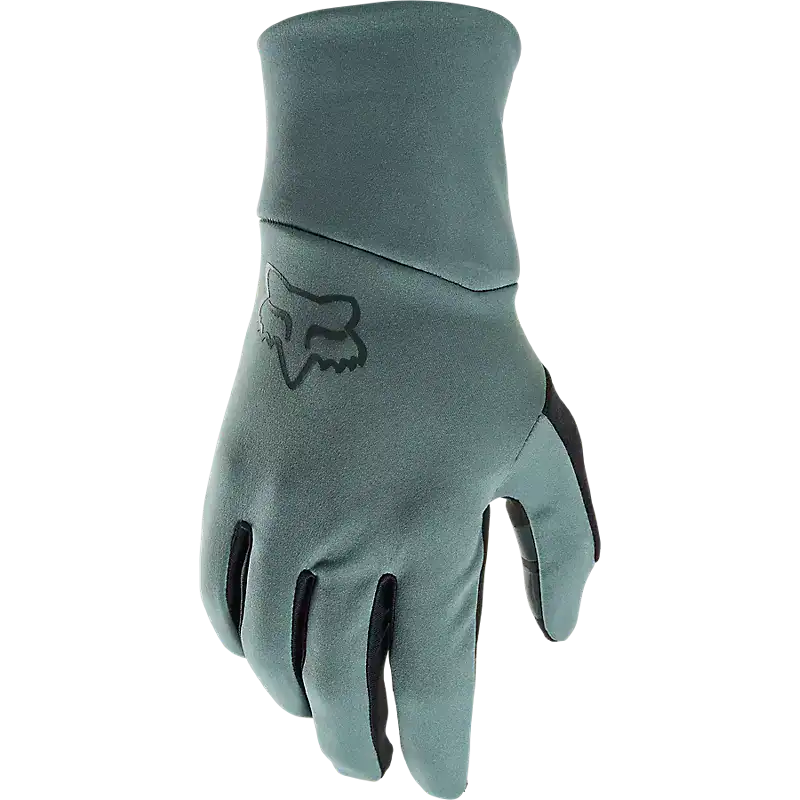
- Fox Ranger Fire Gloves
- Pros
- Warm fleece lining
- Water-resistant outer layer
- Good grip and handlebar feel
- Affordable yet effective
Cons - Grip can feel slippery when wet
- Not very breathable
- Hard to pull on and off
- Touchscreen works inconsistently
Building the Right Base Layer System
Materials That Work in Winter
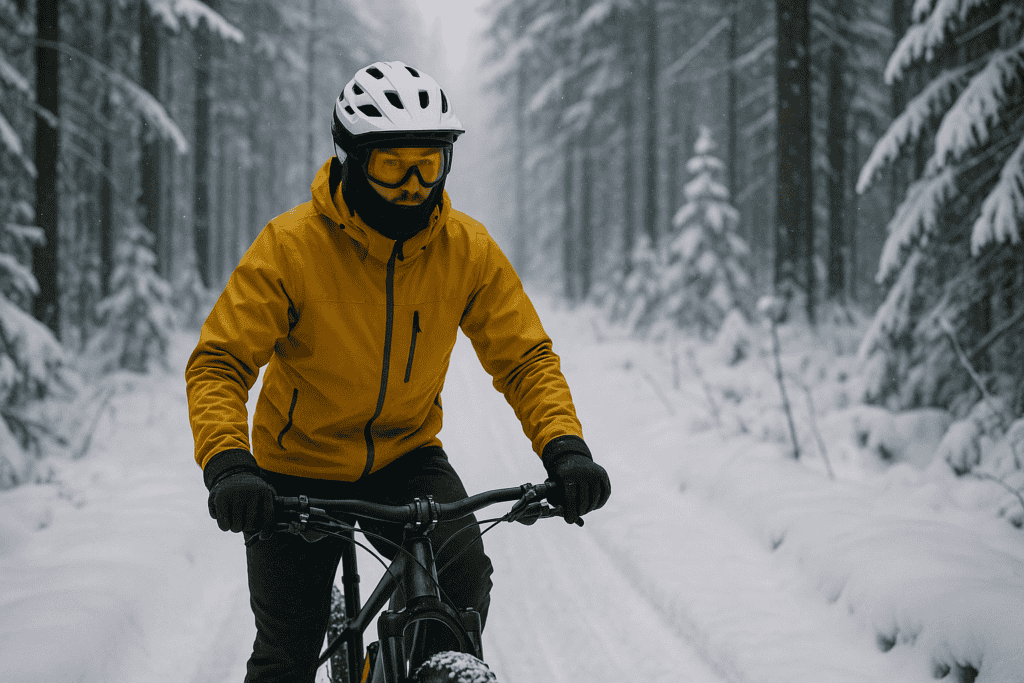
Base layers must stay warm when damp, breathe well, and never feel sticky or heavy. Merino wool provides natural insulation and odor resistance, while synthetics dry faster for higher-output efforts.
Choosing the Right Weight
Lightweight works best for long climbs, midweight for typical winter rides, and heavyweight for cold, slow-paced days. Avoid cotton entirely since it traps moisture and cools you down rapidly.
Mid-Layers That Add Warmth Without Bulk
Purpose of the Mid-Layer
Your mid-layer helps fine-tune temperature as you move between climbs and descents. Gridded fleece, thermal jerseys, or light insulated vests trap heat while remaining breathable.

Finding Balance for Mobility
A good mid-layer shouldn’t restrict your range of motion or make you overheat. Vests are excellent when you want core warmth but want your arms to stay cool and mobile.
Outer Shells: Softshell vs. Hardshell
Protection Against the Elements
Your outer shell must fight wind, snow, and freezing rain. Softshells are perfect for dry, cold days because they breathe well while blocking wind.

When to Use a Hardshell
Hardshell jackets shine in sleet, wet snow, or all-day storms. Look for waterproof and breathable ratings in the 10k–20k range and features like pit zips to manage heat.
Head, Face & Eye Protection
Keeping Your Head Warm
Winter helmets or vent-covered helmets reduce heat loss. Skull caps or thin merino liners boost warmth without affecting fit or safety.
Face & Eye Coverage Matters
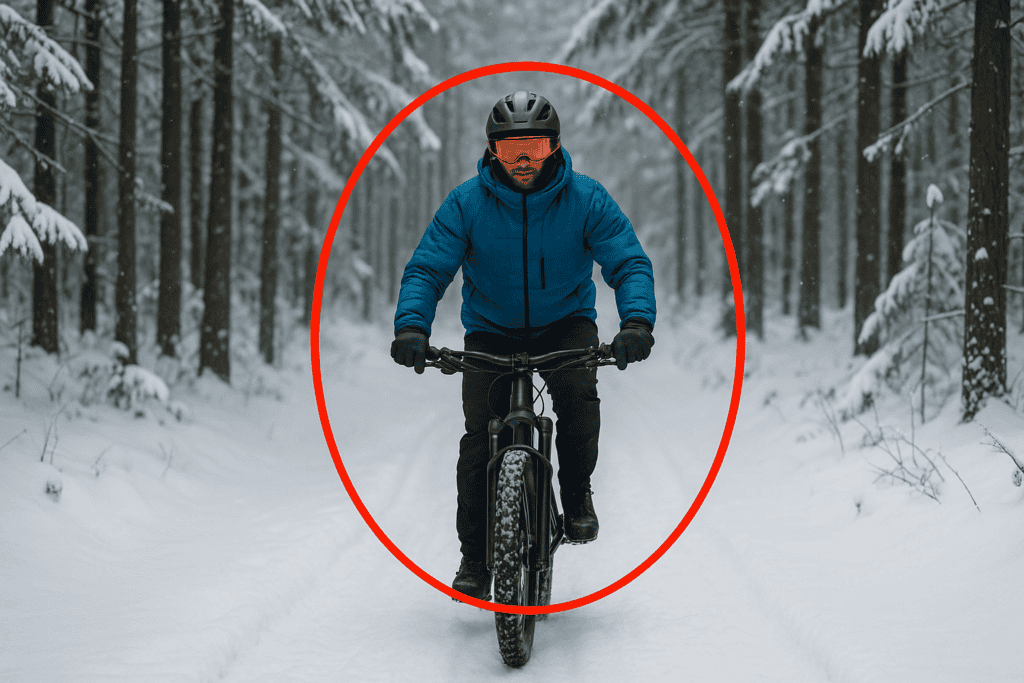
Balaclavas, buffs, and breathable face masks prevent frostbite and windburn. Goggles or anti-fog glasses help maintain visibility and protect your eyes from freezing wind.
Gloves, Pogies & Hand Warmth Systems
Choosing the Right Gloves
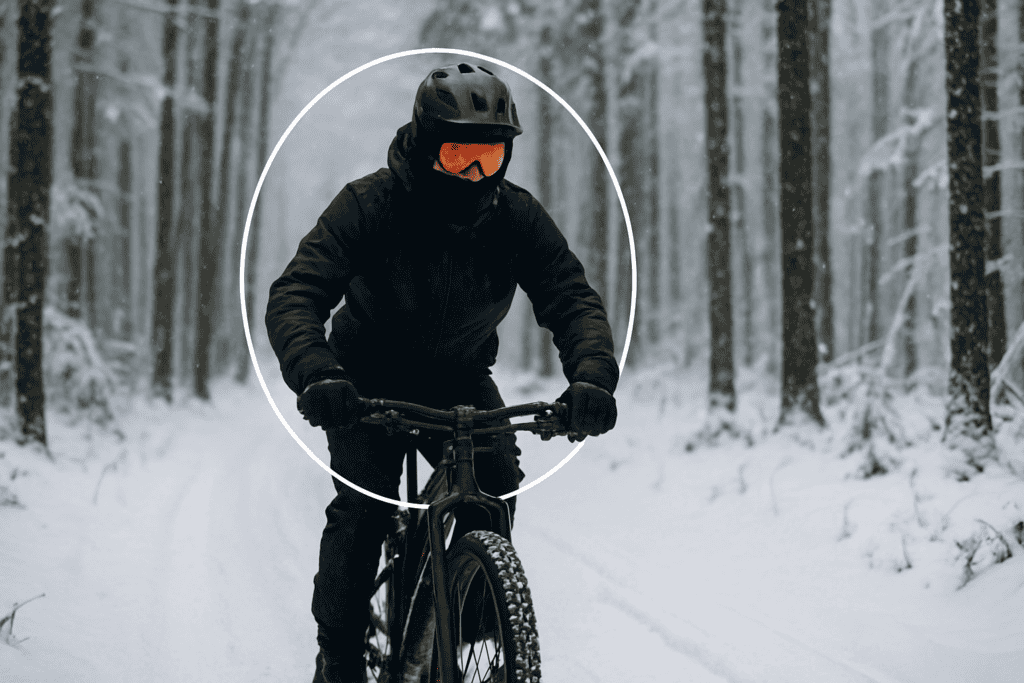
Cold-weather MTB gloves must insulate while preserving bar feel. Softshell materials with Primaloft or merino linings keep hands warm without excessive bulk.
When to Switch to Pogies
Pogies create a warm pocket of air around your hands, allowing thinner gloves and better control. They’re essential for subfreezing temperatures or long rides.
Footwear, Socks & Toe Warmers
Keeping Feet Warm & Dry
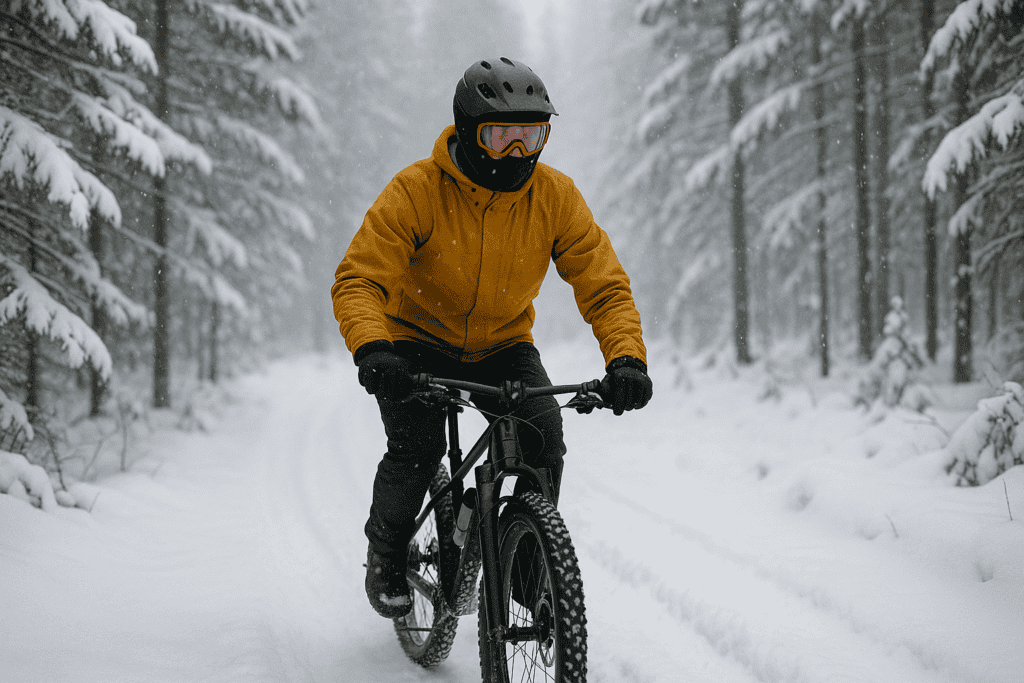
Winter cycling boots are far superior to shoe covers for sustained cold. They offer waterproofing, insulation, and taller cuffs to block snow.
Sock Strategy for Winter
Merino wool socks maintain warmth even when damp. On extremely cold days, a thin liner sock plus a vapor-barrier layer prevents sweat from saturating insulation.
Tires, Traction & Winter Trail Grip
Rubber Compounds That Actually Work
Standard MTB tires get stiff in the cold, reducing grip. Winter-specific rubber stays soft, improving traction on icy roots and frozen dirt.
Studded tires are game-changers for icy terrain. Lowering tire pressure increases the contact patch, giving more traction in snow and packed winter trails.
Lighting, Visibility & Battery Life in the Cold
Why Winter Needs Stronger Lights
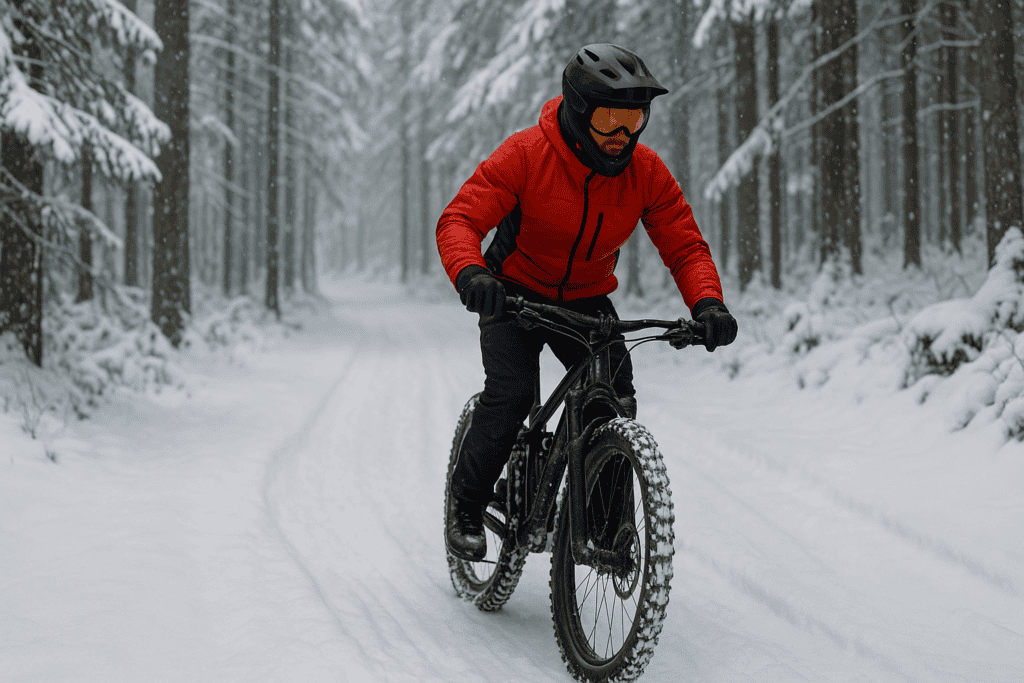
Cold temperatures drain batteries quickly, so bar and helmet lights with long runtimes are crucial. Things like high-vis outer layers help you stand out in dim winter woods. Store batteries warm before the ride and use medium settings on climbs to save power. Always carry a backup battery in colder months.
Plan routes with bailout points, shorter loops, and easier exits in case conditions worsen. Solo riders should always share their plan before heading out.
Emergency Gear You Should Carry
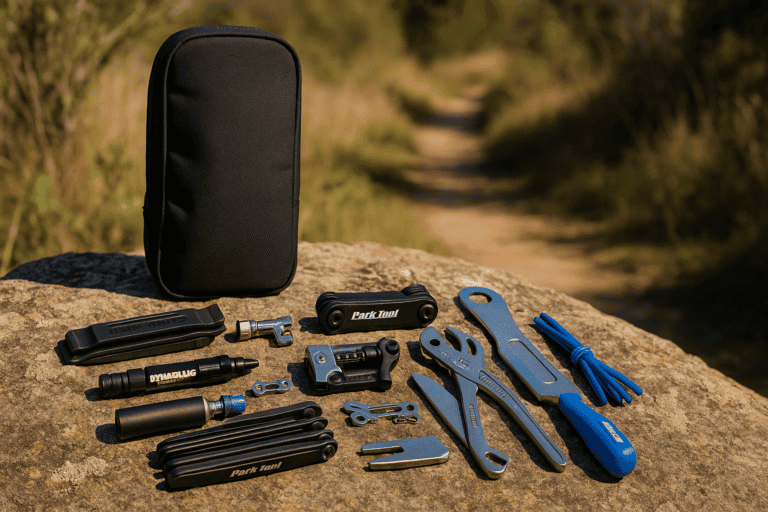
A charged phone, multi-tool, space blanket, and small repair kit can make a huge difference if something goes wrong. Winter demands preparation, not improvisation.
Conclusion
If you’re looking for a solid winter glove that won’t break the bank, the Fox Ranger Fire Gloves are an excellent choice.
They offer warmth, weather resistance, and decent bar control for the price. Just keep in mind: they’re not ideal for the coldest rides and they might feel a little tight or sweaty on intense climbs. But when it comes to breaking the bank, I recommend buying all the gear to get started.